Tom Clancy's Jack Ryan S2E1 Review: Cargo Finds Venezuela's Crisis Hidden Inside a Shipping Route
The Season 2 premiere moves Jack from counterterror certainty into a murkier fight over resources, elections, and plausible deniability.
Tom Clancy’s Jack Ryan begins Season 2 by changing the shape of Jack’s confidence. “Cargo” does not reopen with Jack Ryan chasing a single named extremist across a visible network; it starts with a rocket, an unregistered satellite, a Cypriot ship, and a country most of Jack’s lecture hall barely considers dangerous. The Venezuela arc begins as a question about shipment routes and military facilities, then tightens into a political trap where every official answer is designed to be unverifiable. By the final minutes, “Cargo” has moved from analysis to blood, and Jack’s hunch has become something he cannot file away as a policy concern.
The Almeta points away from the obvious enemy
The premiere’s smartest opening move is giving James Greer the first field wound. Greer is in Moscow meeting Mikhail under cover so thin it depends on sex farce and mutual contempt: if the FSB catches them, they are lovers who met online. The humor lasts only long enough to remind us that Greer is still good at the clandestine rhythm of this work. He has a photograph of a rocket, a vessel name, and a theory that the Kremlin is using a Cypriot-flagged ship called the Almeta to move dangerous cargo the way it has allegedly moved arms before.
What matters is not that Greer is wrong about the first layer. It is that he is professional enough to ask. The scene lets Mikhail push back with the obvious question: what makes Greer so sure the rocket is Russian? Greer’s answer is not the rocket but the payload, an unregistered satellite now sitting over Venezuela. That distinction is the episode’s operating principle. Every visible object in “Cargo” points toward something less visible: a ship toward a jungle site, a satellite toward a political crisis, a public meeting toward a private operation.
Greer’s body betrays him before the case can. He staggers after the Moscow meeting, collapses in the street, and wakes into an institutional judgment he hates: syncope from cardiac ischemia and aortic stenosis, with Carter bluntly telling him that people are assets or liabilities and Greer is no longer in the asset category. Greer takes the diagnosis with furious humiliation rather than fear. He does not want comfort; he wants the right to remain useful. That is why his later transfer request matters. When Mikhail confirms the Almeta is not a Russian operation and has been found in La Guaira outside Caracas, Greer does not retreat to a desk. He maneuvers himself toward Venezuela because the case has just intersected with Jack again.
Jack builds a case nobody wants to own
Jack Ryan is introduced this season in a lecture hall, and the setting is a clean recalibration. He is no longer the analyst dragged from a cubicle into Yemen. He is a man teaching others how attention gets manipulated. News clips mention Russia, China, North Korea, hypersonic missiles, nuclear bombers, and the Venezuelan crisis. Jack asks the room which country feels like the major threat, then walks them toward the answer they missed: Venezuela, with its oil, minerals, economic collapse, looming election, and proximity to next-generation nuclear weapons.
The lecture could have become a blunt geopolitical sermon, but the writing keeps it tied to Jack’s flaw. He is persuasive because he can connect economic pressure, resource politics, and military risk with frightening speed. He is also openly biased, as Senator Jimmy Moreno notes afterward when he tells Jack to tone down the line about President Nicolas Reyes being an asshole. The show is not asking us to treat Jack as neutral. It is showing how a correct pattern can still come through a person with strong priors.
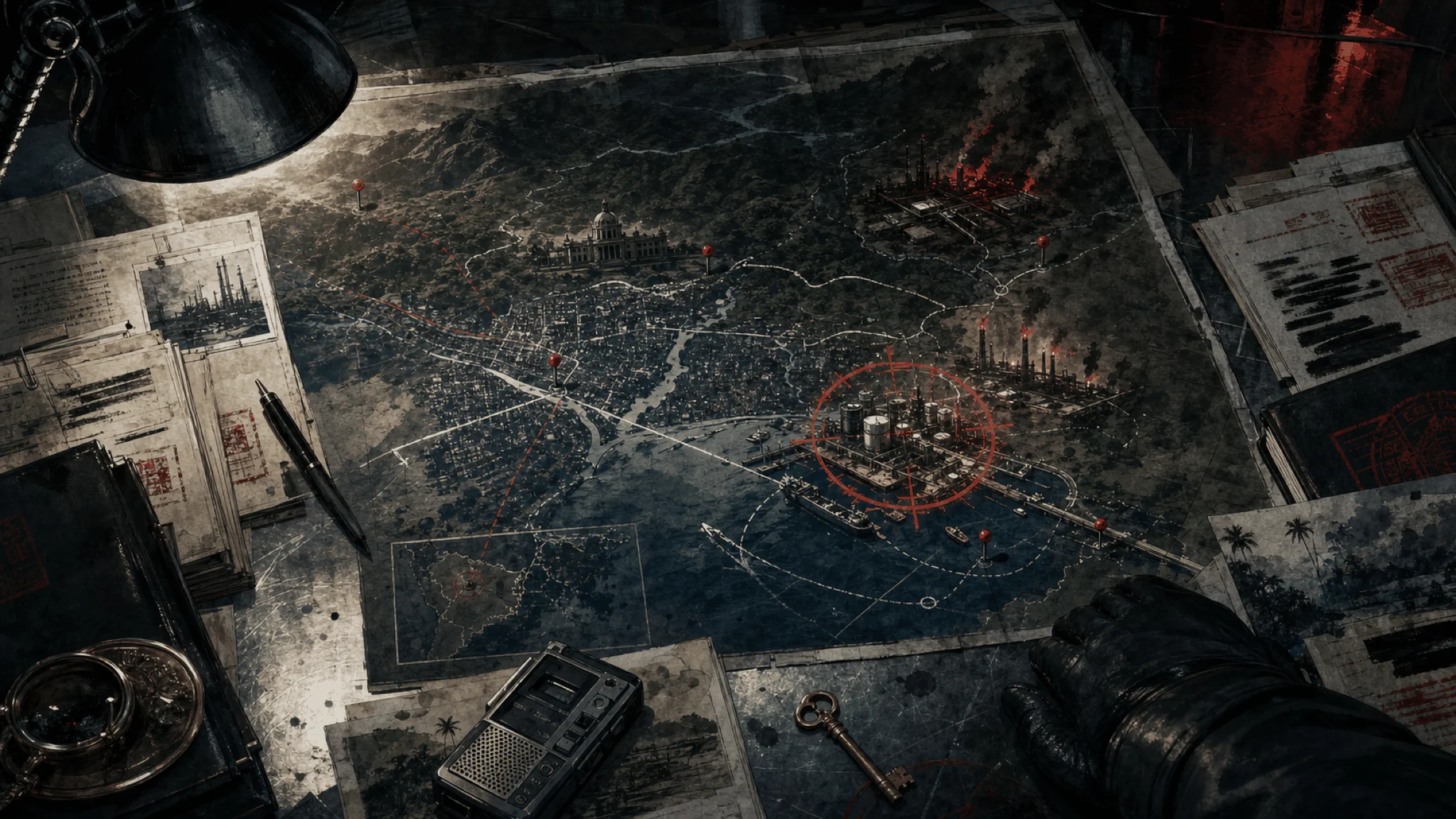
That tension sharpens in the committee meeting with Moreno and Chairman Mitch. Jack and Moreno bring satellite photos of the Almeta in Caracas, crates moved from the ship into the jungle, and a heavily guarded military facility. Jack argues that Russia could be supplying Reyes with anything from ICBMs to chemical weapons. The chairman calls it a hunch, warns about confirmation bias, and refuses to turn a fishing expedition into the next Bay of Pigs. Jack’s response pushes the room toward panic: a nuclear Venezuela will not be on the news because everyone will already be dead.
The scene is effective because neither side sounds foolish. Jack has motive, means, and opportunity. Reyes needs weapons to withstand U.S. sanctions; the Almeta has a history that makes the route suspicious; the containers end near a secret military site. The chairman also understands the blast radius of acting on partial knowledge. A black ops team in a hostile country is not a clean verification tool. His diplomatic compromise, sending Moreno and Jack to Caracas to ask Reyes in person, is politically cautious and dramatically doomed. It ensures they do not start a war, but it also puts them inside the machine they are trying to read from above.
Caracas makes diplomacy a liability
The Caracas material works best when the city and its institutions contradict each other. Ambassador Lisa Calabrese greets Moreno and Jack with professional warmth, then dryly notes that gas is cheaper than water. A pollster tells Reyes’s circle that citizens may be hiding their real support for Gloria Bonalde because they believe polling is conducted by the government. President Reyes then answers Moreno’s satellite evidence with a dodge about old uniforms and unclear photographs before turning the accusation into a test of belonging: Moreno should not think his parents’ birthplace lets him lecture “real Venezuelans.”
That meeting gives the politics a sharper edge than Jack’s lecture did. Reyes does not merely deny the shipment; he converts the question into sovereignty theater, while Moreno answers that Reyes should not pretend to represent the will of the people. Jack’s read afterward is telling. He says they came so Reyes would lie and that the lie proves he has something to hide. The instinct is probably right, but it is still not proof, and “Cargo” keeps the Americans in that uneasy space between knowing and proving. General Ubarri’s home scene widens the same pressure: his daughter admires Bonalde, his wife sees his disgust with Reyes, and Ubarri knows the opposition has a real chance without yet acting on that knowledge.
The night out shifts the diplomatic trip toward a network story. Greer arrives as if by coincidence, Jack sees through it, and Moreno pulls him into dinner anyway, where Afghanistan, Jack’s back surgeries, and Moreno’s hospital visits give the partnership a personal history before Greer needles Jack for turning down Moscow. Their irritation becomes useful when they realize Greer’s unregistered satellite and Jack’s suspected arms shipment both run through the Almeta. Nearby, a woman calling herself Lina enters speaking multiple languages and making Jack’s cover story feel thin. Elsewhere, Schenkel accepts a larger payment from a woman in a swept office, receives a storage unit location, and buys Captain Filiberto Ramos by invoking his sick mother. The convoy attack that follows is the bill coming due: Ramos changes the route, the lead vehicle explodes, Calabrese is wounded, and Moreno is shot after Jack tries to steady him through respiratory panic.
What this episode argues
“Cargo” argues that modern spy work is less about finding villains than reading the markets around them: shipping companies, sanctions, polling fear, medical bills, campaign pressure, committee caution, and the price of a security detail. The episode’s politics are broad, sometimes blunt, but they are not weightless. Jack’s Venezuela lecture frames unstable governments as opportunities for larger powers; the later scenes show that opportunity operating locally, through officials, contractors, families, and men who can be pushed because the state around them has failed.
The closing movements make the season’s scope feel larger than Reyes alone. After the convoy attack, the episode cuts to the man who comes home to find Monica and the children gone, only to be attacked in his own house. There is a regime, yes, but there is also a purchased infrastructure of fear moving beneath the official conversation.
Verdict
“Cargo” is a strong Season 2 reset because it gives Jack a bigger map without letting him become grander than the show can support. Jack is most convincing when his certainty brushes against procedural limits, and Greer’s medical crisis carries the bruised pride of a man who would rather be angry than vulnerable. Reyes is smug enough to hate but careful enough to matter, while Lina adds a cool note of ambiguity that the premiere wisely leaves unresolved.
“Cargo” leans too lecture-forward at times, especially when Jack has to state the season’s geopolitical frame in a classroom before the drama can dramatize it. Still, the hour finds its footing through scene pressure: a Moscow asset meeting, a committee argument, a presidential dodge, a barbed dinner, a paid betrayal, and a killing that makes policy feel like grief. As an opener, “Cargo” does what it needs to do. It makes Venezuela a blind spot, then punishes everyone who thought distance made that blind spot manageable.
Rating: 8.1/10
More episodes from Jack Ryan — Season 2 — The Venezuela arc — Jack chases a stolen nuclear-capable shipment. Jump to any episode in the season:
Where to go next
Reviewed by Mira Vance · QuizFandom Editor & Lead Reviewer. Every rating is an honest per-watch assessment from the desk that also writes the quizzes — not a press release rehash.