Tom Clancy's Jack Ryan S2E6 Review: Reyes Makes the Embassy Gate His Sharpest Weapon
Jack is back in Caracas chasing a shell company, while Reyes converts one reckless investigation to a national expulsion order.
“Persona Non Grata” is the hour where Jack Ryan’s private pursuit stops being containable. Jack comes back from London with Max Schenkel dead, Monica Herrera still alive as a possible financial conduit, and no patience left for the chain of command. The episode frames that impatience against a Venezuelan election that is no longer background pressure: Gloria Bonalde is saying aloud that Reyes’s sanctions problem is really a human-rights problem, while Reyes is looking for a way to make American scrutiny seem like foreign invasion. By the final act, Jack has not solved the conspiracy. He has given Reyes a public instrument.
Jack hands Reyes a usable scandal
The airport pickup sets the hour’s terms before anyone pulls a gun. Jack returns to Caracas after “hitting a wall in London,” and Greer is already lying to Mike November about picking up laundry. Their banter has the dry rhythm the show often uses when the work is getting uglier: Jack jokes that Greer’s secret heart condition is bigger than his own unauthorized return, while Greer makes clear that this detour ends with Jack back on a plane to Dulles.
The file Greer hands over keeps the investigation pleasingly concrete. Monica Herrera filed a business license for Cinco Palmas SRL, is listed as the company’s CFO, and appears to run a practice built around shell companies, laundering, tax evasion, and illicit trade. Jack immediately wants to close the loop: whoever hired Max to kill Senator Moreno went through Herrera. Greer refuses the word “know,” which is the right correction. The episode’s procedural discipline depends on that gap between suspicion and proof.
Their Canadian-businessmen act at Herrera’s office is comic for about ten seconds, mostly because Jack chooses “Timothy Horton” while claiming they are in the coffee business. Then the office becomes a trap. Armed men storm in, Jack and Greer identify themselves as American diplomats, and the fiction of a discreet inquiry collapses. The scene matters because the hour never lets Jack’s intelligence work remain abstract. He has a lead, but he also has a face, a passport, and a presence inside a regime that has every incentive to use him as evidence.
Reyes’s lunch invitation is staged like a civics lesson delivered at gunpoint. President Reyes brings Jack and Greer to a polo setting and lectures them on a sport “not for the timid or the poor.” That line is doing more than adding texture. It places Reyes in his preferred register: aristocratic, wounded, and fond of making power sound like culture. Jack and Greer do not get a meeting so much as a performance of control.
Jack challenges him with the one fact Reyes cannot smoothly absorb. Reyes claims he brought the real killers of Senator Moreno to justice, but Jack names Max Schenkel as the shooter and says Max was killed in London. The implication is simple and corrosive: Reyes has either imprisoned innocent men by mistake or lied. Reyes answers by asking for proof, then tells Jack that his assumptions are based on ignorance. The scene is strong because neither man can fully win it. Jack has the better fact. Reyes has the state.
That imbalance becomes the episode’s political engine. Earlier, Bonalde’s interview defines the election in moral language. She says the sanctions are not against Venezuela but against Reyes and his human-rights violations, then stands by the phrase “state-sanctioned mafia.” When asked whether Reyes will hand over Miraflores if he loses, she answers with the almost naive clarity that this is what democracy means. The line lands because the rest of the hour shows how fragile that premise is when the man in power controls both the security apparatus and the national microphone.
Reyes later takes that microphone and calls American activity an interventionist attack on Venezuela’s electoral process. The accusation is politically useful because Jack has made it easier to sell. The show does not need the viewer to believe Reyes’s version. It asks the viewer to see how Jack’s off-book choices give a cynical president something real to weaponize.
The jungle story prices the cost of the case
The Matice thread initially looks like the episode’s action counterweight, but it becomes the hour’s bleakest account of what evidence costs. Matice, Coyote, Disco, and Uber move through the jungle with the kind of gallows humor that soldiers use to keep fear conversational. A joke about ham and cheese barely clears the air before gunfire tears through it. The team is ambushed hard enough that even the professionals cannot understand how the attackers found them so far out.
Uber’s return complicates the tactical picture. He says he got lost, found a prison camp over the ridge, heard the shooting, and came back. The case he carries is important enough to the attackers that Matice decides it has to reach Greer even though no one knows what is inside. That choice links the jungle firefight to the Caracas investigation: everyone is chasing fragments, and each fragment requires someone to keep moving while the larger picture remains incomplete.
Matice’s decision to split the team gives the sequence its blunt force. He orders the others back to the river with the case and leads the pursuers away himself. Coyote wants to stay. Matice makes it an order. The episode then lets Coyote, Disco, and Uber argue the rule that governs men under fire: Matice told them to go, but they do not leave their own behind. Uber’s answer is the simplest and most damning: Matice came back for him, so he is going back for Matice.
The rescue impulse arrives too late. Matice fights alone long enough to kill more attackers and mock the men closing on him, but the surrounding soldiers overtake the ground. Disco’s whispered refusal when he sees what has happened carries more weight than a speech would. The episode does not present Matice as a clean martyr. It makes him the human cost of a mission where the people closest to the proof are also the least protected.
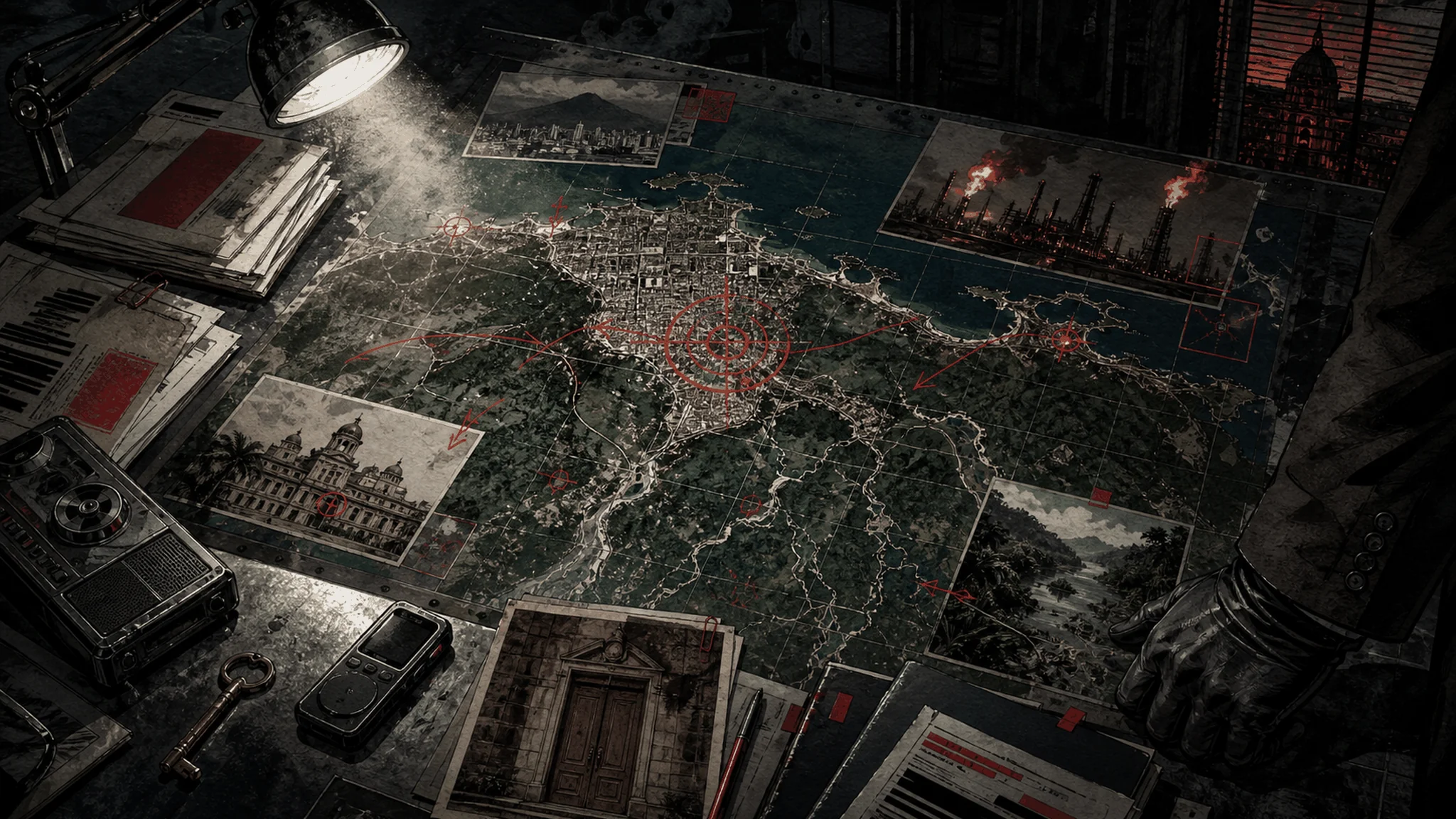
Persona non grata becomes a trapdoor
Back at the embassy, Mike’s anger at Jack is not bureaucratic pettiness. It is operational reality catching up with a man who keeps treating permission as optional. Mike says Jack went over his head to Chapin and asks whether Jack understands what it means to be on a team. Greer defends Jack in the narrowest possible way: Ryan is an ass, but that does not make him wrong. It is a good Greer line because it separates Jack’s instincts from Jack’s conduct. The lead may be real. The damage is also real.
Reyes’s televised declaration makes that damage a national crisis. The ambassador hears the message clearly: Reyes says the Americans tampered with the election, declares them persona non grata, and orders the embassy evacuated immediately. When she tells Mike that American lives are now in danger, the episode stops being a chase and becomes an extraction. Flags come down, staff move through crowds, helicopters churn overhead, and the United States presence in Caracas shrinks from institution to convoy.
Jack’s call to Senator Chapin is almost painfully consistent with his flaw. Chapin values him, especially “the kind of guy” Jack is, but tells him there is nothing he can do from Washington and orders him home to brief him. Jack says he will. Then Mike gathers Jack and Greer and makes the choice the institution will not authorize. Two Americans are dead, three operatives are missing in the jungle, and Mike refuses to leave as a personal decision. If they stay, he warns, there is no protection and nobody is coming to save them. Jack’s response is pure fixation: he does not care.
The final movement makes that decision feel less heroic than hazardous. The remaining team uses old police vehicles with false compartments, weapons, and cash to get out under Reyes’s lockdown. Greer’s health, which Jack was joking about in the opening minutes, becomes visibly dangerous as he pants and struggles in the safe room. Jack quietly reroutes him to the airport rather than the safe house, a rare moment when Jack’s loyalty expresses itself as command rather than argument.
The plan still breaks. One roadblock is survived when a sputtering engine restarts and suspicion passes. Greer’s route does not get the same mercy. A checkpoint, a search, and then Bastos waiting at the arrival point change the escape to a capture. Greer’s last line is fury, not surprise. The hour closes by proving Mike’s warning instantly correct: they have no protection, and Reyes’s people are already inside the space where the Americans thought they could disappear.
What this episode argues
“Persona Non Grata” argues that truth without usable procedure can become politically dangerous. Jack is not wrong about Herrera, Max, or Reyes’s false arrests. The episode keeps showing that his instincts are pointed toward something rotten. But the hour is severe about the difference between being right and being effective. Jack’s presence in Caracas lets Reyes recast a murder investigation as electoral interference, and the regime understands the propaganda value of that faster than Jack understands the diplomatic cost.
The episode also keeps its politics from becoming simple American virtue. Bonalde’s language about democracy is presented with seriousness, but American action is not treated as automatically cleansing. Mike’s critique matters because he is not trying to protect Reyes; he is trying to stop Jack from making a fragile embassy a target. Reyes exploits the crisis cynically, yet the show lets the exploitation work because Jack has given him enough material to build a public case.
Verdict
“Persona Non Grata” is one of Season 2’s tighter pressure episodes because it gives every thread a cost. The Herrera lead pushes Jack and Greer closer to the money behind Moreno’s murder, but it also gets them dragged in front of Reyes. The jungle case survives because Matice puts himself between the attackers and the evidence. The embassy evacuation gives the title its literal force while stripping Jack, Greer, and Mike of the institutional cover they have been abusing and depending on at the same time.
The hour is strongest when it lets procedure curdle into consequence: the ridiculous “Timothy Horton” alias becoming a forced audience with Reyes, Bonalde’s democratic idealism answered by Reyes’s televised retaliation, and the safe-house plan ending with Greer in Bastos’s hands. Some of the action geography is intentionally chaotic enough to blur the tactical picture, but the emotional math is clear. Jack has not been vindicated yet. He has only raised the price of staying.
Rating: 8.3/10
More episodes from Jack Ryan — Season 2 — The Venezuela arc — Jack chases a stolen nuclear-capable shipment. Jump to any episode in the season:
Where to go next
Reviewed by Mira Vance · QuizFandom Editor & Lead Reviewer. Every rating is an honest per-watch assessment from the desk that also writes the quizzes — not a press release rehash.