Marshals S1E5 Recap: Kayce Finds Hayley and Loses Her Again
Marshals, Season 1, Episode 5 — “Lost Girls” Paramount Network
Marshals Episode 5 is the first hour where the procedural machinery and the family grief pull in exactly the same direction. Kayce (Luke Grimes) spots a missing reservation girl at a Wyoming truck stop while trying to sell Monica’s horse, and spends the rest of the episode burning through jurisdictional limits and a federal witness-protection babysitting assignment to get back to her. The episode does not resolve the case — it ends with Bludsoe and nine girls in the wind — but it establishes Hayley Charlo as the season’s moral center and locks the missing-and-murdered Indigenous women crisis into the show’s engine in a way that can no longer be treated as a subplot.
Monica’s Horse and the Accidental Lead
The episode opens with what looks like a domestic scene: Kayce and Tate at the ranch, the mustang that belonged to Monica terrorizing a potential buyer, Tate getting his arm nearly taken off trying to connect with the animal. Kayce’s line lands clean — “The only way left for this world to hurt me is through you, son” — and the scene does what the Yellowstone universe does best, which is use livestock as emotional shorthand. Kayce is not ready to release Monica’s horse because releasing it is another form of burial. He does it anyway.
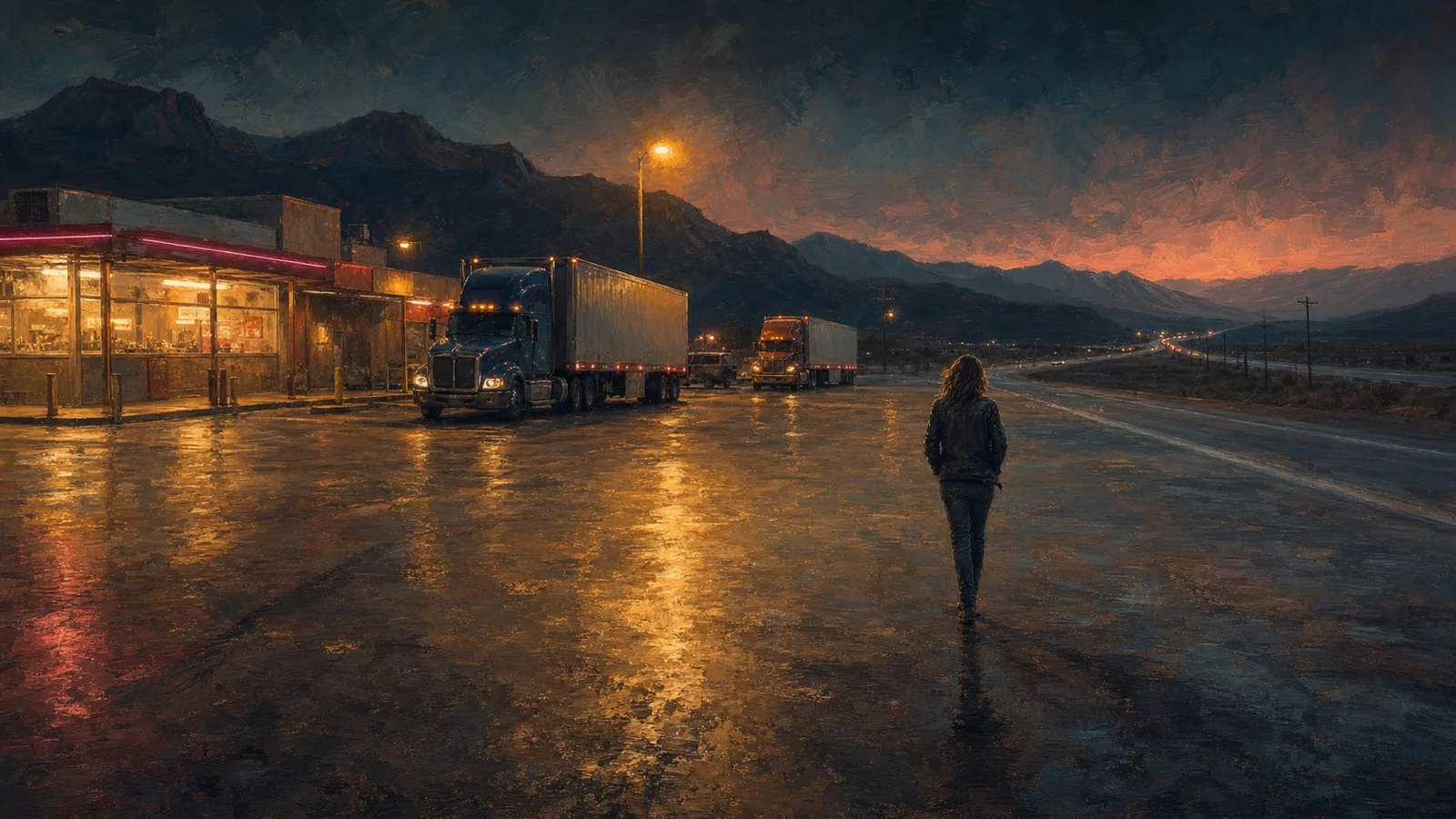
That errand takes him and Tate to Wyoming, which is where Tate recognizes Hayley Charlo, an old classmate from Broken Rock, in a truck stop parking lot. She is with a man she calls her boyfriend and she cuts the conversation short. Tate says she didn’t seem like herself. The detail is small and the episode trusts it to carry weight: a teenage girl from the reservation, across state lines, flinching at an old friend’s face. Kayce reads it the same way the audience does.
When he brings it to the team — Calvin, Miles, Belle, Andrea — the institutional response is the episode’s most pointed structural argument. Calvin has a federal assignment: protect Sammy LaChance, a suspect in multiple homicides who is cooperating with prosecutors in a bid-rigging case. The priorities are explicit. Andrea puts it flatly: “The government would rather protect a killer than lift a finger for missing girls.” The team splits its attention because it has no choice, but the episode never lets the audience forget which work actually matters.
The Jurisdiction Problem and the Thomas Rainwater Meeting
Miles (Mo Brings Plenty) brings context Kayce does not have: Hayley was reported missing four months ago. So was Ava, Miles’s former case that he could not close before he left tribal police. Both girls were groomed online by the same account — green_eyezz44 — and lured off Broken Rock. When Kayce goes to visit Ellie Charlo, Hayley’s mother, the scene turns on a line that earns its place: “It’s a cruel thing when your best hope is your child fled the life you gave her.” The episode understands that for Ellie, a voluntary runaway would be the better news.
Thomas Rainwater (Gil Birmingham) arrives at the marshal’s office, and his exchange with Calvin is the episode’s most precisely written dialogue. He has come to ask for what he would normally refuse to ask for — federal help. “One of my most challenging responsibilities as chairman is knowing when to ask for help. Not something men with power like to do, especially when it comes to asking the very government that’s waging a war on our way of life.” Calvin’s reply — “You’d rather lose the battle on your terms than win on someone else’s” — is a readable character beat: it recognizes Rainwater’s calculation without judging it. Rainwater’s final answer cuts the debate off. “These girls deserve better than my pride getting in the way.”
The Rainwater appearance matters beyond plot mechanics. In Yellowstone, he and Kayce existed as permanent adversaries-by-circumstance: both trying to protect Broken Rock, both carrying weapons the other distrusted. Marshals puts them on the same side of a request for the first time. That shift is not sentimental. Rainwater is not endorsing the federal system. He is accepting an alliance of necessity, and the show is honest enough to let him say so.
“I’m Not a Marshal Right Now. I’m a Dad.”
Kayce and Miles go off-script to track green_eyezz44 to Greely Creek, a fishing hole Kayce used to bring Tate to. The confrontation is short and physical. They pull the predator — a man called Noah — out of the water, and Kayce interrogates him in the way the Yellowstone universe codes as just: without the formalities of procedure, but also without cruelty for its own sake. Noah gives up Kurt Bludsoe, a trafficker who is using the girls Noah lured off the reservation. “Using pictures and videos to blackmail them into sex work” is how Miles names it to Calvin afterward. “No big deal,” Noah had called it. The episode puts those two lines against each other without editorial comment.
When Calvin notes they had jurisdiction only to visit Hayley’s mother, Kayce explains his reasoning without apology: “I’m not a marshal right now. I’m a dad looking for his son’s friend.” The line is not an excuse. It is a description of how Kayce Dutton operates — by substituting personal loyalty for institutional authority whenever the institution runs out of road. The Yellowstone archive is full of the same move at the ranch. The badge changes the venue, not the pattern.
The Truck Stop Find and the Choice Kayce Cannot Make for Her
The team tracks Bludsoe’s camper through a Ponderosa Truck Stop logo — “the place with the trees” is what Hayley told Kayce to find. The detail is a trust exercise: she could not give him a name, but she gave him a shape. When Kayce locates her at a service area, the reunion scene is the episode’s hardest thirty seconds.
Hayley is controlled and frightened in equal measure. She tells Kayce that Ava is dead — Bludsoe killed her to teach the girls what escape costs. There are nine others, and they are not all at this stop. If Hayley leaves alone, the others pay. She is not paralyzed. She is making a decision. Kayce has to hear that and respect it, which he does. He lets her go and asks only for a lead. She gives him the Ponderosa clue.
Miles reads this as Kayce releasing a girl back to a killer. “Like a miracle, Hayley falls right into our hands and Kayce tosses her back.” Belle pushes back correctly: forcing Hayley would have gotten the others killed. This is the episode’s procedural and moral argument running in the same channel. Kayce made the better call. It is still not a good outcome. The episode does not paper over the gap between those two things.
The pursuit ends badly in the short term. The camper is spotted on highway cameras, the team closes, Bludsoe’s crew opens fire, Kayce cannot return fire with the girls inside, and the vehicle escapes. “We missed them. They’re gone.” It is a cliffhanger that reads as consequence rather than contrivance: the cost of acting carefully in a situation that does not reward care.
Tate and the Ceremony Kayce May Not Make
The episode’s quietest scene happens late, after Kayce returns home. Tate is at the kitchen table with Monica’s things, looking for something to read at the Broken Rock remembrance ceremony. He asks about Hayley without accusation. He connects the dots himself: the horse selling trip led to Hayley, which is almost like Monica trying to save her from above. Then he says the plainest thing: “If you won’t make it to the ceremony… bringing Hayley back is the best way to honor her.”
The scene earns its emotional weight because it does not ask Kayce to choose between his grief and the case. Tate understands that the work is the tribute. That understanding is entirely consistent with what the Yellowstone universe established about who Monica was — she founded a North Star advocacy group for missing reservation girls before she died — and the episode does not make the connection explicit. It just lets it sit there, visible to anyone watching the franchise.
Universe Context
“Lost Girls” presses on the ground Yellowstone established but never fully worked. The missing-and-murdered Indigenous women crisis appears in the parent series as ambient context — reservation life, land politics, the violence that trails both. Marshals makes it the procedural center of an episode for the first time.
Kayce’s standing in this case depends on his history with Broken Rock. He married across the divide. He lived on the reservation. He knows where Greely Creek is because he took Tate fishing there. None of that history gives him jurisdiction, but it gives him access that a marshal parachuted in from outside would not have. The Kayce Dutton character page traces the argument: every title is a new attempt to put the training to use without losing what it cost. The badge is new. The borderland is the same ground.
Thomas Rainwater arriving at the marshal’s office inverts the usual dynamic. In Yellowstone he was the man the Duttons could never fully win over. Here he is asking. That is the sharpest franchise evolution in the episode — the adversary becoming the person who has to trust first.
Tate Dutton and Mo are both present in smaller registers. Tate provides the emotional anchor for why Hayley is personal. Mo relays progress back to Rainwater, functioning as the bridge the show needs between Kayce’s federal role and the reservation’s internal politics.
Pros
- The Hayley truck stop confrontation is the best scene the show has produced: her decision to stay for the others is character logic, not plot convenience, and Kayce accepting it is consistent with everything Yellowstone established about how he operates.
- Thomas Rainwater’s “these girls deserve better than my pride getting in the way” lands with franchise weight. It pays off seasons of adversarial posture without erasing it.
- The institutional critique — protecting LaChance for bid-rigging testimony while Hayley is trafficked — is blunt but the episode earns the comparison by keeping both tracks running simultaneously.
- Monica’s horse as the mechanism that puts Kayce at the right truck stop is the franchise’s most economical piece of grief plotting this side of the vision quest.
Cons
- The green_eyezz44 interrogation sequence moves fast enough that the logic of how they located his fishing hole is slightly underwritten. The episode trusts its own momentum when a beat of ground-laying would help.
- LaChance himself is kept deliberately flat — he serves the thematic argument but not as a person. The “cold destination” payoff for him is satisfying but brief.
- The highway chase ends on a hard cut to black that is structurally correct but emotionally abrupt. One more beat of reaction — Kayce, Miles, anyone — would have given the cliffhanger room to breathe.
Rating: 8.3/10
More episodes from Marshals — Kayce Dutton after Yellowstone, episode by episode. Jump to any episode in the season:
Where to go next
Reviewed by Mira Vance · QuizFandom Editor & Lead Reviewer. Every rating is an honest per-watch assessment from the desk that also writes the quizzes — not a press release rehash.