Marshals S1E12 Recap: Calvin's Cancer Confession and Miles Loses His Badge
Marshals, Season 1, Episode 12 — “The Devil at Home” Paramount Network
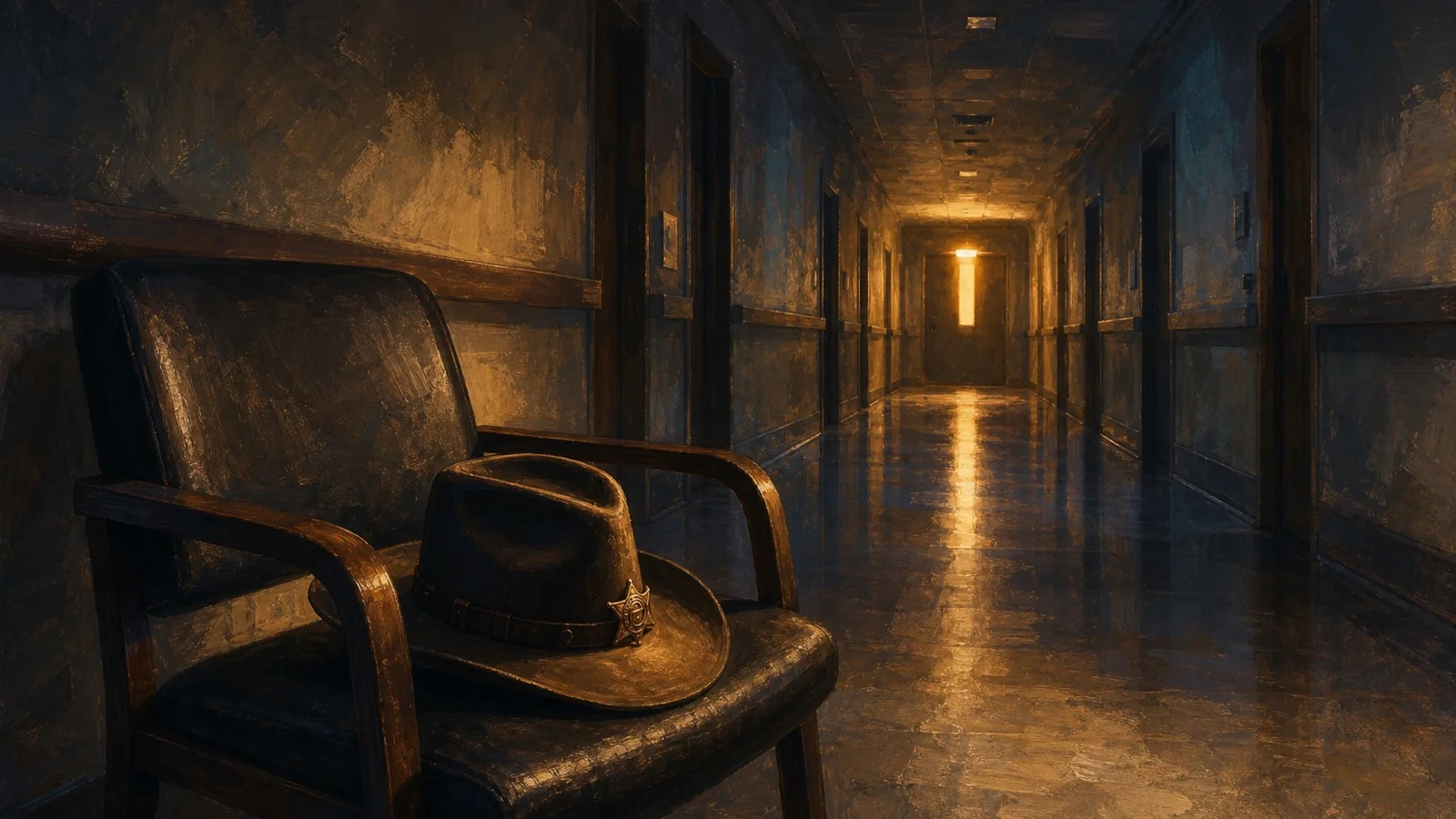
Marshals Season 1 Episode 12 is the penultimate-hour that earns its title twice over. A Jalisco cartel operation built on top of Broken Rock is the literal devil at the door, but the episode’s lasting weight comes from the quieter devils: a cancer diagnosis delivered to a near-empty office, a suspended marshal standing bareheaded without his star, and a widower on his dead wife’s porch deciding whether land he no longer recognizes as home is still worth holding. Every major thread in the season — the tribal sovereignty fight, the team’s Clegg-era fractures, Belle’s financial spiral, Kayce’s inheritance grief — lands at a penultimate inflection point here, and the writing earns most of them.
Double G’s Death Ripples Through the Ranch
The cold open confirms what the previous episode left unresolved: Garrett (Double G), the Alabama vet who found unexpected purpose at East Camp, died from fire-related oxygen damage two hours before the episode begins. The marshals give him a bar sendoff with PBR and a Roll Tide flag, which the show treats with the right mix of warmth and absurdity. “It’d be poetic if it weren’t so damn tragic,” one of the team says, and the line captures the episode’s tone exactly.
The death accelerates two separate storylines. For Kayce, it collapses the case he had been building in his own head for staying on at East Camp. The ranch was going to be Garrett’s salvation. Instead, in Kayce’s words, “it put him in the ground.” That admission opens the door to a serious conversation with Dolly Weaver about whether Kayce’s connection to the land is grief and duty dressed up as identity, or something he actually wants. “Want isn’t a concept I’m familiar with,” Kayce tells her, and the show lets the line breathe without underscoring it. By the episode’s final scene, Kayce is sitting across from Dolly’s father, talking terms, which is not a clean resolution so much as a man testing whether change is even possible.
For Miles, Garrett’s death is one grief too many arriving too fast. The news of his childhood friend Sabrina’s fentanyl overdose lands immediately after, and the episode trusts the actor to carry both without collapsing the scenes into one long mourning sequence. Sabrina was a wicked fancy shawl dancer, Miles tells Kayce; she wore a purple outfit his aunt made for her. That specificity does more than any longer speech could.
The Cartel Case Cracks Open on Broken Rock
The fugitive operation that opens the episode’s procedural thread — a carjacker named Cody Raynor running from a Livingston apartment complex — turns out to be a structural pivot. Raynor’s truck contains roughly a million dollars in cash and a gun that ballistically connects to a Jalisco-Sinaloa shootout in Eagle Pass, Texas. Once the team traces his phone to a derelict property on Broken Rock, they find a fentanyl stash large enough, in Calvin’s words, “to poison the whole reservation.”
The show is careful about the geometry here. Raynor was not a cartel defector — he was a foot soldier running a distribution hub through a connection to Hector Diaz, a Mexican national who married into the tribe through an elderly woman named Josie Marsh. “Old woman just wanted her own plot of land,” Chairman Rainwater says when the marshals notify him. “Opened the door to a plague.” The cartel playbook the episode describes — send someone with a clean record into new territory to build a local network — gives the threat a specific shape rather than leaving it as vague organized crime.
The lab results confirm what the episode already made inevitable: the fentanyl batch links to the recent overdose spike on Broken Rock, and to Sabrina specifically. The revelation lands about thirty seconds after Miles has finished describing her dance outfit.
Harry Stands Them Down, Miles Goes Rogue Anyway
DEA Agent Dendry arrives to collect Raynor’s cash and immediately poisons the room. Two weeks of DEA surveillance on Raynor evaporated when cartel retribution found him in county custody, stabbed 27 times. Dendry tells the marshals the trail they opened belongs to the DEA and instructs them to stay away before they cause any more problems.
Marshal Gifford sides with Dendry, sidelining the team with a bluntness that reads less like institutional caution than face-saving. “Harry’s only saving face for the DEA,” Calvin says afterward, and the show does not really argue with him.
Miles stops showing up for work. By the next morning, his vehicle GPS places him on Broken Rock rather than at home, and he is not answering his phone. Maddie comes to the office looking for him. The team pieces together the obvious: he is hunting Hector Diaz on his own, outside orders, and likely inside cartel territory.
The rescue operation that follows is the episode’s tightest sequence. Belle and Calvin track Miles’s coordinates onto the reservation, arrive to distant gunfire, and pull their unit together before the situation becomes a body count. Miles has already found Guzman. He is standing over Hector Diaz with a weapon when Kayce reaches him.
What follows is the scene the episode has been building toward since the bar sendoff. Kayce tells Miles that killing Diaz will not honor Sabrina — it will just attach Diaz’s face permanently to every memory of her. “Don’t let him rob her memory from you,” Kayce says. Miles lowers the gun. It works because Kayce has earned standing to say it: he is the only person on the team who has come close to that same line, and Miles knows it.
Calvin Suspends Miles — Then Reveals the Diagnosis
The professional fallout is immediate. Calvin takes Miles’s badge and weapon, hands him a suspension pending further notice, and tells him plainly that the operation put the whole unit at risk. “You did what was reckless,” he says. Miles’s response — “like you’ve never gone outside the lines for what’s right” — lands without Calvin denying it. “I keep telling you, don’t use me as a road map,” is all he offers back.
What follows is the episode’s most quietly effective scene. Belle comes into the office to check on Calvin, finds him already depleted by the suspension decision, and something shifts. Calvin starts to deflect, then stops. “You ever heard of a Pancoast tumor?” The diagnosis comes out in fragments: pain in the neck and shoulder he has been carrying for weeks, a tumor at the top of the lung, and then the word neither of them has said yet. “It’s a symptom of cancer,” Calvin tells her. “Wasn’t really scary till I said it out loud just now.”
Belle’s first instinct runs toward logistics — oncologists, treatment plans, her husband’s connections. Calvin interrupts before it gets there. “Right now, I just want to feel like I’m not staring this down alone.” She answers: “You’re not.” The scene is two lines and a held shot, and it is the best thing the episode does.
Gifford uses the same stretch of the episode to offer Andrea the D.C. position she was originally exiled from Montana for wanting. The offer arrives on the worst day the unit has had in weeks. Andrea’s non-answer is the most honest response available.
Rainwater and Kayce on the Nature of Losing Ground
The episode’s philosophical throughline crystallizes in the conversation between Kayce and Rainwater after Guzman’s arrest. Rainwater catalogs what Broken Rock is absorbing — toxins, trafficking, cartels — and reaches for the title image directly: “More and more, my home has become a beacon for the devil. The toxins, human trafficking, cartels — we’re under attack from all sides. The battles never end.” Kayce answers with a line about his father: relentless when it came to protecting the land. Rainwater’s reply is more useful than comfort. “Had enough losses to see the wisdom in living to fight another day.”
Both men are circling the same question from different sides. Rainwater’s sovereignty fight is being complicated by the cartel discovery in ways a single hostile senator could exploit — the tribe defending its right to block the mine while explaining why a drug hub operated on tribal land. Kayce’s question is personal rather than political, but the show draws the parallel cleanly: holding onto something because you always have is not the same as knowing what you want.
The final porch scene — Kayce, Dolly, and the elder Weaver talking terms over East Camp — echoes the Yellowstone sale without making the connection heavy-handed. Weaver mentions he took over his family’s firm thinking he would “blaze my own trail, but trying to carry out my father’s legacy nearly sank me.” He tells Kayce he will never be free until he sheds everything weighing him down. Whether that is good advice or convenient salesmanship the episode does not decide for you.
Pros
- Calvin’s cancer reveal earns its weight by arriving through genuine exhaustion rather than dramatic convenience; the two-line resolution with Belle is the episode’s best piece of writing.
- Miles’s confrontation with Kayce over Hector Diaz uses the show’s established character history to make the intervention feel earned rather than formulaic.
- The Jalisco cartel investigation builds its procedural logic tightly, with each discovery — Raynor, Diaz, Guzman, Sabrina — paid off in a single episode arc rather than stretched across weeks.
- Rainwater and Kayce’s conversation recontextualizes the mine plot and the ranch sale as the same problem at different scales.
Cons
- Andrea’s subplot — the Gifford lunch, the dignity cost of reliving the Clegg kidnapping, the D.C. offer — gets less real estate than it deserves. Dropping a career-altering offer on a character the same day her unit fractures needs more than one beat.
- Belle’s gambling debt and overdue security clearance resurface briefly and then park; both feel underloaded against the episode’s heavier arcs.
- Raynor’s death in county custody is announced rather than shown, and the cartel’s reach inside a jail is treated as a passing shock rather than the operational threat it implies for everything that follows.
What This Sets Up for E13
The finale has Miles suspended and separated from the team, Kayce on the verge of selling East Camp, Calvin carrying a diagnosis his colleagues do not yet know about, and Broken Rock under simultaneous pressure from the mine fight and a cartel network that lost a stash house but not its leadership structure. Gifford has boxed the marshals out at the worst moment. Andrea has a standing offer to leave Montana. The season’s central question — whether Broken Rock can be defended on multiple fronts at once — will need an answer. So will Calvin’s.
Rating: 8.2/10
Universe Context: The Yellowstone Connection
Marshals sits inside the Yellowstone universe, and “The Devil at Home” is one of its most direct invocations of that inheritance. The Weaver porch scene explicitly references the Yellowstone sale in dialogue, with Kayce noting that his father’s last act on that land was to do “whatever the Yellowstone needed” — and that it “robbed him of so much.” East Camp is framed here as a smaller-stakes version of the same transaction, the same question about whether loyalty to land is identity or inertia.
Thomas Rainwater’s continued presence gives the show its most direct bridge to the original series. His appearance here is not nostalgia — it is a character doing coherent work, running a sovereignty campaign while managing a cartel discovery on tribal land, and the episode gives him room to be right and limited at the same time.
Viewers coming to Marshals from Yellowstone will recognize the series’ interest in what Western land means to the people who lose it. The show earns that theme through its own characters rather than relying on inherited weight.
More episodes from Marshals — Kayce Dutton after Yellowstone, episode by episode. Jump to any episode in the season:
Where to go next
Reviewed by Mira Vance · QuizFandom Editor & Lead Reviewer. Every rating is an honest per-watch assessment from the desk that also writes the quizzes — not a press release rehash.