Mayor of Kingstown S2E2 Review: Mike Tries to Rebuild Order From a Massacre
A public slaughter forces Mike to treat prison hierarchy as civic infrastructure, while Iris and Kyle expose the human cost.
Season 2 Episode 2 begins with Jeremy Renner’s Mike McLusky narrating the show’s governing equation in its bluntest form: wars inside mean wars outside. The prison riot has not ended anything; it has broken the chain of command that kept Kingstown’s violence legible. This hour makes that abstraction concrete through a house full of bodies and a morally grotesque plan that only sounds insane until every other option looks worse. It is an episode about leadership as containment, and about what a town will tolerate when containment is the best word it has left for peace.
The massacre proves the prison is running the streets
The opening massacre is staged less as surprise than confirmation. Mike’s voiceover separates prison violence from street violence by who gets hit: inside, the combatants at least know the war they are in; outside, the method is to make innocent people part of the message. A 911 operator hears a victim die, a gunman threatens responding police, and officers arrive after the violence has already passed from drive-by attack into execution.
When Mike reaches the scene, Ian and Evelyn are not asking whether this is bad. They are asking what kind of bad it is. Ian initially frames the attack as the predictable result of giving Bunny’s side room to operate, but Mike pushes back immediately. Bunny did not order this, he says; the disorder comes from the vacuum inside. Hugh Dillon’s Ian has the practical cop’s objection: if there are no leaders inside, how can anything come from inside? Mike’s answer is the episode’s best diagnosis. When there are no leaders, everyone tries to become one.
That logic gets sharper when an officer finds a dropped weapon with modifications that Ian reads as more than ordinary street hardware. Mike follows a blood trail into the alley instead of waiting for SWAT. The wounded Crip he finds there gives the hour its street-level autopsy. The attack was retaliation for civilians being hit elsewhere, including an eight-year-old sister at a bus stop. He describes a war with no dispatcher, no real command, and alliances forming because anger has outrun structure: Crips tied to Mexicans, Bloods tied to Aryans, everyone “just warring.”
The scene works because Mike does not pretend that the wounded shooter is innocent. He tells him two dozen people are dead next door and that the war will keep expanding to churches, schools, and mothers’ workplaces if nobody stops it. But the man is also useful because his dying account confirms Mike’s worst fear. Nobody ordered the massacre. That is the problem. Kingstown has moved past corrupt order into unmanaged violence, and unmanaged violence has no incentive to spare civilians.
The McLusky house cannot hold what Mike brings in
Before Mike can solve Kingstown’s public emergency, he has to park his private one somewhere. Iris, played by Emma Laird, sits beside him insisting she does not need a babysitter. Mike answers with the grim practical truth: she needs witness protection, and since that has already failed, she needs to leave. Her reply, “I just need a kind world,” is one of the episode’s plainest lines. Mike does not mock it. He simply says those do not exist.
The drop-off at Kyle and Tracy’s house is almost comic in its bad judgment until the fear catches up with it. Taylor Handley’s Kyle understands exactly who Mike has brought into his mother’s living room: the woman tied to the office murders and to Milo. He does not want her near his pregnant wife or Mariam, and he is not wrong. Mike’s defense is equally true and less defensible. Iris has been put through the worst kind of trouble, none of it her fault, and he has no safe place that does not immediately become somebody else’s risk.
Mariam’s response is the moral counterweight. Mariam (Dianne Wiest) gives the scene a small, unsentimental grace. She hears that Iris is in trouble, asks what kind, and accepts Mike’s answer that it is the worst kind. Tracy offers the spare room. Iris introduces herself, then admits the name is not hers because she made it up. Identity, for Iris, is not a stable biography; it is something assembled under threat.
The house still cannot save her. After Mike’s plan with the gang leaders, he returns to find Iris gone. The cut is brutal because it confirms what he told her in the car. Kingstown is a town, not a city, and nothing stays hidden in a town. Iris does not run toward safety. She goes back to Milo’s world because she has nowhere else to imagine herself belonging. Her final scene, entering a dark space and repeating that she has no home, is answered by a man telling her she is home now. The mercy of the line is false, and that falseness is the point. Predators in Kingstown know how to make captivity sound like shelter.
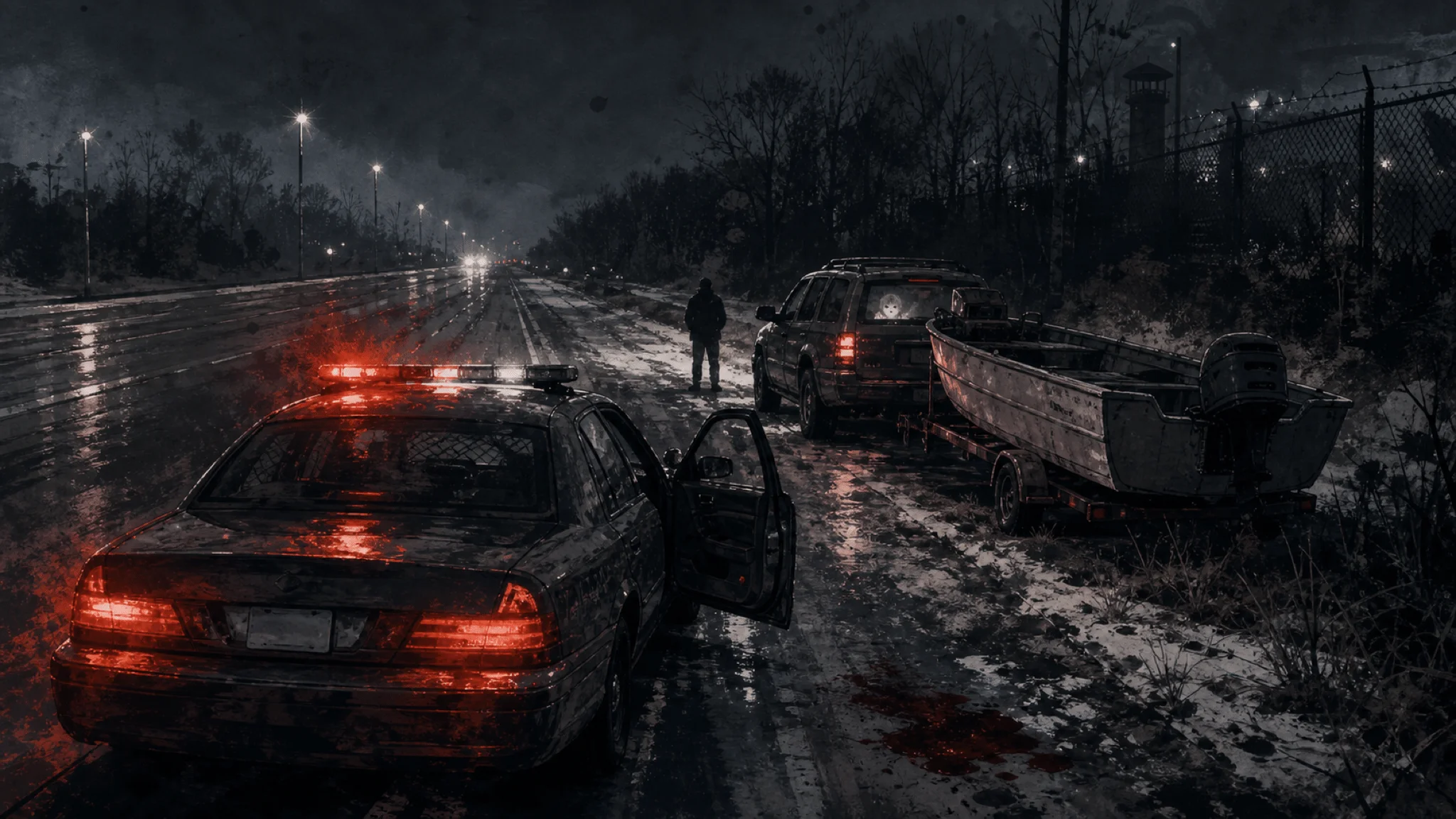
Kyle’s roadside story is the other half of the domestic failure. He is upstate, away from Mike’s direct orbit, but Kingstown follows him through training, temperament, and trauma. His partner Morass tailgates a Jeep towing a boat, hits the siren, then pulls the driver over when the vehicle speeds up. Kyle calls him an asshole and tries to slow the procedure down, telling Morass to wait until he is in position. Morass does not. The stop erupts into gunfire, Morass goes down, Kyle reports multiple gunshot wounds, and a baby cries nearby as he loses control of his location over the radio.
That sequence belongs to the same argument as the gang summit. Institutions train men to move quickly, dominate space, and assume threat. Sometimes those habits save lives. Sometimes they walk directly into gunfire.
Mike buys order by handing Bunny over
Mike’s meeting with Bunny is the hour’s central negotiation because both men are right about different pieces of the same disaster. Bunny (Tobi Bamtefa) carries an anger that is political before it is personal. He denies ordering the massacre and insists the guards are exploiting the chaos inside: turning backs during stabbings, letting bodies rot, throwing men out with the trash. Mike needs Bunny to stop the street war. Bunny needs Mike to admit that prison staff are not neutral referees.
The solution Mike invents is monstrous and coherent. He calls Evelyn and asks what would happen if he could deliver the leaders of all four gangs. He needs them arrested on firearm possession, sent to the penitentiary rather than county, and later released when the inside has chosen new leadership. Evelyn hears the madness clearly: arrest the leaders of the worst prison gangs so they can restore a leadership structure in prison. Mike says yes because the inside runs the outside, and at that moment nobody runs the inside.
The plan is operational, not heroic. Mike goes to Kareem, newly given temporary control of the prison after the warden’s failure, and pitches the same arrangement. Kareem (Michael Beach) has lived through the riot but refuses to call that survival. The people rebuilding order are themselves unprocessed casualties of the riot.
At the rendezvous, Robert’s tactical presence makes mediation feel like occupation. He has men on rooftops and in a warehouse, reads the gang lookouts before they can read him, and keeps escalating the temperature Mike is trying to lower. Bunny arrives, then the other leaders, including a representative from Grand Rapids because nobody local can speak for that faction. The contempt among them is immediate. Mike’s job is to create a narrow corridor where mutual self-interest can survive long enough to be useful.
Kareem explains what the prison can and cannot provide: patrols will resume, conflicts will be interrupted, but food remains bagged because work programs are suspended and the facility lacks the means to operate normally. Bunny pushes on the abuses inside, asking whether the guards are finished with their payback. Carney answers with open menace, and Mike has to shut him down. Mike can arrange bodies in the right rooms, but he cannot cleanse the guards of revenge or the inmates of fury.
Then Evelyn arrives with the legal blade. The leaders are being arrested for firearm possession; when there is peace in the valley, charges will be dropped. For Bunny, peace must mean everybody. For the others, it means getting their houses together inside quickly. Bunny calls it ice cold, and it is. Mike asks him to name another way, and Bunny cannot. But the cost of being unable to name another way is visible when Bunny orders Mike to stay and watch him get down on the ground. Trust was required for the plan to work. Humiliation is the receipt.
The final prison image makes that receipt feel prophetic. Bunny enters Tent City on crutches as inmates cheer, then warns the men staring at him that if they prayed to God, they would not be staring at the devil. It is a great entrance and a bad omen. Mike has restored hierarchy by importing power back into the cage. The streets may quiet. The inside will now have to absorb the violence required to make that quiet possible.
What this episode argues
Season 2 Episode 2 argues that Kingstown is not failing because it lacks authority. It is failing because every form of authority has become indistinguishable from coercion. The police need gang leaders to stop civilian slaughter. The prison needs inmate hierarchy to make confinement governable. The DA needs fake charges to create real order. Mike needs Bunny’s trust, then spends it in public because the alternative is more dead people at bus stops and in houses.
That is why the Iris and Kyle material matters beside the gang plot. Iris shows what happens to a person who cannot be safely housed by any institution or family. Kyle shows what happens to someone who leaves the city on paper but carries its instincts into the next jurisdiction. Every system generates the next wound, then asks Mike to keep the wound from becoming a headline.
Verdict
“Staring at the Devil” is stronger and more focused than the season premiere because it treats the riot fallout as a concrete civic problem. The mass shooting, Bunny negotiation, Evelyn workaround, Kareem handoff, and Tent City return all move through one clear question: can a broken hierarchy be rebuilt without becoming another kind of violence? The answer is no, but everyone accepts the bargain anyway, and the writing earns that.
A few subplots — Iris orbiting Milo, Kyle drifting in Michigan — feel like overflow rather than fully entered storylines, but those threads give the episode its necessary human pressure. Mike can talk all day about order, captains, and ships in port. The bodies in this episode keep answering him from the places where metaphors stop helping.
Rating: 8.4/10
More episodes from Mayor of Kingstown — Season 2 — The prison-town drama widens — Mike McLusky after the riot. Jump to any episode in the season:
Where to go next
Reviewed by Mira Vance · QuizFandom Editor & Lead Reviewer. Every rating is an honest per-watch assessment from the desk that also writes the quizzes — not a press release rehash.