Mayor of Kingstown S2E5 Review: Bunny Sees the Course Is Gone
A prison-transfer hour pushes Mike's promises into debt as Bunny starts measuring survival by what he can still control.
Mayor of Kingstown S2E5 watches a system lose people on purpose. The riot deal has curdled into a bureaucratic shell game, and Mike McLusky cannot broker peace if he does not know where the men he promised to protect have been sent. Bunny is no longer a voice on the street or a bargaining partner across a desk; he is inside Anchor Bay, surrounded by other displaced power brokers and watched by officers with their own agenda. The hour works best when it treats Mike’s authority as a rumor everyone is learning to distrust.
Rhonda names the failure before Mike can manage it
The first real scene puts Mike’s office under pressure from the outside world he tries to translate into closed-door favors. Families are waiting for information. A woman says her husband was moved out of Tent City in the middle of the night, and even his lawyer cannot find him. Rebecca tries to keep order, but Rhonda walks in with the one credential that matters here: she is Bunny’s cousin, and she will not “wait with the rest.”
That phrase carries the hour because the question underneath every scene is who gets the courtesy of being tracked. Mike, played by Jeremy Renner, tells Rhonda he did not lose Bunny. She refuses the technical defense. Bunny, Rafael, and the other men were moved into four different locations after Tent City, and that may be accurate, but accuracy does not feed a family, protect a shop, or keep a gang structure from collapsing in the street. Rhonda’s accusation is blunt because the situation is blunt: Mike made a deal he cannot yet prove still exists.
Her best line is more than an insult. When she calls his posture “white savior” nonsense and tells him to call the thing what it is, she punctures the moral costume around his job. Mike has always survived by making power sound intimate. He knows who to call, which guard owes him, which prisoner can be reached, which threat will land. Rhonda forces him to hear what that sounds like from the other side once the calls stop working. Bunny’s shop is not a storefront in the abstract; it is a neighborhood pressure valve, and if Bunny stays buried, the danger walks from his people to Mike’s door.
The office confrontation hands off cleanly to Mike on the phone with Carney, trying to reconstruct the map. Carney cannot even locate himself inside the prison chaos. He has the one-eyed Blood leader and the Aryan Brotherhood leader, but Mike needs Bunny because Bunny is the hinge. Without the leaders’ locations, there is no management, only reaction. The whole hour sits inside that gap: Mike’s city is held together by informal knowledge, and the state has just scrambled the board.
Anchor Bay changes Bunny from partner to prisoner
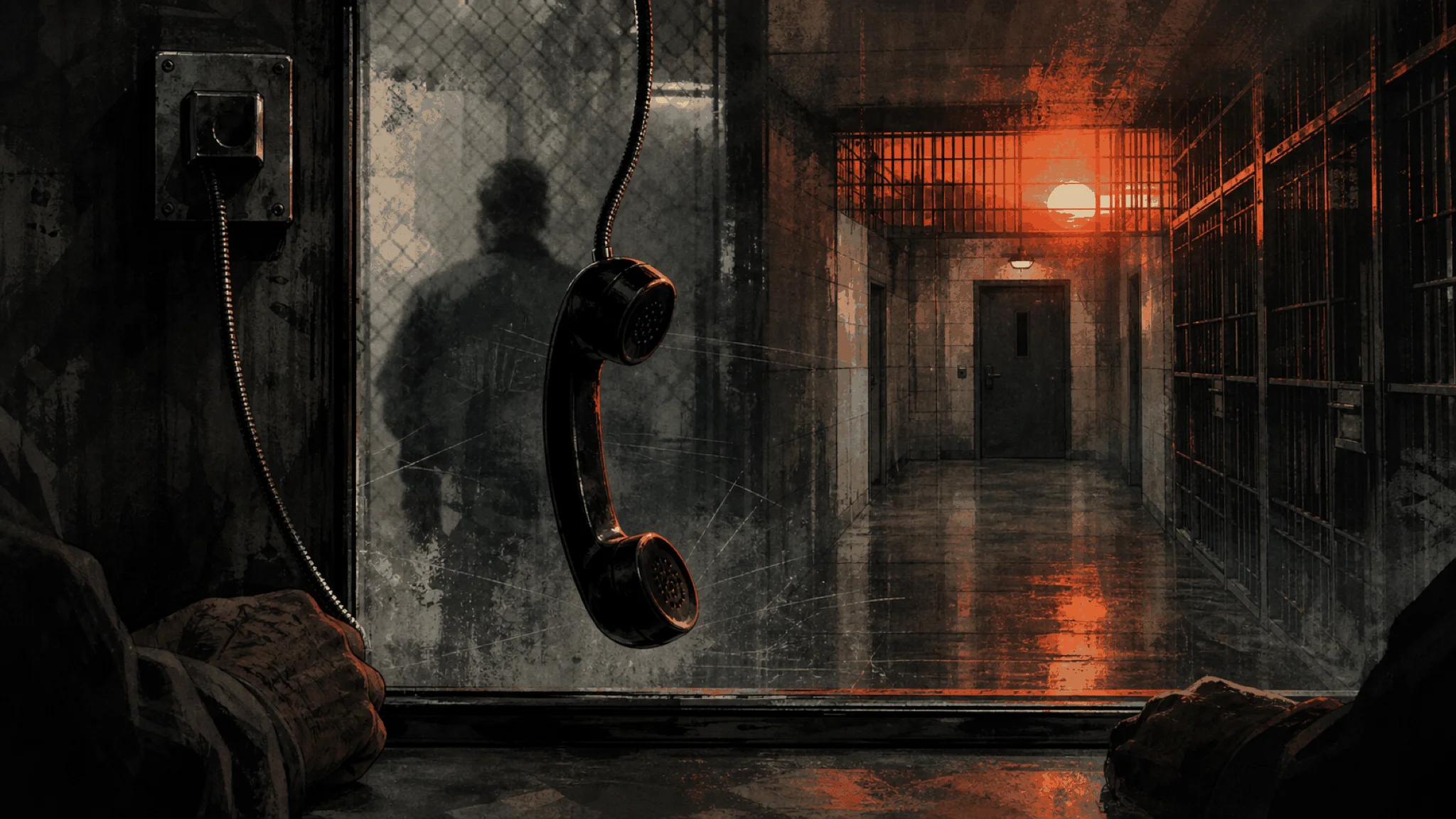
Bunny’s first Anchor Bay sequence gives the episode its strongest prison material because it lets him read the room before he tries to move it. Bunny (Tobi Bamtefa) carries a smaller, colder energy than the street scenes usually allow. He finds Big Hush, asks about his crew, and learns the new logic quickly: “we all your crew now,” because the transfer has compressed Black inmates into a single survival bloc. The line is not sentimental. It is arithmetic.
Rafael’s arrival sharpens the point. Bunny thought Rafael might already be out; Rafael thought Bunny would be out too. Instead, they compare how long they have been inside and recognize that the “generals” have been concentrated in one house. Bunny tries to find strategic purpose in that. Rafael calls it hope. The distinction matters. Bunny still thinks like a negotiator, looking for design. Rafael is already closer to the truth of Kingstown: neglect and malice often produce the same result.
The yard conversation widens the hour’s racial politics without turning into a speech. The men talk about the Aryan Brotherhood, the correctional officers behind them, and a line that is not blurry because it does not exist. When a prisoner drops on the yard and the response comes as procedure - “con down,” med team, extraction - the show places physical collapse beside institutional vocabulary. The body is falling apart; the system is naming the category.
Then Kareem enters with his “state of the union,” and the scene turns into a grim lesson in failed authority. He tells the former Tent City inmates that he does not care about them, that there is no relationship, no past, no future, only the present arrangement. From a management perspective, it is probably honest. From a prison-politics perspective, it is gasoline. He threatens to answer anything they bring with ten times the force, then leaves them to absorb the message.
Bunny’s response is immediate: Mike is done. He says they will run things the way they run things now. That is not a tantrum. It is the first open sign that the McLusky deal has lost legitimacy inside the walls. Bunny has waited, listened, taken phone calls, and calculated. Kareem’s speech tells him the formal system does not recognize the deal. Mike has not delivered the informal one. Between those failures, Bunny begins charting his own course.
The bonds and Kyle’s conscience make Mike’s crisis personal
While Bunny is learning the shape of his confinement, Mike chases the other problem left by the riot: Milo’s bonds. Ian Ferguson (Hugh Dillon) has traced the violence around the pawnshop and the murdered woman back to the only kind of person who would kill for those bonds - someone who knows how to flip them, or the man who stole them in the first place. Mike lands on the number with visible dread. Fourteen million dollars is reason enough for Milo to remain in Kingstown.
Kyle McLusky (Taylor Handley) wants a simpler hierarchy of emergency. Let Milo take the money and leave; find Bunny; get the old arrangement working again. His plea reads as emotional because it is almost sane. Kingstown has so many fires that prioritizing revenge against Milo feels like vanity. Mike’s answer shows why he cannot let it go. Milo did not only steal money. He “broke something.” Mike does not define the thing because he does not have to. It is the thin myth that there are rules beneath the corruption, that some violations still require an answer.
Kyle’s later scene with Tracy plays as the episode’s quietest and most necessary counterweight. He has been cleared for duty after the dash-cam review, but the news does not free him. It opens a question he cannot answer. Does he want to return to KPD? Does he want to work with Mike? What kind of father can he be if he no longer knows what is right? Tracy tells him the decision needs to be theirs and says he is a long way from ready. The tenderness of the exchange does not soften the series so much as clarify its damage. Kingstown does not only kill people; it makes basic moral instruction feel fraudulent.
That texture is why the missing-bonds scene plays as more than plot mechanics. Mike tells Ian and Stevie to get the bonds out of police lockup because Milo’s people strung a woman up in daylight without witnesses. The next day, Stevie reports that the bonds are already gone. Mike’s fury is practical, but the deeper injury is that he has lost the one piece of leverage he thought might buy Bunny’s release. He tells Stevie to pull the cameras, find who took the bonds, and make the tapes disappear. Even in panic, Mike’s reflex turns to evidence management.
The hour cuts that corruption with Ian’s visit to Charlie Pickings, where burgers become the price of information. Charlie gives him a body in Ohio, a confession that may help families and may also become the “something” Mike can offer the DA. The scene plays uneasy because Ian frames it as closure while using Charlie as an archive of bodies. Kingstown can turn even confession into currency.
What this episode lays bare
S2E5 shows how a broken deal does not vanish; it mutates. Mike promised freedom, protection, money flow, and order. When freedom stalls, he offers Bunny a way to earn inside. When protection fails, he checks on Rhonda’s shop and gives her his number. When the legal route jams, he looks for a body in Ohio to trade upward. None of those moves are meaningless. None of them are enough.
The hour’s most revealing exchange comes when Rhonda asks why Bunny trusts Mike and why Mike trusts Bunny. Mike cannot answer either question. That silence carries the show’s social theory in miniature. Trust in Kingstown has nothing to do with affection or ethics. It is repeated utility under pressure. Bunny trusted Mike because Mike had delivered before. Now the delivery has stopped, and the old bond becomes another exposed liability.
Milo’s scene with Joseph runs on the same principle, but without Mike’s need to sound decent. Milo (Aidan Gillen) stays quiet as he counts Joseph’s failures: the man killed, the woman killed, the money still missing. Joseph says he tried. Milo says he failed and calmly takes the problem back into his own hands. The scene does not need a visible spectacle to make its point. In Milo’s world, incompetence does not earn forgiveness because apology has no value unless it recovers the asset.
By the time Bunny is dragged from Carney’s custody by Davidson and other officers, every thread has tightened. Bunny tries to resist being taken to solitary because he recognizes the “kill box” for what it is. Carney objects that Bunny was not resisting, but his objection has no power. The officers beat Bunny, remove him from the floor, and tell him Gunner wants him out of the way for a move. Then Carney calls Mike, Mike calls Kareem, Kareem does not answer, and screams cut through the prison as the alarm starts. That ending plays not as a cliffhanger built on mystery but as the sound of every deferred consequence arriving at once.
Verdict
Watch this hour for what Mike refuses to see about himself. The episode never needs a major shootout or a clean revelation; its dread comes from process - inmates moved without accountability, evidence logged and stolen, medical trauma rewritten, confessions traded, family fear rerouted into institutional language. The machinery keeps shrinking events on paper while enlarging them in the street and the yard, and S2E5 holds that contradiction without flinching.
This is not a flawless episode. Milo’s bond plot still operates partly as a thriller engine beside the more textured prison material, and Charlie’s confession scene arrives with more utility than emotional depth. But the best work runs deep: Rhonda’s refusal to let Mike narrate failure as logistics, Kyle’s recognition that fatherhood requires a moral clarity Kingstown has stripped from him, and Bunny’s slow pivot from waiting on Mike to acting without him. By the final alarm, the dread has been earned. The mayor is still making calls. The city has stopped waiting for him to finish.
Rating: 8.4/10
More episodes from Mayor of Kingstown — Season 2 — The prison-town drama widens — Mike McLusky after the riot. Jump to any episode in the season:
Where to go next
Reviewed by Mira Vance · QuizFandom Editor & Lead Reviewer. Every rating is an honest per-watch assessment from the desk that also writes the quizzes — not a press release rehash.