Mayor of Kingstown S2E4 Review: Bunny Puts Mike on Borrowed Time as Milo's Bonds Surface
Tent City starts emptying, Mike's promises narrow, and one bag of bearer bonds reopens Milo's reach across Kingstown.
Mayor of Kingstown Season 2 Episode 4 is built around a promise losing its legal shape before it loses its moral one. Mike McLusky (Jeremy Renner) told Bunny Washington and the other gang leaders that their stay in Tent City would be temporary, strategic, and useful. Now the Department of Corrections is moving bodies before the deal has paid out, and Mike has to explain a bureaucracy he does not control to men who can only see the cage they are still inside. At the same time, Milo’s buried bonds reenter the town through the worst possible route: a working man with a shovel, a frightened wife, and a fantasy of sudden money.
Bunny Learns the Deal Can Move Without Him
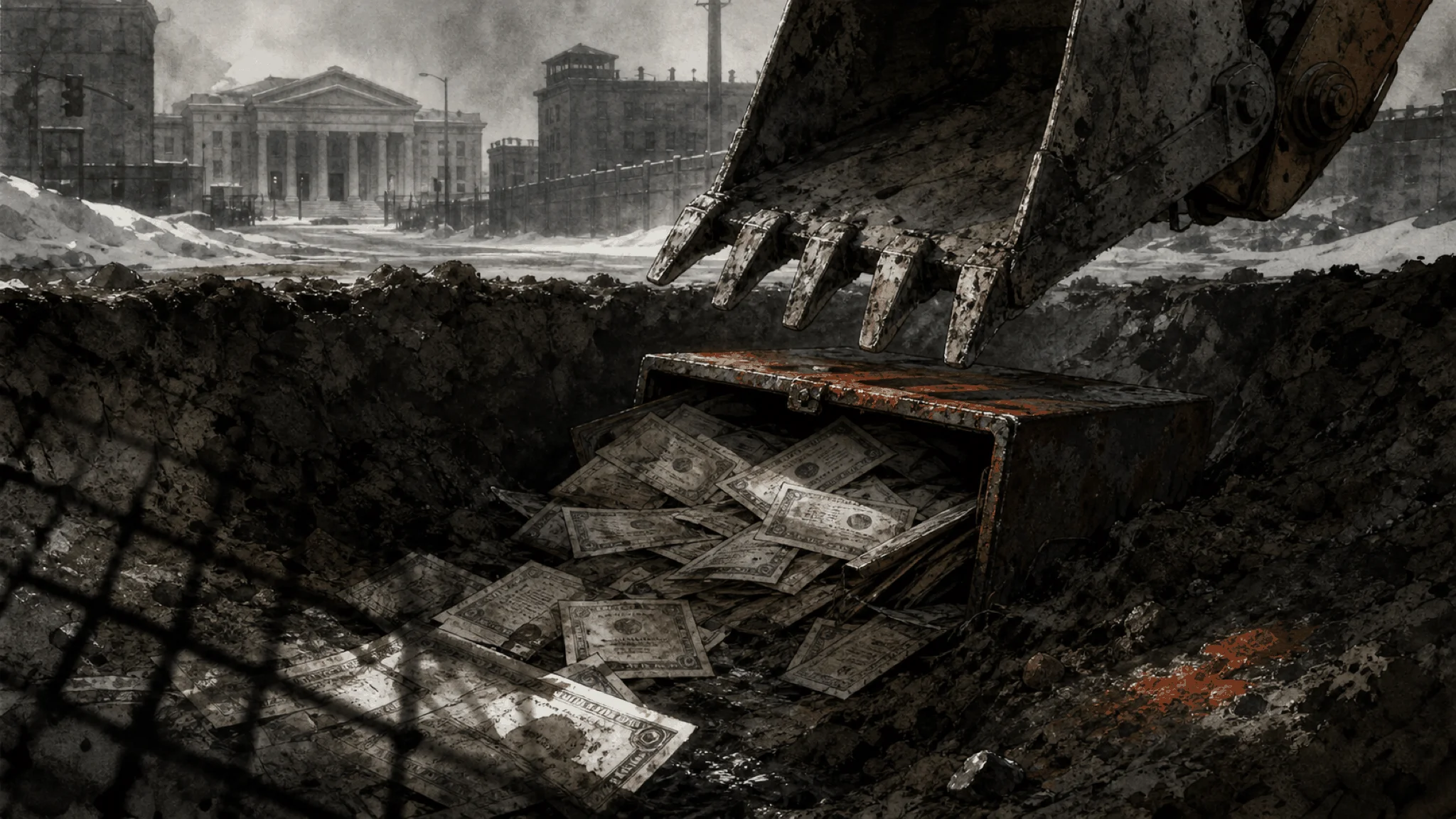
The episode opens with a construction worker hitting metal at a work site and lying to the people around him by calling it trash. That small deception carries the hour’s rhythm. Kingstown is full of men finding pieces of hidden systems, then pretending they understand the price. The worker has found the bearer bonds Milo sent Mike after last season, but he has no idea that the paper in his hands belongs to a criminal economy already soaked in blood.
From there, the episode moves to Tent City, where Bunny (Tobi Bamtefa) watches inmates get called out for transfer. Carney tells him the state is spreading men across facilities, and Bunny immediately understands what the move means. It is not comfort, not progress, and not the next step in Mike’s arrangement. It is dispersal. It is the state reclaiming control of the board by scattering the pieces before anyone can force a public accounting.
Bunny’s phone call with Mike has the acid humor and panic that make their partnership so volatile. Mike tries to calm him, guessing that the transfer is some official flex after a fight or some “asshole in Capitol Hill” making a statement. Bunny hears only delay. His line about being transferred only to his own bed cuts through Mike’s explanations because it names the original bargain in the simplest terms possible: Bunny took control inside, and Mike was supposed to get him out.
That pressure intensifies when Casper pulls Bunny aside and says what others are starting to think. Mike is outside, Bunny is still in the cage, and the men inside are being handled like cattle. Bunny defends Mike, but the defense is no longer automatic. He has not forgotten why he trusted Mike. He also knows that a leader who waits too long starts looking led.
Mike’s later visit to Tent City is the episode’s strongest negotiation because neither man can afford to lie cleanly. Mike says the DA will sign the papers, the judge will stamp them, and Bunny will be back in the free world. Bunny answers with the material facts of captivity: people are being shipped out every day, the place will be torn down, and he is “pissin’ in a trough” while being told to stay cool. When Mike suggests putting Rafael on point, Bunny rejects it because authority cannot be delegated while he is still present. As long as he is there, he is point.
The warning he gives Mike is not abstract. People inside are already looking at Mike sideways, and Bunny says he cannot stop what will happen if Mike does not fix it fast. That is the real crack in the season’s peace. Mike’s power depends on reputation, speed, and belief. This episode shows all three running thin at once.
Mike Finds Every Office Passing the Buck
Mike spends much of the hour moving from one official pressure point to another, and each stop teaches him the same lesson with a different tone. At the courthouse, a lawyer tells him Evelyn is buried in the aftermath of the riot and the massacre on 23rd. The DA’s office is sharpening knives, the ACLU and DOJ are looking for someone to blame, and the temporary moral logic of the Tent City deal has run into public liability.
Evelyn does not deny that deals were made. She just refuses to treat Bunny’s problem as the emergency at the top of her desk. Her argument is bureaucratic and self-protective, but it is not empty. The riot deaths, federal pressure, the DA’s future, and the SWAT fallout are all closing in. Mike’s answer is equally grounded: the deal put his name in circulation, and moving the gang leaders before release risks more bodies and more chaos. The scene works because both characters are right about different parts of the same failure. Evelyn sees exposure. Mike sees consequence.
Kyle McLusky (Taylor Handley) gives the hour a more private version of that same helplessness. Before he enters Mike’s new office, he visits Mitch’s grave and admits he does not know what to do. He is having a child, naming him after Mitch, and feels as if he is already failing. Later, he asks Mike for a real job, not a chore. He has been waiting at buses and train stations for Iris, and idle hands make him feel worthless.
Mike does not give Kyle a clear place in the machinery. That absence matters. In Season 1, the family business always looked rotten, but it also had tasks, phones, favors, and a strange chain of command. Here Kyle is asking for purpose in a system that has already consumed two brothers in different ways.
Kareem Moore is Mike’s third stop, and his refusal is sharper because it comes from a man who has already paid for trying to survive the riot’s aftermath. Mike asks whether Kareem knew about the transfers and pushes him to keep Bunny and the other leaders in Tent City until their releases are signed. Kareem hears command where Mike wants urgency. He reminds Mike that he is not the mayor to him, that he does not work for him, and that after being punched in the face he is making his own plans.
Mike’s counterargument is the episode’s clearest statement of scale: lose Bunny, lose the generals; lose the generals, lose the prison; lose the prison, lose Kingstown. He even brings Kareem’s child into it, warning that there will be nowhere safe for him to go if this collapses. It is manipulative, but it is also the kind of truth Mike specializes in. He does not need people to like his leverage. He needs them to recognize that the disaster he is describing has already happened once.
The Bonds Leave Milo’s Shadow
The bearer bonds plot gives the episode its grim joke: a fortune can be worthless if the wrong person finds it. The construction worker Horace discovers that the paper may be as good as money, then tries to convert it without understanding that its value is inseparable from Milo Sunter (Aidan Gillen). He tells someone the bonds could still be recovered if the issuer remains active, and that even a tenth of their worth would make them millionaires. The fantasy is not greed alone. It is escape math.
Horace brings the bonds to Colton, trying to trade fifty thousand dollars’ worth for ten grand. Colton mocks the old-timey bank notes, then gives him the only decent advice anyone offers him: burn them and forget the hopes he placed on them. Horace cannot do it. When he asks who Colton knows, he chooses the bad place after being told exactly what it is.
The route leads him toward Joseph, where the danger becomes physical. Horace meets a man named Michael, says the bonds came from his construction site, and insists the rest are in a safe place. The conversation shifts from sale to possession, and then violence arrives with a crack and a scream. Milo does not need to appear for his presence to register. His property has a gravitational pull. People bend toward it, then break.
Iris (Emma Laird) moves through that same orbit in a quieter key. In the club, she challenges Tatiana over missing cash and pills from her lockbox, only to be told that the cash is probably upstairs and the pills probably went into her own mouth. Tatiana’s hyena speech reframes the place as a clan with a matriarch who manages internal problems. When she asks whether Iris will be a problem, the line lands as both invitation and threat. Iris is trying to occupy space among predators without surrendering the little control she has rebuilt.
Stevie pulls Mike back into the bonds story when Horace’s wife brings the paper to the station in a gym bag. Mike immediately understands the danger: the bonds have to be kept out of the system, nobody can talk, and Milo will come looking. His instruction to tell the wife to wait for Horace, then find a new zip code if he does not return, is cruel only because it is practical. The police station is not shelter here. It is another place where evidence, favors, and survival start bargaining with each other.
What this episode argues
Season 2 Episode 4 keeps returning to systems that pretend motion is the same as repair. The state moves inmates out of Tent City and calls it management. The DA’s office moves papers slowly and calls it process. Horace moves bonds from a buried box to a pawn-adjacent contact and calls it opportunity. None of those actions fixes the buried condition underneath them. They only relocate danger.
Mariam McLusky (Dianne Wiest) gives the hour its moral counterpoint at the juvenile facility. She tries to speak to young offenders by beginning with her own losses: her husband shot in a drive-by, Mitch killed in a robbery, her rage toward the world, and the strange thankfulness that came after Mike and Kyle walked out of the burning prison alive. The boys answer with their own dead - a father killed on a porch, a baby sister killed outside school with no trial or protest. Mariam’s scene does not redeem the town. It shows how many children are already fluent in Kingstown’s grief before the institutions get their hands on them.
Verdict
Season 2 Episode 4 is a tense, disciplined middle chapter, less explosive than the riot fallout but stronger at showing how the fallout travels. Its best scenes are conversations where everyone is trapped by a different clock: Bunny in the tents, Mike in the offices, Kyle at the edge of usefulness, Kareem between authority and fear, Mariam among boys who have inherited adult violence too early. The hour sometimes leans hard on explanatory dialogue, especially when characters spell out institutional stakes, but the pressure is specific enough to hold.
The bonds thread also gives the season a sharper shape. Milo does not need to dominate the screen when his money can corrupt the episode from a hole in the ground. By the time Bunny tells Mike they are reaching a point of no return, the warning applies to nearly every plotline. Mike still has access, reputation, and nerve. This episode asks whether any of that matters once the people who trusted him start counting the minutes.
Rating: 8.3/10
More episodes from Mayor of Kingstown — Season 2 — The prison-town drama widens — Mike McLusky after the riot. Jump to any episode in the season:
Where to go next
Reviewed by Mira Vance · QuizFandom Editor & Lead Reviewer. Every rating is an honest per-watch assessment from the desk that also writes the quizzes — not a press release rehash.