Mayor of Kingstown S2E3 Review: Bunny Learns Mike Cannot Control the Street Anymore
A riot bargain starts breaking in public, while Kingstown previews a colder prison business waiting behind the smoke.
Mayor of Kingstown Season 2 Episode 3 watches Mike McLusky’s influence shrink in real time. The previous episode left him with a brutal solution to the prison-camp crisis: put the leaders back inside long enough to reorder their factions, then get them released before the debt curdles. This hour opens by showing how fragile that solution always was. One careless police raid, one missing woman, one private-prison sales pitch, and Mike’s whole arrangement starts looking less like control than delay.
Iris Returns to a Cage Mike Cannot Find
The first scene belongs to Iris, Milo, and the sick calm of a man reclaiming property without raising his voice. Iris tells Milo she worked hotels in Lansing and thought he died in the riot. Milo asks whether there was “no Mike,” and Iris answers with anger before denying she slept with him. He says he believes her, then postpones everything until tomorrow. Milo’s softness is not mercy; it is scheduling.
That opening matters because Mike McLusky (Jeremy Renner) spends the rest of the episode trying to solve a disappearance that the audience knows has already become captivity. When the federal agent presses him, Mike admits he put Iris at his mother’s house and that she ran. Rebecca’s correction is cleaner than anything he says back: Iris’s hell is not his to live in. Mike insists he is only trying to get her out of it, which is true and still insufficient.
The hour keeps Iris away from Mike’s search until it has rebuilt the architecture around her. A man numbs her skin while a concierge lays out the rules of her “new home”: bed, safe, closet, and a nightly quota of five thousand dollars. Make more and she keeps the difference; make less and there is a problem. Kingstown rarely needs to say ownership out loud when it can express it as a payment schedule.
Iris (Emma Laird) later meets Tatiana, who offers the friendliest version of institutional discipline. Tatiana says Iris can come to her if other girls cause trouble, assures her she has already done well, and answers the Milo question with careful distance. Milo does not come by. Iris can go to him when he calls. When Iris asks for drugs, she phrases the request as a desire to make today feel like tomorrow might. Tatiana answers with a line that sounds generous until the room closes in: hope is good; hope dies, they die.
The episode refuses to make Mike’s search heroic. He visits Joseph, hears a baby crying in the background, and pushes on the only pressure points he can see: Milo’s escape, Joseph’s reduced status, Iris’s likely fate. Joseph says that when a sex worker talks to the feds, Mike should already know what happens. Mike hits him, but the violence produces no useful information, only more crying from another room and a threat to return.
That failed visit is mirrored by the later club search. Tatiana finds Mike outside, says she knows where Iris is, and claims Milo is dead, “I think,” because Mike’s people killed him. The viewer knows better. Tatiana offers a door in the alley if Mike wants to “put on a cape.” Mike takes the path and finds Joseph waiting instead. He searches rooms, finds no Iris, and leaves Joseph with a message for Milo: he knows Milo is out and he will find him. It is a threat with no address.
Bunny Pays for a Deal the Police Do Not Respect
The episode’s sharpest public mistake happens before Mike can repair anything. Police hit the Commons looking for drug activity, and the first person we hear clearly is an older woman refusing to get on her knees for anyone. The officers know whose grandmother she is. They lower their weapons and offer her a chair, which tells us the raid is both aggressive and self-conscious: the police know the social meaning of the door they just kicked.
Mike arrives furious because the raid lands on the wound he is trying to cauterize. Bunny Washington (Tobi Bamtefa) is inside doing work for the city, and KPD has just made his family the price of cooperation. Ian (Hugh Dillon) and the others defend the raid as a response to a drug tip, but Mike’s answer is practical before it is moral. There is always drug activity at the Commons. This moment teaches Bunny that helping Mike does not protect his own house.
That distinction drives the first Mike-and-Bunny scene inside the facility. Bunny is still trying to keep faith with the plan, but his trust has already thinned. One of his men argues that Mike is the last person who should be giving instructions, because Mike’s plan twisted everything up. Bunny shuts that down for the moment. They will trust that Mike has a plan to make it right; if it does not go Mike’s way, they run things their way.
The conversation with Mike is all transaction under a thin skin of friendship. Bunny wants out. Mike says he is working on it. Bunny says Mike’s word means nothing to him anymore. That is the center of the episode: Mike’s currency has been his word, and the riot aftermath has inflated it past use. He needs Bunny to stabilize the inside, the assistant district attorney to produce release dates, guards to look away, and KPD to stop making new enemies. He gets none of it cleanly.
Bunny’s request is also a test. He needs “some chips” knocked off, his cousin ready to run point once he is released, and backs turned at five the next day. Mike agrees. He tells Carney to keep Kareem insulated because Kareem is management now. This is Mike’s machine exposed: a prison administrator protected, a gang leader empowered, guards instructed to look elsewhere, and everybody acting as if temporary disorder will buy future order.
The beating sequence later shows the price. Music carries the yard as men move, attack, and settle scores. Bunny asks whether they will be brothers today. The answer is no. By the time Mike sees him again, Bunny has been badly hurt, and whatever tactical success the plan achieved has been overtaken by the raid at home. Bunny heard about it. Mike did not tell him.
Their final confrontation is the episode’s strongest scene because Bunny stops pretending Mike can separate personal debt from institutional failure. His home was raided, his family was terrorized, and Mike did not talk straight. Mike insists it was KPD, not him. Bunny’s answer cuts deeper: what good is Mike if he cannot control his own people? If Bunny is not back on the street in forty-eight hours, payback will land close to home, not merely on guards inside or cops outside.
Mike’s only immediate move is another threat passed down the chain. He tells Carney that nobody touches Bunny and makes the warning physical: if Bunny gets hurt, Carney gets hurt; if Bunny bleeds, Carney bleeds. The repetition is ugly and revealing. Mike cannot make the deal whole, so he narrows the problem to one body and one guard, hoping fear can substitute for authority.
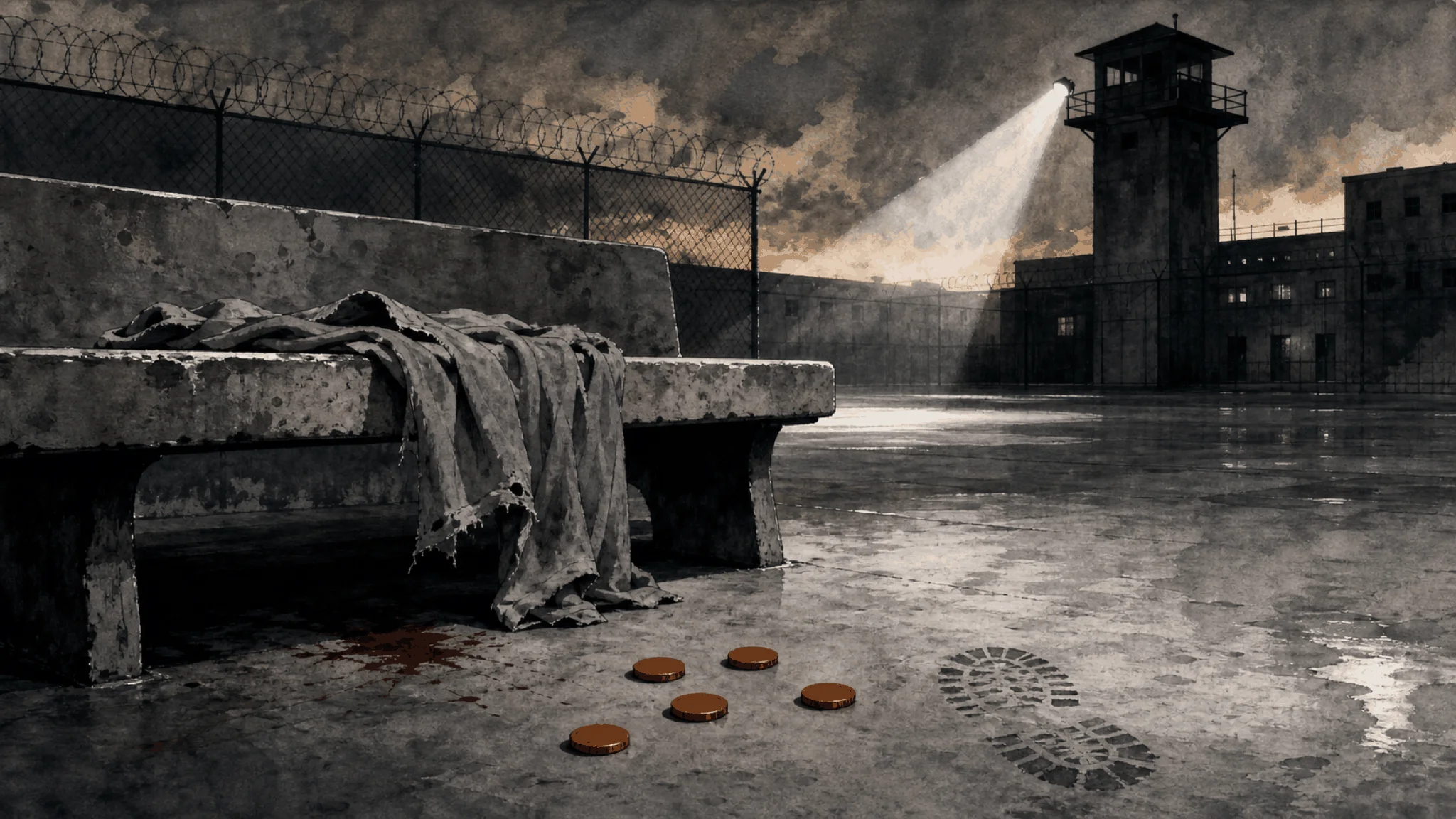
Warwick Shows Kingstown a Cleaner Brutality
Episode 3 is not only about the old prison order failing. It introduces the shape of the replacement, and that shape is colder because it speaks in terms of retrofit, overflow, contracts, and warehouse capacity. Evelyn calls Mike to Warwick Detention because, as she says, the world is changing and he needs to see it. She is right, though not in the way the Warwick executives intend.
Warwick Detention is described as Kingstown’s only private penal institution and the only prison that saw no violence during the riot. Mike immediately names the trick: no yard time, no education, no cafeteria, no commissary. Warwick treats deprivation as efficiency. Tent City is temporary, the presenter says; Warwick is a permanent solution.
The sequence widens the season beyond Mike’s immediate fires. While he is begging for release dates and trying to keep Bunny alive, a corporate operator is already positioning itself to absorb the overflow and eventually contract every prison in Kingstown. The riot report has not even arrived, and Warwick is doing the report. Mike watches suited visitors tour the facility and compares them to people on safari. Kingstown’s crisis is becoming somebody else’s expansion plan.
Kyle McLusky’s (Taylor Handley) subplot gives that institutional argument a smaller human echo. He returns to the station like a man coming home, only to admit to Ian that he quit after suspension without pay. He has a child on the way, no patience for internal affairs, and a need to be useful that sounds closer to withdrawal than duty. Ian tells him to keep his head down until the shooting is ruled righteous. Kyle says he does not need a shrink; he needs a job.
When Kyle brings the same need to Mike, family language becomes another errand. Mike first suggests rest, then chores around the house, and Kyle snaps at being brushed off. So Mike gives him work: check the train station, bus depot, taxis, and the shelters Mariam gave Iris. In Kingstown, even a suspended cop cannot be allowed to sit still with his fear. He gets folded back into the search grid.
What this episode argues
Mayor of Kingstown S2E3 argues that Kingstown is not collapsing because no one has power. It is collapsing because too many forms of power are acting at once without accountability to one another. Mike can get a guard to turn his back. KPD can raid Bunny’s grandmother’s house. Evelyn can chase paperwork. Warwick can sell confinement as a management upgrade. Milo can turn a woman into a quota. Each system has force. None of them can make the others behave.
That is why Mike feels less like a mayor here than a man running between leaks with his hands full. He plays the role with anger, but every problem has already moved by the time he reaches it. He is furious at KPD after the raid, furious at Joseph for hiding Milo’s operation, furious at Evelyn for not having release dates, furious at Carney because Bunny has become exposed. The rage is not competence. It is what competence sounds like when the room stops listening.
Verdict
This is a strong bridge episode, more valuable for pressure than release. Its best material is Bunny’s dawning recognition that Mike’s promise cannot protect his family, paired with the Warwick sequence’s glimpse of a privatized future that may be even less human than the broken public system it wants to replace. The Iris material is grim without pretending that Mike’s concern gives him control, and Kyle’s return keeps the McLusky family tied to the same addiction to usefulness that drives the city.
Things get crowded as Mike moves from Commons fallout to Bunny, Kyle, Joseph, Evelyn, Warwick, Tatiana, and the club in rapid succession. Still, the density fits. Kingstown does not give its broker one crisis at a time. It gives him a stack of debts, then sends the bill to the wrong house.
Rating: 8.3/10
More episodes from Mayor of Kingstown — Season 2 — The prison-town drama widens — Mike McLusky after the riot. Jump to any episode in the season:
Where to go next
Reviewed by Mira Vance · QuizFandom Editor & Lead Reviewer. Every rating is an honest per-watch assessment from the desk that also writes the quizzes — not a press release rehash.