Mayor of Kingstown S2E7 Review: Drones Become the New Yard Currency
Mike's fragile settlement faces drone commerce, police testimony, and Iris's reappearance as every side mistakes movement for control.
Mayor of Kingstown Season 2 Episode 7 spends most of its runtime watching what survives an agreement once the people who made it stop watching it. Mike McLusky (Jeremy Renner) has forced the guards to step back, pushed Bunny Washington into a better cell, and tried to make the yard fair enough to hold. The trouble with that math is that Kingstown does not run on fairness. It runs on advantage, memory, and the old confidence that any deal can be bent if no one happens to be looking. By the final voicemail, when Kyle says he has found Iris, another private wound has been folded back into the same public war.
Bunny Gets an Upgrade Without Getting Free
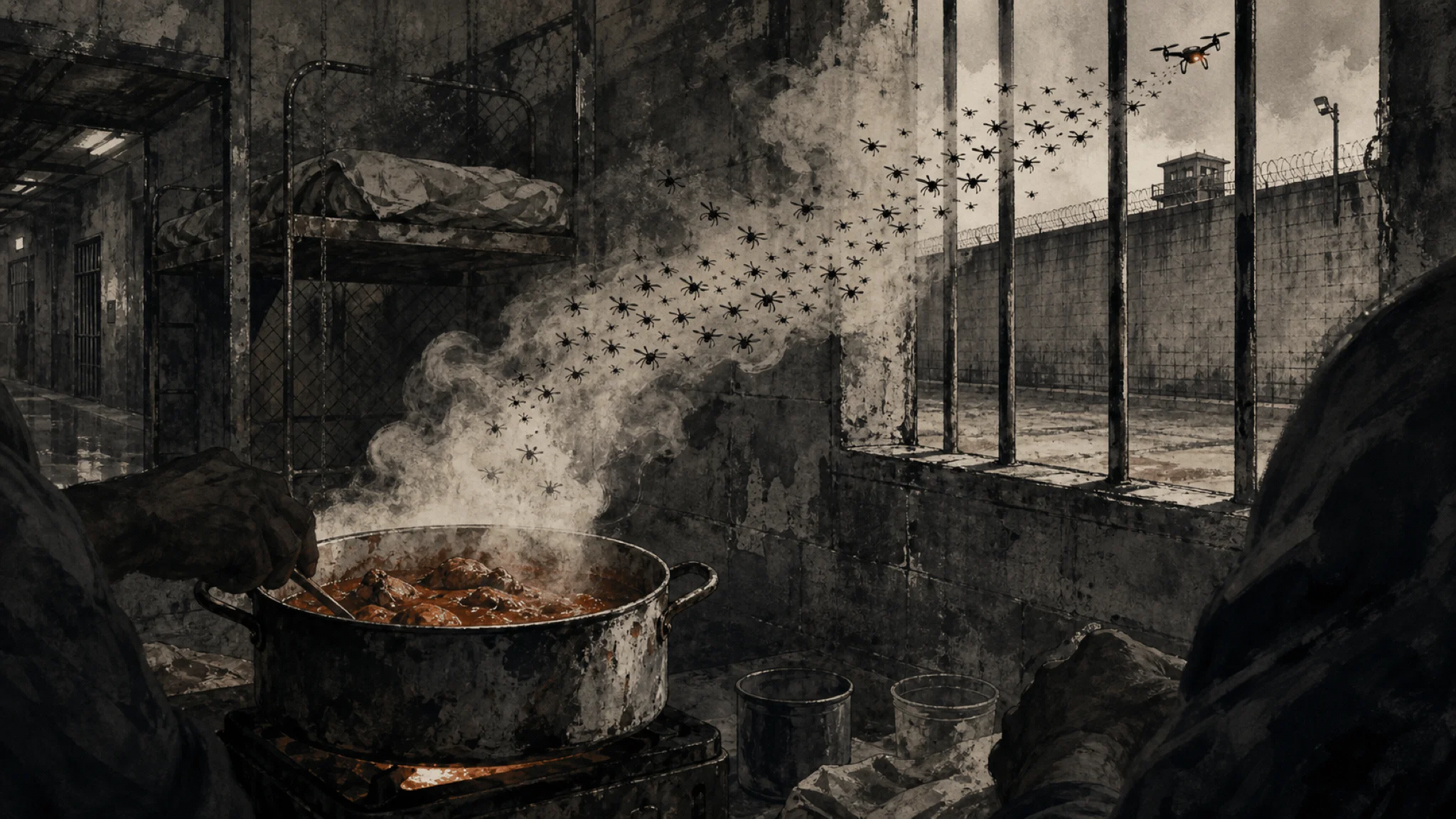
The opening prison visit reads almost comic until the terms underneath it harden. Bunny Washington (Tobi Bamtefa) sees the drones over Anchor Bay as a delivery system the walls can no longer stop, and Mike tells him that problem has been handled. Bunny does not soften. The deeper issue, as he frames it, is not technology. He wants to know why Mike has not delivered the release he promised, and why another political actor had to be cleared out before anything else could move.
Bunny’s anger has the precision of a man who can still read the board. The guards are backing off, the yard is supposedly level, and the AB correctional officers are the people Mike needs watched. When Mike asks Carney whether he is aligned with those guards, Carney offers back the equal-opportunity disgust that passes for institutional neutrality in Kingstown. He hates everyone in the joint, which is not the same as being clean, but it is enough for Mike to use him.
The favor becomes visible when Bunny and Raphael are moved into a roomier cell arrangement. They joke about Goodfellas and The Godfather, argue prison-movie memory, and accept the upgrade as both insult and relief. Bunny gets space, cooking, food, and a little theater of status. He does not get outside. The distinction lives in behavior rather than speech: Bunny accepts the room, tastes the sauce, and still hears the buzzing before anyone else treats it as danger.
That buzzing functions as a moral instrument. The drones are not just contraband carriers; they are proof that Mike’s agreement has a technical loophole. If the AB side can keep goods moving through the air while everyone else is told to earn the old way, the level playing field becomes fiction. Bunny clocks the imbalance before the guards respond to it. He demands a phone call because he knows Mike’s peace will be judged by the smallest visible edge, not by whatever language got used in a courthouse or corridor.
Mike answers by catching the drone operator outside, knocking him down, and taking the collect call from Gunner himself. The attribution matters: Gunner calls looking for the shipment, and Mike turns the call into a threat. He tells Gunner that the yard time is over, that there are no more drones or favors, and that if Gunner wants to earn, he can do it like everybody else. It is one of Mike’s more satisfying tactical moves because it actually closes a loop. It is also small against everything pressing in around it. He can stop a drone. He cannot make everyone believe the war is finished.
Evelyn Names the War Mike Keeps Trying to Manage
The hour’s civic confrontation belongs to Evelyn. Mike comes to her office after Lockett’s murder, and she meets him with grief, fury, and no patience for his brokerage language. He says Lockett went back on his word, put a target on himself, and pretended the temporary order was permanent. Evelyn’s reply cuts through Mike’s whole season: there is no peace, and no bandage large enough for the bleeding.
That scene works because it refuses to make either position comfortable. Mike has a defensible read on Lockett’s reversal. The deal with the incarcerated leaders was not legal purity, but it was a functional attempt to keep Kingstown from consuming itself after the riot. Lockett broke that arrangement and then stood inside a law-and-order pose that the streets were never going to honor.
Evelyn has the harder ground. Mike speaks as if one more signature can end the cascade, as if she can hold the pen quietly and turn the violence back into paperwork. She says quiet belongs to peacetime, and the line lands because by Episode 7 too many people are visibly preparing testimony, cover stories, shipments, and reprisals in parallel. Mike wants a treaty. Evelyn is looking at a city where the negotiator may have helped normalize the battlefield.
The police side of that battlefield is no less compromised. Kyle McLusky (Taylor Handley) runs into Captain Heard, who asks whether the men have their stories straight before internal affairs speaks with them. Kyle insists they were victims during the riot, under attack while inmates killed and assaulted officers. Heard does not argue the emotional truth of that. He reframes the inquiry as politics, media management, and the public need for a bad guy so the police can remain the good guys.
Later, Ian Ferguson (Hugh Dillon), Kyle, Robert, and Mike gather at the bar, and Robert says he has found the rat: Ben Morrissey. Robert believes Morrissey has already spoken to the DA, which makes the coming IA interviews feel less like fact-finding than damage containment. Ian keeps pushing the singular version of events. Kyle wants the details synced. Robert wants action. Mike stops both Kyle and Robert from going near Morrissey and says he will talk to him himself.
The bar scene tightens because everyone there is trying to protect a truth by disciplining its shape. Robert and his team did save lives in the riot, and the episode keeps that claim attached to the men who were there. The same scene shows how quickly survival becomes narrative control. The system is not asking only what happened. It is deciding who gets to tell the version that can survive scrutiny.
Iris Reenters the Story as Kyle Comes Apart at Home
Iris (Emma Laird) returns here through the club, not through rescue. The scene with Tatiana positions her as a problem before Milo even appears. Tatiana calls her Milo’s girl from New York, says she has no room for new complications, and asks why Iris would want to come back. Iris says she is trying to leave, but that answer only exposes how little exit means inside Milo’s orbit.
Tatiana’s message has the temperature of administrative work. Milo wants to see Iris, but not now; he will send for her, maybe tonight, maybe tomorrow, maybe never. The uncertainty becomes its own form of discipline. Iris is told to work the bar and make money while waiting for a man whose absence still governs the room. Season 2 has built Milo’s power as intermittent by design. He does not need to stand in the frame for people to arrange themselves around him.
The episode hands Kyle the domestic counterweight to that captivity. Tracy surprises him with dinner after a shift mix-up, and Kyle comes home carrying the bar, IA, Ian, Robert, and the riot in his posture. She has made food; he reaches for a beer, catches himself because she is pregnant, and then turns her silence into accusation. Tracy’s answer is one of the hour’s sharpest small lines: whatever he is feeling is not coming from her.
That exchange matters because Kyle is not being framed as a monster at home. He is being shown as a man whose nervous system cannot tell the difference between threat and judgment anymore. The pregnancy has placed the future inside the room, and Kyle keeps bringing Kingstown’s present back through the door. His apology does not arrive as a scene of repair. Dinner is ready. If he wants to eat it, he can eat it.
Ian’s visit with Charlie carves out a stranger, sadder pocket of feeling. Charlie says he has started praying, not to ask for rain or money, but to say thank you. Ian tells him the body was found where he said it would be, and Charlie confirms there are more places, more people to remember. Then Ian begins steering him toward a dentist visit outside the institution, framing it as a field trip with fresh air. Charlie remembers calling it “French air” when he was little.
The scene is delicate and uncomfortable at once. Ian is moved by Charlie’s gratitude, but he is also gathering more information from a vulnerable man whose memory can locate bodies. The proposed dentist trip may be kindness, strategy, or both. That ambiguity reads as the show’s moral weather. Even tenderness has a case file attached.
The final call snaps those private threads back into the season’s larger hunt. Mike misses Kyle’s call, and Kyle leaves a message saying he found Iris. The episode does not show the reunion, so it wisely keeps the discovery as an alarm rather than a payoff. Iris is alive, reachable, and still inside the network Milo controls. For Mike, that is not closure. It is another debt coming due.
What this episode is doing
Season 2 Episode 7 reads Kingstown’s order as never the absence of violence. It is the temporary agreement over who gets to use which kind. Bunny wants drones stopped because unfair commerce can reignite prison politics. Evelyn wants signatures because legal authority has been humiliated in public. Robert wants Morrissey contained because testimony can turn heroism into liability. Iris waits for Milo because absence can command as effectively as presence.
Mike moves through all of that with his usual force, but the hour stays careful about scale. He can ask Carney for a favor, move Bunny to a better cell, scare off street dealers from someone else’s block, flatten a drone runner, and threaten Gunner over a prison phone. Those are real interventions. They are also local repairs in a town where every side keeps producing new fractures faster than he can name them.
Verdict
Mayor of Kingstown S2E7 lands as a quiet, accumulating hour — less explosive than the riot aftermath chapters but disciplined in how it tracks the second-order damage the bargain has left behind. The best material is not any single confrontation but the layering: Bunny hearing the drones, Evelyn refusing Mike’s peace language, the bar scene turning riot survival into testimony strategy, Tracy declining to absorb Kyle’s fear, and Ian routing Charlie’s prayer toward another path of buried bodies.
The hour can feel slightly overpacked, particularly because Iris’s return is held mostly as setup for the next chapter. The restraint helps anyway. Rather than forcing a rescue or a courtroom detonation, the show watches Kingstown’s arrangements wobble under small inputs. A drone, a pen, a phone call, a dinner plate, a dentist appointment: each one becomes an instrument in a city where no tool stays innocent for long.
Rating: 8.0/10
More episodes from Mayor of Kingstown — Season 2 — The prison-town drama widens — Mike McLusky after the riot. Jump to any episode in the season:
Where to go next
Reviewed by Mira Vance · QuizFandom Editor & Lead Reviewer. Every rating is an honest per-watch assessment from the desk that also writes the quizzes — not a press release rehash.