Pluribus S1E02 Review: Carol Sturka meets the other last people on Earth
What happens — the short version (spoilers)
- A joined woman Carol nicknames Pirate Lady watches her dig Helen's grave via a drone and offers eerily intimate help, then appears dressed as a character from Carol's own unpublished draft only Helen knew about.
- Carol's rage accidentally triggers a worldwide freeze; she tries to save a man stuck on a ladder, and learns afterward that her outbursts can kill innocents inside the hive's care.
- Carol flies to Bilbao to meet the English-speaking immune survivors without the hive interpreting, and finds them standing beside the joined loved ones they lost.
- Koumba Diabaté arrives living it up on a commandeered Air Force One and asks the forbidden question: why save a world with no crime, no war, and peace on Earth?
- Over lunch the hive explains it cannot kill even an insect, then states the death toll from the joining: 886,477,591 so far.
- Carol's coalition collapses; most survivors leave, Koumba stays to enjoy himself, and Zosia reveals the joined literally cannot choose anything that would hurt someone.
Vince Gilligan’s second hour turns survival into an argument about grief, consent, appetite, and the unbearable comfort of surrender.
Carol Sturka spends the first part of this hour trying to do the most ordinary thing left to her: bury Helen. The world will not even let her have that in private. A woman in Carol’s yard tells her to take a break, reveals that a harmless Air Force Reaper drone has been watching her from far above, and offers a bottle of water with a precision that feels less like kindness than possession. “Pirate Lady,” as Carol eventually calls her, is polite, patient, and appallingly intimate.
Carol’s grief becomes a world event
The smartest move in “Pirate Lady” is that it does not open by expanding the apocalypse. It contracts it to a backyard, a shovel, volcanic rock, and a widow who wants to put her partner in the ground without supervision from a planet-sized consciousness. Rhea Seehorn plays Carol here as someone whose rage has not clarified her. It has exhausted her, embarrassed her, and left her with no safe place to put her hands.
The hive’s approach is almost tender, which makes it worse. Pirate Lady offers water, explains that Jarmell Gurky, a bottling supervisor in Winston-Salem, says the bottle is clean, and volunteers neighborhood logistics: Martin at 1204 has a pickaxe, a sun hat, and gloves. It is useful information delivered with a cheer so total that it erases the boundary between help and trespass. Carol has to decide whether truth still matters when truth arrives without permission.
That violation sharpens when Pirate Lady appears dressed as Raban, a character from Carol’s own books. Carol realizes the choice is not random. Her first draft of Raban was female, and only Helen knew that. The hive insists it does not read minds, but it has Helen’s thoughts and memories because Helen joined before she died. Miriam Shor is not physically present in the scene, yet Helen’s absence presses on every line. The show makes a cruel distinction: Helen is gone, but Helen’s remembered love is available for consultation.
Carol’s reaction is the clearest moral fact she has left. She calls them ghouls and grave robbers. She tells them they caused Helen’s death and have no right to speak for her. Then the world stops.
The freeze is a chilling escalation because Carol does not mean to do it. She walks through the stillness and finds a man hanging helplessly from a ladder, then tries, badly and desperately, to save him before the hive returns. Nobody scolds her. They thank her. That generosity is almost unbearable, because it leaves Carol with the guilt anyway. When she asks whether anyone died during the freeze, the answer comes in increments: a few, then enough for Carol to understand that “a few” is not mercy. Her emotions, if aimed at the joined, can wound the world.
Carol is immune, but she is also dangerous to the very people she despises, and to innocents who happen to be inside their care. Her anger may be justified; it is still kinetic.
The last people are not a resistance
Once Carol learns there are now thirteen immune people, including a man in Paraguay discovered that morning, she asks to meet the English speakers. The hive offers to interpret for everyone. Carol refuses. She wants contact without their mediation, and that refusal matters. It is the first strategic decision she makes that is not just panic with better posture.
The trip to Bilbao gives the show one of its sharpest tonal shifts. Carol rides in the back of a plane while the joined flight crew offers comfort, even suggesting she sit up front and steer because it is fun. They warn her, with typical soft menace, that they cannot protect the immune people from one another. At first that sounds like reassurance about autonomy. By the end of the meeting, it feels like a diagnosis.
Carol meets Otgonbayar, Xiu Mei, Kusimayu, and Laxmi, then sees the joined family members waiting beside them: a daughter, a husband, an aunt, a cousin, a mother, a husband, and Ravi, Laxmi’s nine-year-old son. The show does not let “immune” mean heroic by default. These people have arrived with their grief standing ten feet away, speaking in calm borrowed voices. They have not come from the same movie Carol has been watching in her head.
Then Samba Schutte enters as Koumba Diabaté, and the hour finds its best comic weapon. Koumba has asked for Air Force One because it was available to anyone who requested it. He calls it Air Force Koumba, jokes about the nuclear football, notices the upper staircase, and fills the cabin with pleasure so aggressively that Carol’s emergency meeting starts to look like an interruption of his vacation. Koumba is not stupid. He has looked at a world where every luxury can be summoned by smiling servants and decided the crisis can wait until after lunch.
Carol tries to turn the group into a resistance council. She asks whether anyone has training in biology, genetics, medicine, science, anything. Nobody does. She asks whether anyone can build a volcano, a bleak joke that lands because this is now the level of available expertise. The future of humanity, as Carol puts it, has fallen into the hands of people who cannot even agree that humanity needs rescuing.
Koumba asks the forbidden question: why save the world? No one is being robbed or murdered. No one is in prison. Race appears to have lost its social charge. Zoos are empty, dogs have been freed from chains, and there is peace on Earth. It is a seductive argument because it has evidence, and the room is not ready to accept Carol’s horror as proof.
Laxmi is the harder challenge. Her son Ravi is still her son, she insists. Carol counters that Ravi is also everyone else: prime minister, former boyfriend, gynecologist, pilot, surgeon. Her cruelty is tactical, meant to force recognition, but it wounds the mother before it moves the room. Kusimayu wants to join her aunt and cousin. Carol tries to persuade her that everything personal and individual will disappear. Kusimayu believes she will have herself and share herself. The difference between those two verbs becomes the hour’s central wound.
Carol has not even asked what joining feels like. When the others realize that, her authority collapses. She compares the hive to a drug dealer and refuses the sales pitch, but the line sounds less like wisdom than fear. She is right to fear it. She is also exposed by not knowing what temptation she is trying to defeat.
The hive’s mercy has a body count
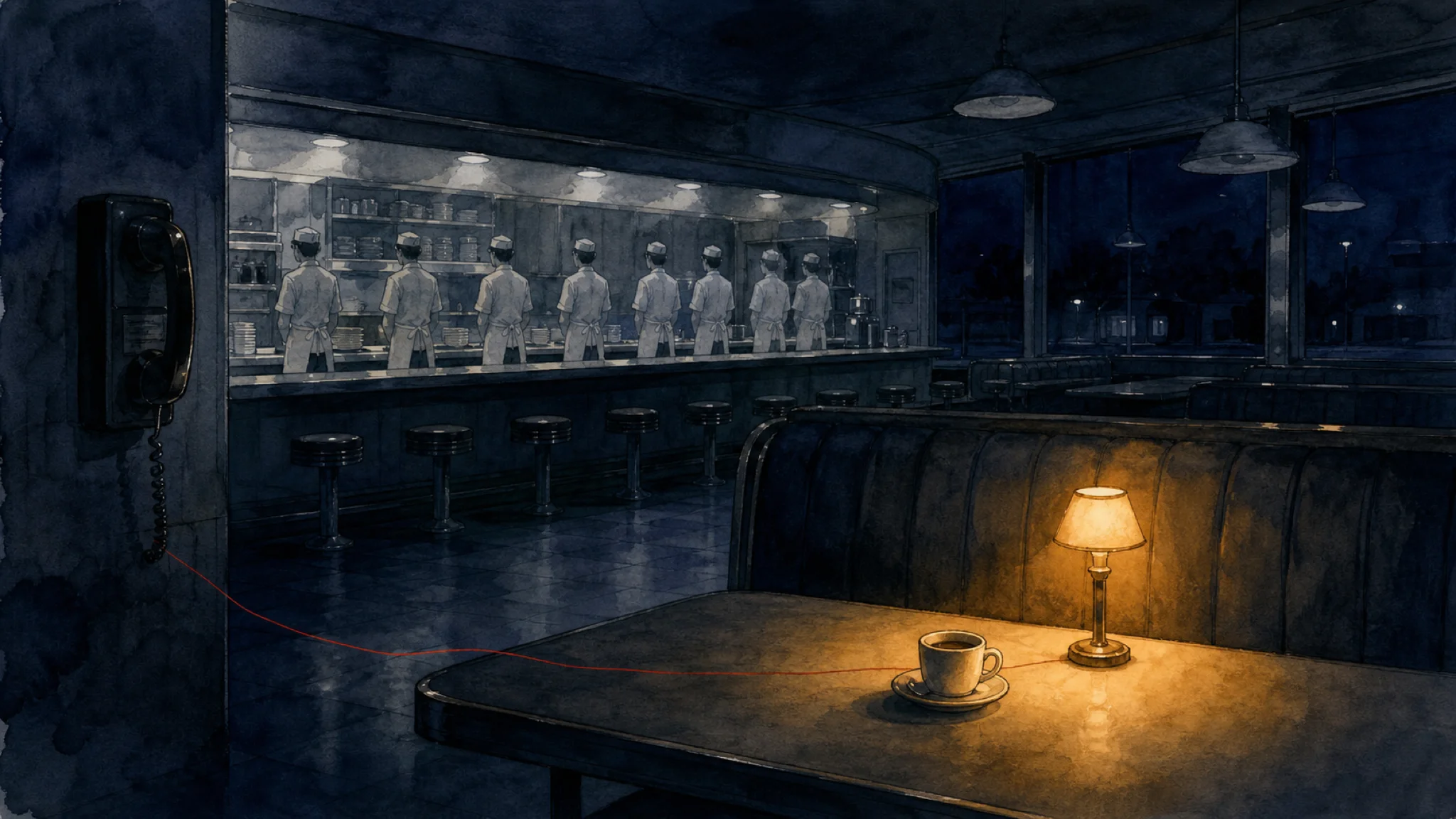
Lunch turns the philosophical argument physical. Koumba asks for lobster and receives Poulet Yassa instead, made like his Auntie Awa prepared it when he was a child. The substitution is not a mistake of hospitality. The hive could not find dead lobster, and it does not kill. It will not kill a wasp, a snail, or even an insect if it can avoid doing so. It prefers vegetarianism and cannot intentionally take life because, as Pirate Lady says, it is not in their nature.
Carol sees the contradiction instantly. They will not step on a bug, but they have absorbed a planet. The hive rejects the slavery charge and calls joining the opposite of slavery, a biological necessity like breathing. Carol keeps pressing for the number dead during the joining. The answer is delivered without theatrics: 886,477,591 so far.
That number changes the episode. Until then, the joined can cloak themselves in a peaceable future. After it, every omelet, tour, museum recommendation, and helpful smile has to sit beside mass death. The explanation makes it worse. For the first month, they brought people in one at a time, peacefully, thousands per day. Then the military discovered them. To prevent more bloodshed, they accelerated. The disaster keeps presenting itself as harm reduction.
Carol’s meeting falls apart after the reveal. Koumba points out that Carol’s outburst killed people too, including the grandfather of one immune person who was in a car when the freeze hit. The accounting is not equal, but it is not irrelevant. Carol can condemn the joined and still be implicated in death. Her opponents can be morally compromised and still have real grievances against her. That is the episode’s best kind of mess: not ambiguity for prestige polish, but competing facts that refuse to line up neatly.
After Carol calls the others traitors to the human race, she loses control again. Ravi goes down. The next morning, she asks if the other five have left. All but one have. Koumba stayed, drinking the best martini he has ever tasted and planning a trip to Las Vegas to occupy Elvis Presley’s penthouse at the Westgate. He also wants Zosia to accompany him.
Here, Karolina Wydra becomes the hour’s quietest horror device. Zosia can calculate the square root of 46,279, can receive affection, can answer questions, and can appear fully present. Yet when Carol asks her to choose whether to go with Koumba, she says they cannot choose. If they chose, someone would be hurt, and they cannot do that. Consent exists in the scene as theater without agency behind it.
That is why the ending lands harder than Koumba’s earlier jokes. He tells Carol that, for him, this does not feel like the end of the world. He may mean it sincerely. That sincerity is the problem. For Koumba, paradise is available because someone else has already paid the moral bill.
What this hour costs
“Pirate Lady” makes the hive frightening by making it competent at care. It knows Carol’s favorite bacon from a 1998 trip, can fly in brioche from Les Crayères, can summon family, food, transport, museum tours, and erotic companionship, and can arrange the world around the desires of the few who remain outside it. The horror is not scarcity. The horror is abundance without refusal.
Carol’s position remains the right one, but the hour is severe about her limitations. She is grieving, furious, verbally brutal, and unprepared to lead anyone. The other immune people are not cowards because they want comfort; they are frightened humans standing beside the people they love, being told that surrender may feel like reunion. That does not make joining acceptable. It makes resistance harder than slogans can handle.
Verdict
Pluribus S1E02 is sharper and stranger than a simple “meet the survivors” installment needed to be. It keeps finding concrete ways to test the premise: a drone over a grave, a character costume pulled from a private draft, a child who can answer medical questions, a luxury jet repurposed as a moral conference room, a hive that mourns lobsters after killing nearly a billion people. The details do the thinking.
The episode’s one weakness is that the immune gathering occasionally states its dilemma more bluntly than the surrounding scenes require. Even so, Seehorn’s raw, defensive precision keeps Carol from becoming a mouthpiece, while Schutte’s Koumba gives the show a necessary appetite for absurdity. The result is early-season science fiction with real bite: grief comedy, apocalypse ethics, and a consent nightmare served with perfect hospitality.
Rating: 8.8/10
More episodes from Pluribus — Vince Gilligan's post-apocalyptic immune-vs-hive-mind drama, episode by episode. Jump to any episode in the season:
Where to go next
Reviewed by Mira Vance · QuizFandom Editor & Lead Reviewer. Every rating is an honest per-watch assessment from the desk that also writes the quizzes — not a press release rehash.