Pluribus S1E04 Review: Carol finds the cost of forcing an answer
What happens — the short version (spoilers)
- Carol designs a test using a volunteer body, demanding honest opinions of her writing, and gets the hive's relentlessly flattering praise instead of truth.
- She forces the hive to relay what Helen really thought: the Wycaro books were harmless "cotton candy" and the serious novel Bitter Chrysalis was merely "fine."
- Carol compares the hive's forced happiness to Camp Freedom Falls, the conversion therapy camp her mother sent her to at sixteen, where counselors also smiled while "helping."
- Sensing the joining might be reversible from the hive's reluctance to answer, Carol gets heroin delivered but chickens out of using it.
- Carol corners the injured Zosia outdoors and keeps pressing for how to reverse the joining, using the hive's own no-interference ethics to stop anyone from helping.
- Zosia goes into cardiac arrest; the hive asks permission to save her and Carol finally says yes, too late to undo the harm.
Carol tests the hive's tenderness until it breaks, and her refusal starts to feel like both survival and rot.
“Pluribus” opens its fourth hour by draining the world of human noise and leaving Carol Sturka with the mechanical kind. A timer ticks. A phone rings. A car starts and dies. A management notice apologizes because storage units had to be opened, as if apocalypse can still be routed through customer service. Then Carol starts reaching for the other immune people and finds, almost immediately, that even refusal has become a shared circuit now.
Carol wants honesty from people who can only please her
The opening stretch is almost cruelly mundane. Carol tries to make contact, fumbling through Spanish well enough to identify herself before a man on the other end tells her to leave him alone. Her response is not diplomatic. She smashes the phone after telling him off, then heads home in a police car with a radio she cannot fully escape. The hive finds her there too, cheerful and practical, explaining the push-to-talk button as if they are helping a confused aunt with a rental vehicle.
The comedy matters because it keeps the premise tactile. The joined are in the handset, in the house, in the broken glass, in the mayor standing in Carol’s living room after patching shrapnel holes from the previous day’s blast. Carol’s problem is not that the hive is faceless. Her problem is that it has too many faces and all of them are trying to be nice.
That niceness has rules. They will deliver her Range Rover. They will remove the alcohol interlock from the police car if she wants. They will repair her home because, during the ambulance ride, while Zosia was bleeding, Carol apparently nodded permission. Their version of consent is technically attentive and morally monstrous. They heard the nod. They logged the nod. They obeyed the nod.
So Carol designs a test. She asks for a volunteer who is not a politician and chooses a short man from the crowd. This body used to be Lawrence J. Kless, Larry to his friends, and Larry carries the scene with unnerving civility: a person-shaped customer service window with access to every mind on the planet. Carol asks if he likes her books. He says they love them. She presses for details. The hive answers with fan-service praise so exact it becomes grotesque, quoting Lucasia’s gown from her first novel and saying the passage made quite a few of them tingle.
The exchange is funny until it isn’t. Carol compares herself to Shakespeare, and Larry’s answer is the same answer every time: equal, wonderful, beloved. When she tells him to stop using the word “wonderful,” the hive shifts tactics and gives her Moira McAllister, the Kansas City fan who once sent crocheted hats and who, before finding Carol’s books, was suicidal. The praise becomes harder to reject because it shifts from taste to evidence that whatever Carol privately fears she has made can still keep a person alive.
Then Carol asks the real question: what did Helen think?
Helen’s love hurts more than the hive’s praise
The hour’s best writing is in the way Carol walks herself into pain and then keeps going because stopping would mean accepting a lie. Helen is supposed to be off-limits; Carol made that boundary herself. But grief changes the rules by the minute. She grants “special dispensation” and asks what Helen thought of the Wycaro books, the work that bought their life together.
The answer arrives in layers, each one softer and worse. Helen loved Carol very much. Helen thought the books were harmless. “Cotton candy” was the phrase in her mind, mostly. The hive tries to rescue the wound by noting that Helen loved cotton candy, then ruins the rescue by adding that she consumed it four times in her life. That is one of the sharpest jokes Pluribus has landed: the joined can access factual intimacy without understanding which facts belong in a room.
Helen never speaks in the present here, but she dominates the scene precisely because the hive has her thoughts. Carol wants the beloved dead returned as a witness, and what she receives is a record. Helen thought Carol knew how to please her audience. Helen was grateful for the beautiful life Wycaro provided. Helen was proud of her. Those are loving answers. They are also devastating because they dodge the one category Carol needs most: respect.
The unpublished novel, Bitter Chrysalis, breaks the dam. Helen thought it was fine. Fine as in “meh.” She stopped on page 137, paragraph three, then read the last two pages and thought it wrapped up nicely. She encouraged publication after talking to Val because it would not hurt Carol’s career and would make Carol happy. There is no betrayal in this, exactly. It may even be kindness. But Carol hears the domestic arrangement beneath it: Helen managed her, protected her, and kept a private opinion.
Carol plays the scene without vanity. She is not noble in her demand for honesty. She is needling, wounded, vain, and far too smart to miss the difference between love and admiration. Each answer lands as a fresh insult and a confirmation of something she already suspected. The cruelty is not that Helen disliked the work. The cruelty is that Helen knew how much Carol needed not to know.
When Zosia returns, the tone shifts into apology and negotiation. Carol gives her something to drink and half-apologizes for the explosion, admitting it would not have happened if she had understood that these people were generous enough to hand her real explosives. Zosia stays open-faced and mild, which makes the conversation more threatening, not less. Carol asks if the joining can be reversed. Zosia cannot answer. Carol notices the shape of the silence immediately. If the answer were no, they would say no. A nonanswer means there may be a way back.
That revelation sends the hour into its moral center. Carol brings up Camp Freedom Falls, the conversion therapy camp where her mother sent her at sixteen. The hive knows the story, names Covington, Tennessee, and admits it was terrible. Carol makes the comparison herself: those counselors smiled all the time too. They also claimed to be helping. The hive replies that it loves and accepts all beings equally, but Carol has found the contradiction. If they accept her, why are they trying to make her like them?
Their answer is seductive and frightening at once: they know what it feels like to be Carol, alone and suffering, because they have been her. She has never been them. For any other series, that might play as a villain speech. Here it lands closer to a real ethical trap. Joining may relieve pain. Relief forced on an unwilling person is violence.
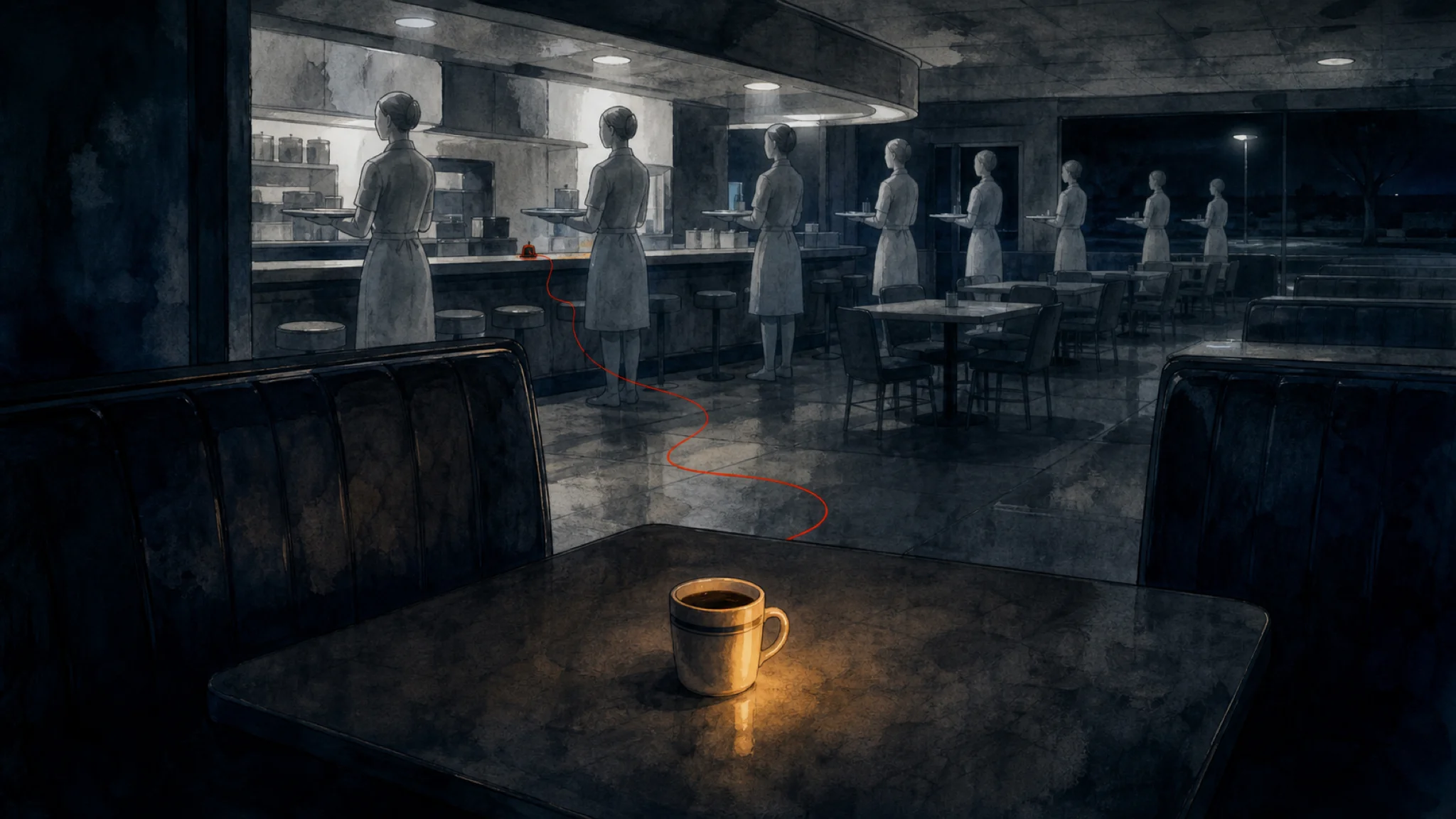
Zosia pays for Carol’s proof
Carol goes to the hospital looking for heroin. The request is ugly, funny, and painfully consistent with the hour’s pattern. She wants something that belongs only to her nervous system. The hive worries about physical addiction, mentions a whole wing of bodies in recovery, and suggests regulated opioids when heroin is not stocked. Then, because pleasing Carol remains the prime directive, they locate unadulterated heroin eight miles away and send it over.
She does not use it. Instead, she ends up alone, blurred enough to argue with herself, read from her own fantasy prose, insist that she is not that bad, and spiral into a lonely, profane fixation on Zosia. Carol mocks Zosia’s cheerfulness, calls her annoying, then admits her attraction in the crudest possible terms. The hive wants to remove contradiction. Carol is made of contradiction. She misses Helen, resents Helen, wants truth, hates truth, wants Zosia gone, wants Zosia near.
Morning brings a smaller, more dangerous Carol. She finds Zosia looking better and suggests fresh air. She lies about throwing away the heroin because she was not in the mood, then corrects herself: she chickened out. That tiny admission matters. It is one of the few honest things she offers without having to extract it from someone else.
Outside, Carol sets the trap. She asks about the weather. Zosia answers with impossible precision: Celsius, Fahrenheit, wind speed, direction. Then the answer starts to stutter. The hive can handle facts, but it cannot handle being made to disappoint her while inhabiting an injured body. Carol asks how to reverse the joining. Zosia says no, then cannot hold the line. Carol keeps pushing. Is it something one person can do? Is it a chemical? A medicine?
The scene is hard to watch because Carol is both victim and aggressor. When others move to help Zosia, Carol invokes the very language the hive has used to protect her: agency. They cannot touch her. They cannot interfere. She makes a cage of their ethics and uses Zosia’s body as the thing inside it. The crowd chants “Please, Carol” until the words become less plea than weather. Still she pushes.
Then Zosia arrests. The hive stops chanting and tells Carol what is happening. She’s dying. May we save her? Carol says yes. That yes is not redemption; it is a boundary she reaches too late. The AED begins analyzing as the hour cuts off.
What this hour costs
This hour makes one of the show’s strongest cases for taking Carol seriously without making her clean. Her resistance to the joining is legitimate. Her comparison to conversion therapy is not rhetorical decoration; it names the horror of forced happiness delivered by smiling people who believe they are saving you. The joined have inherited the world’s bodies and memories, but they have also inherited the old missionary confidence that a person can be improved against her will.
At the same time, Carol’s immunity does not make her morally pure. She weaponizes the hive’s care, exploits its inability to lie, and nearly kills Zosia to obtain proof. The hour’s grimmest insight is that coercion can travel in both directions. A collective can erase a person by absorbing her. A person can brutalize a collective by finding the one body it cannot bear to lose.
Verdict
“Pluribus” S1E04 is the season’s sharpest hour so far, and the first one that fully shows how durable the premise can be at scene level. The Larry interrogation converts literary insecurity to apocalyptic farce. The Helen material gives Carol’s grief a specific shape rather than a generic wound. The Freedom Falls exchange connects the show’s science-fiction premise to a history of smiling coercion without flattening either side to a slogan.
It is willing to make Carol hard to defend at the exact moment she becomes easiest to understand. That is the right choice. Carol carries the hour through silence, vanity, rage, lust, shame, and panic, while Zosia’s softness feels like a genuine worldview rather than a mask. The cliffhanger is a little blunt in its mechanics, but the emotional math is precise: Carol wanted an answer no one would give her, and by the time she proves there is one, someone else is on the floor paying the price.
Rating: 8.8/10
More episodes from Pluribus — Vince Gilligan's post-apocalyptic immune-vs-hive-mind drama, episode by episode. Jump to any episode in the season:
Where to go next
Reviewed by Mira Vance · QuizFandom Editor & Lead Reviewer. Every rating is an honest per-watch assessment from the desk that also writes the quizzes — not a press release rehash.