Pluribus S1E05 Review: Carol learns the cost of being left alone
What happens — the short version (spoilers)
- Laxmi confronts Carol over hurting Zosia and her son, and Carol insists Zosia is not her chaperone and will be fine.
- Carol wakes to an emptied Albuquerque; the joined leave a recording saying their feelings haven't changed but they need a little space, and the abandonment stings more than the attention did.
- The hive keeps the utilities running, restoring power and trash pickup with precise rules, so withdrawal of intimacy comes with continued customer service.
- Carol records a recruitment message to the other survivors, framing the hive's tearful reluctance to answer her reversal question as proof she found the machine's edge.
- She investigates the strange milk cartons the joined constantly drink, testing a neutral, oily liquid made from water and white powder at a local dairy plant.
- In a deliberately anti-heroic closer, Carol fights and fails to pull down a flagpole, knowing more than yesterday but unable to make the world obey her.
Carol makes Albuquerque her laboratory, but the silence around her makes every discovery feel like a private dare.
Pluribus S1E05 begins with a voice on the phone and ends with Carol Sturka fighting a flagpole, which is about as elegant a summary of the hour’s method as any. After last week’s escalation, the hive does not punish Carol with violence. It punishes her with accommodation, distance, and municipal procedure. The result is a stripped-down episode that asks Rhea Seehorn to carry long stretches of anger, boredom, paranoia, and bruised resolve with almost nobody else in the frame.
Albuquerque becomes a boundary
The first exchange comes from Laxmi, not from Zosia, Helen, or one of the other immune holdouts Carol wants to reach. Laxmi is furious that Carol made her son cry and gave Zosia what she calls a heart attack. Carol corrects the language immediately. Zosia is not her chaperone, and Zosia is going to be fine. Even here, before the hour has settled into its emptiness, Pluribus makes Carol’s position awkward rather than heroic. She has learned something real about the hive’s limits, but the information came through pain broadcast across the joined world.
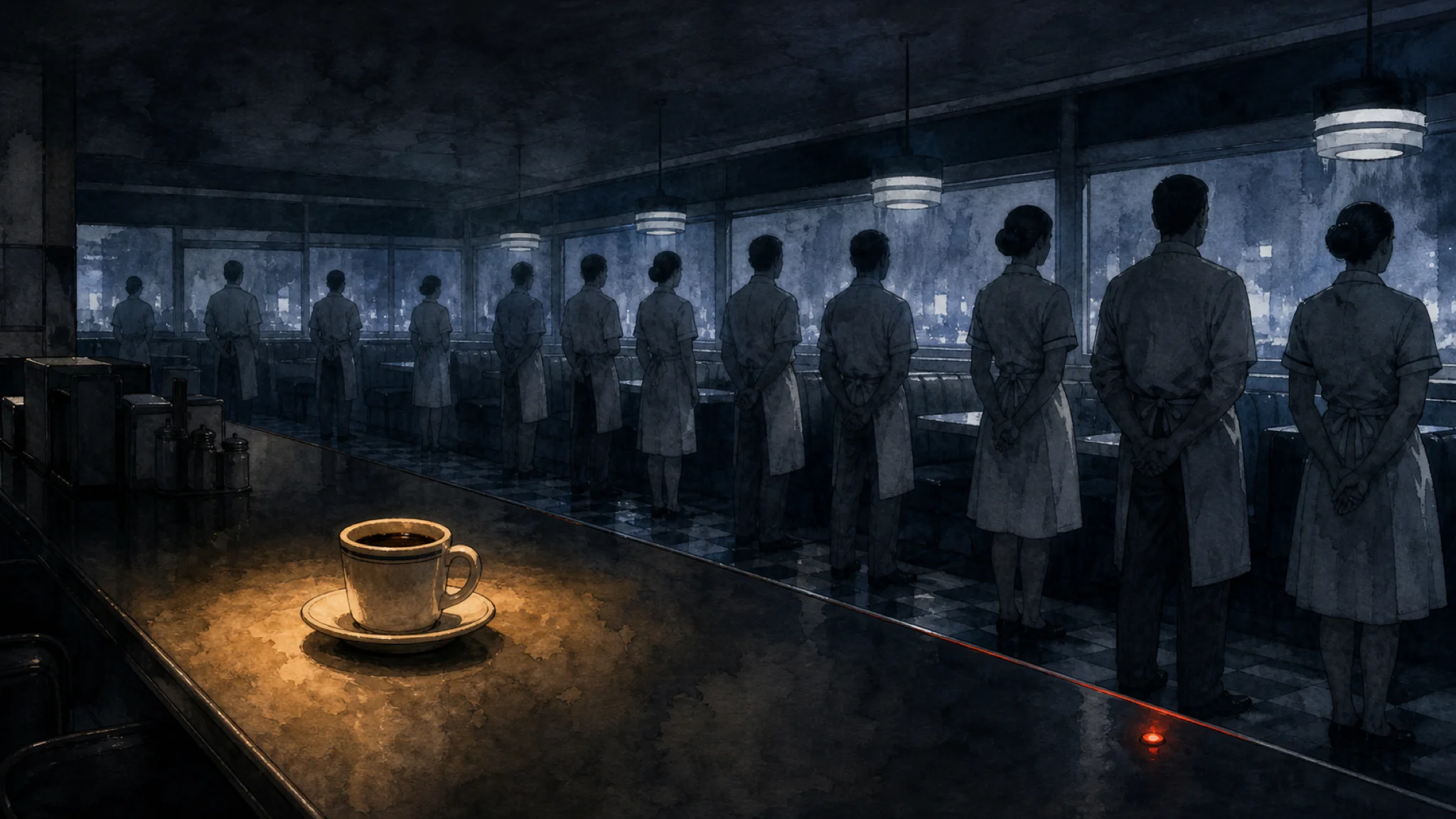
That matters because the collective’s next move is neither retaliation nor forgiveness. Carol wakes into an Albuquerque with the people removed from it. The house, the streets, and the usual hovering care are still there, but the human presence has been withdrawn. When she calls out, the answer is a recording: they will provide anything she needs, their feelings have not changed, and after everything that has happened, they need a little space.
It is a beautiful inversion of Carol’s complaint. She has spent the season recoiling from constant attention, from Zosia’s serene patience, from the way the joined people turn privacy into a service they can grant but never quite understand. Now they give her privacy, and it lands as abandonment. The phrasing is almost unbearably polite, which makes it worse. The hive has discovered a boundary, but because the boundary belongs to the hive, Carol experiences it as control.
Seehorn plays that shift without smoothing Carol out. She is not instantly lonely in a noble, readable way. She is irritated first, then defiant, then petty, then unsettled. She yells into the vacancy. She curses the collective. She acts as if freedom has finally arrived, then realizes how little freedom means when every road leads back to a recorded voice and an absent audience.
The episode’s best joke is also one of its sharper ideas: even when the collective leaves, it keeps the utilities responsive. Carol demands the lights back on everywhere, and the lights come back. She asks for trash pickup, and the answer arrives with exact rules about bag weight, curb spacing, and acceptable presentation. The joined world has vacated the city but maintained customer service. It can withdraw intimacy without withdrawing infrastructure.
That is the hour’s most unnerving version of power. Carol is alone, but she is not beyond reach. She can make demands, and the system will meet them as long as the request fits inside its procedures. Her problem is that resistance cannot live on restored electricity and compliant sanitation alone. She wants a fight with a face. The city gives her a voicemail menu.
Carol’s resistance begins as a home video
Carol’s counterattack is wonderfully unglamorous. She records a message to the 12 other survivors, introduces herself, and shapes her discovery as a pitch. The joined cannot lie. They resisted answering her question about whether this condition can be undone. Their resistance was so severe that everyone cried. Soon after, Albuquerque emptied out around her. Carol reads the sequence as evidence that she has found the edge of the machine.
The speech matters because it is both brave and manipulative. Carol tells the others that if they still have opinions, they should enjoy them while they can, because forced peace may be the last thing that leaves them recognizably themselves. That line has bite because the show does not treat individuality as an automatically noble substance. Carol’s individuality includes grief, contempt, vanity, impatience, and a gift for making other people miserable. It also includes the capacity to say no when the whole world has been gently taught to say yes.
The absent survivors give the message its charge. Carol names the group as 13 people, then immediately has to reckon with how little that number guarantees. Laxmi’s rage shows one version of survival: she is immune, but she is still a mother trying to protect her child from the emotional shockwaves Carol keeps causing. Carol addresses the others as potential allies because she needs them to be a category. The episode lets us feel how fragile that category is.
Her use of the hive is just as revealing. Carol cannot force the joined to distribute her video, so she frames cooperation as something that would please her and noncooperation as something that might put her in a biblically bad mood. It is a threat dressed in the language of emotional management. She knows exactly how to exploit their devotion to her comfort, and the show is clear-eyed about the ugliness of that. Resistance does not make Carol pure. It gives her leverage, and she uses it.
That tension has been present since the pilot, but S1E05 sharpens it by removing the usual conversational cushions. Without Zosia in the room, Carol has no calm foil. Karolina Wydra is still felt through Zosia’s absence: the earlier reassurance that she will be fine, the wounded trace of what Carol did to her, the eerie reminder that the hive can take a familiar face away whenever it chooses. Helen, played by Miriam Shor, remains the grief behind Carol’s fury even when the hour keeps her offscreen.
So Carol performs leadership for a camera. She says humanity needs saving. She says the 13 survivors owe it to the species. She says good luck and godspeed, then leaves the recording outside by a rock like a ransom drop. The grandeur of the language and the ridiculousness of the delivery method sit side by side. Pluribus has a real respect for Carol’s cause, but it refuses to buff away the absurdity of one angry writer trying to found a resistance movement from an emptied suburb.
The milk mystery keeps the apocalypse tactile
The hour’s second half recasts Carol as a bad scientist with good instincts. She notices the cartons first: little school-milk containers in flavors that imply normalcy, except the substance inside is not milk. The joined drink it constantly. The cartons come from a local dairy facility, where water has been mixed with a white powder to make a pale, oily liquid. Carol believes similar production may be happening wherever there is a dairy or bottling plant.
This is where the episode’s restraint pays off. Pluribus could make the discovery a clean explanatory dump. Instead, Carol fumbles through observation. The liquid has no smell. Its texture is like olive oil, but thinner. Its color might be amber, or straw. Its pH is 7.1, which sends her back to her notes before she concludes that it is basically neutral. It does not contain chlorine. Celery is neutral too, she points out, in a line that makes the whole investigation feel human again.
The scene works because it gives the alien premise a kitchen-counter reality. Carol is not decoding the universe from a glowing console. She is poking at cartons, powders, strips, and guesses. The show lets the science remain provisional, which is more frightening than a tidy answer. If the liquid helps the joined stay connected, then the hive has a supply chain. It has factories, ingredients, distribution habits, and vulnerabilities. The end of ordinary life may depend on ordinary containers.
That tactile emphasis also rescues the episode from becoming a one-person lecture. Carol’s videos are pointed, but the world keeps interrupting her. She hears noises. She chases birds away. She tries to continue her update and cannot know if anyone is receiving it. The practical world keeps degrading around the edges of her rhetoric. Trash piles up. Animals wander into the spaces people used to police. A flag becomes a problem large enough to consume her body.
The flag sequence is a small masterpiece of anti-mythic staging. Carol sees the flag, yells at it, tries to pull it down, and cannot get it loose. She struggles, curses, and fails. Later, she is still stuck in the same fight, reduced to another “son of a bitch” in the empty city. There is no swelling triumph, no symbolic victory over the old order, no clean image of rebellion. There is only a person who knows more than she did yesterday and still cannot make a piece of fabric obey her.
That final irritation is funny, but it is not disposable. Carol can make the collective cry. She can make it restore power. She can pressure it into carrying her messages. She can locate a possible material clue in its new food system. Yet she cannot command the world back into sense. The episode keeps bringing her from species-level language down to dumb matter: bags under 17 pounds, cartons on counters, birds in the wrong place, a flag that will not come loose.
What this hour costs
S1E05 makes solitude look less like liberty than exposure. Carol gets the space she claimed to want, and the space reveals how dependent even her rebellion is on the people she despises. She needs the hive’s distribution network, its electricity, its trash service, and its emotional vulnerability. The joined need distance from her, but even their distance remains structured around her wants. Neither side knows how to separate cleanly.
That is why the episode’s horror has very little to do with jump scares or spectacle. The frightening thing is a world so responsive that refusal becomes another form of service. Carol can yell, threaten, demand, investigate, and record, but the system absorbs each act and answers in the politest possible voice. Her only advantage is that she remains abrasive enough to produce friction. In Pluribus, friction may be the last surviving proof of personhood.
Verdict
This is not the season’s most expansive episode, and some viewers may find its deliberate emptiness a comedown after the emotional rupture of Zosia’s collapse. But the narrowness feels purposeful. Gilligan and Seehorn turn a near-solo hour into a study of what happens when a character who defines herself against suffocating togetherness is forced to sit with the practical terror of being alone.
The milk discovery gives the mythology a concrete new handle without pretending to solve it, while the recorded-message structure keeps the hive both absent and omnipresent. S1E05 is prickly, funny, and quietly punishing, with a lead performance that lets Carol remain necessary without making her easy to admire. For a show built on the nightmare of universal agreement, this is a strong hour about the cost of being the person who will not go along.
Rating: 8.3/10
More episodes from Pluribus — Vince Gilligan's post-apocalyptic immune-vs-hive-mind drama, episode by episode. Jump to any episode in the season:
Where to go next
Reviewed by Mira Vance · QuizFandom Editor & Lead Reviewer. Every rating is an honest per-watch assessment from the desk that also writes the quizzes — not a press release rehash.