Pluribus S1E06 Review: Carol finds the cost of peace in cold storage
What happens — the short version (spoilers)
- Carol breaks into the Agri-Jet warehouse and films shrink-wrapped human remains, grinders, and cooking vats, her reporter composure breaking down.
- Brought the footage, the joined don't deny it: a cheerful explainer video (via John Cena's face) admits the dead are processed into shelf-stable human-derived protein to feed seven billion bodies that cannot harvest crops.
- In Las Vegas, Koumba lives inside a scripted casino fantasy and, unlike Carol, accommodates the horror rather than fighting it.
- Koumba reveals the other immune survivors meet by Zoom on Tuesdays and Fridays to plan saving the joined from starvation, and voted that Carol's presence would be disruptive, leaving her crying in a bathroom.
- He tells Carol the joined cannot turn the immune without bodily consent for an invasive stem-cell extraction, handing Carol a boundary they cannot cross.
- Carol formally refuses consent over the recording, then broadcasts to the other survivors; in Paraguay, Manousos rejects a joined voice calling him "son" with personal disgust.
Carol's Las Vegas detour turns a cannibal logistics problem into the season's sharpest test of consent and loneliness.
Pluribus Episode 6 begins its real work inside a refrigerated warehouse in Albuquerque, where Carol Sturka walks through a cold industrial room and tries to narrate what she is seeing before horror catches up with language. The joined have been processing human remains into food, and the discovery gives the series its most grotesque fact so far. The episode then does something more unnerving than a simple reveal: it asks whether Carol can still think clearly after the world gives her a reason to hate it.
A refrigerated warehouse makes the apocalypse physical
Pluribus has spent much of its first season turning moral horror into politeness. The joined ask before they intrude. They flatter Carol. They send representatives, gifts, messages, apologies. They speak in soothing cadences, even when the content of those cadences is domination. Episode 6 opens by tearing the linen off the table.
Carol, played with fraying precision by Rhea Seehorn, finds the Agri-Jet warehouse after forcing her way into an abandoned industrial space. She records herself moving through it, partly as evidence and partly because the camera gives her a task to hold onto. The place is vast, cold, and filled with shrink-wrapped human remains: body parts vacuum sealed, storage systems, and beyond one door, a grinder and cooking vats. Gilligan’s world has always been good at making evil feel like a workplace. Here, the horror arrives with inventory discipline.
The genius of the sequence is Carol’s inability to stay composed. She starts in reporter mode, trying to describe the location, estimate the size, give the “grand tour.” Then the words break. She curses. She repeats herself. She forces the viewer to look at the thing she is looking at and then realizes there is no stable distance from it. For a woman who has been told, again and again, that the new world is gentle, the warehouse is a rebuttal written in refrigeration and plastic wrap.
When Carol brings the footage to Koumba, the episode immediately complicates the charge. The joined do not deny the practice. They have already prepared an explanatory video for her, delivered through the borrowed face of John Cena, and it is as cheerful as a corporate safety module. They cannot deliberately harm life, including plants. They cannot harvest wheat, corn, rice, or pluck an apple from a tree. They can consume windfall fruit, milk domesticated animals, and eat preexisting processed food. The problem is scale: more than seven billion joined bodies need calories, and the dead, in their accounting, are a resource that would otherwise decay.
That explanation is obscene because it is rational. The carton described in the video contains a shelf-stable liquid with 300 calories per half-pint and a percentage of “human-derived protein.” The language is sanitized without being evasive. They even admit that most cultures have condemned anthropophagy and that they are not fond of it either. Their case depends on necessity, not pleasure. That makes it worse. Pluribus shows a civilization that has built a clean moral system and then discovered that its premises require a butcher’s room.
Koumba Diabaté chooses pleasure without denial
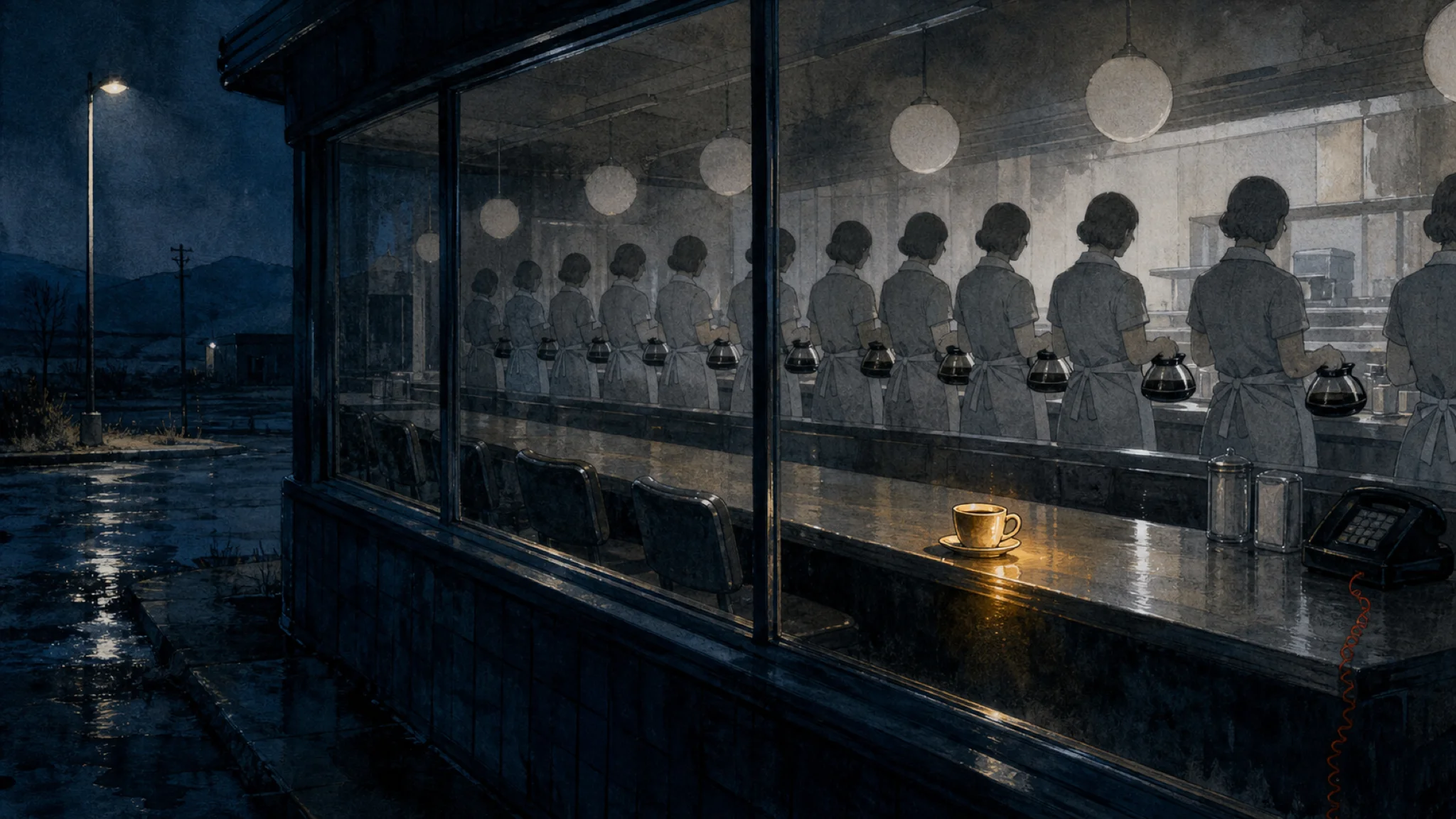
The episode’s Las Vegas material could have been a detour, but Samba Schutte makes Koumba essential. Before Carol reaches him, he is living inside an elaborate casino performance. The joined around him play dealers, gamblers, companions, and heavies. They speak French, cheer his record-setting win, and let him perform danger without risking anything. When one man breaks the fantasy, Koumba snaps at him to stay in character. It is funny because the scene knows how pathetic and seductive the arrangement is. The last unjoined people on Earth can command pageantry, but they cannot command surprise.
Koumba’s life looks unserious at first: champagne, beautiful companions, scripted poker, a penthouse full of indulgence. Yet the episode gradually reveals that his decadence is also a philosophy. He knows about the HDP. He has asked questions. He has watched the explanation. He has had time to sit with it. His answer is not outrage but accommodation, and that infuriates Carol more than ignorance would. He can call the practice troubling and still keep drinking champagne. He can call the case reasonable and still acknowledge the disgust. To Carol, that sounds like surrender. To Koumba, it may simply be the sane response to a fact neither of them can undo that night.
Their conversation is the episode’s best sustained scene because both characters are right in partial, incompatible ways. Carol sees the warehouse and refuses any moral laundering. Koumba sees the starving future beyond the warehouse and refuses Carol’s fantasy that disgust is a plan. He tells her the other immune individuals are in contact, all but the man in Paraguay. They meet on Zoom, usually Tuesdays and Fridays, and they have been discussing ways to save the joined from mass starvation. Robotic farming has been pitched, though the joined would have to build and program the robots themselves, which creates its own ethical snag.
Carol’s wound in this scene goes beyond being excluded. The others have judged her accurately enough to hurt. Koumba tells her the group voted and decided her presence might be disruptive. The word lands like a slap because it is insulting, condescending, and difficult to refute after everything we have seen her do. Seehorn plays the moment without overstatement. Carol retreats to the bathroom and cries because exclusion is devastating when there are only a dozen people left capable of excluding you.
Koumba hears this too. Speaking in French to the companions who have left him, he says Carol is lonely. That small private acknowledgment does a great deal for him. He is vain, avoidant, theatrical, morally slippery, and perceptive. In the morning, he cooks for Carol, jokes with her, and offers a standing line of contact: dial zero and the joined will find him wherever he is. The scene has warmth without pretending he and Carol are allies.
Consent becomes Carol’s first real leverage
The episode pivots when Koumba gives Carol information she did not know: the joined cannot turn the immune without consent. The virus must be tailored to individual stem cells, and collecting those cells requires an invasive procedure, a needle into the hip bone. The joined cannot do that without permission. Koumba says they discovered this only the day before and are not pleased. He was asked for consent and declined with almost comic courtesy.
That revelation changes Carol’s position. Until now, she has been reacting to a world with overwhelming numbers, perfect coordination, and bottomless patience. She could damage property, threaten, flee, and demand answers, but the joined always seemed to have the larger clock. Now Carol has something they need and a boundary they cannot cross. The fact that the boundary is bodily matters. Pluribus has made consent its most unsettling language from the start: people are absorbed into peace, grief is shared across billions, and intimacy has been repurposed as infrastructure. Episode 6 locates the remaining line in bone.
Carol tests it immediately. She calls the joined, reaches only a recording, and asks whether they need her stem cells and express permission. The answer comes not through words but through silence and the appearance of a joined figure in the distance. Then she calls again and makes her refusal formal: she does not consent, and they will not lay a finger on her. The recording’s practiced gentleness makes the exchange colder. It keeps saying their feelings have not changed. Carol is trying to establish a legal fact with people who can love her and still want her erased.
Koumba’s farewell complicates her anger one last time. He tells her the world is doing the best it can, that it misses her, that Karolina Wydra’s Zosia misses her, and that they are waiting for a change of heart. Carol’s reply is blunt contempt. She drives away from the casino in a vehicle Koumba finds amusing, and the episode moves from conversation into broadcast.
The radio sequence is patient and wordless before it becomes declarative. Carol works through static, waits through timers, adjusts, listens, and tries again. When she finally sends her message, she addresses the twelve other survivors, though the Paraguay man immediately catches the number. Carol tells them there is a way to undo the situation because the joined resisted telling her so intensely that the world broke into tears and Albuquerque was abandoned. She has also learned another rule: they cannot lie. Her pitch is a warning to holdouts who admire the new peace: their opinion may be the last one they possess.
The closing Paraguay scene sharpens that warning. Carlos-Manuel Vesga’s Manousos moves through darkness, hears a Spanish-speaking joined voice greet him as son, and rejects the word with rough, personal disgust. The line is ugly, funny, and clarifying. Carol may be building a coalition, but the immune are not noble by default. They are individuals, which means they come with pettiness, history, cruelty, wit, fear, appetite, and bad mothers. That is the point.
What this hour costs
Episode 6 makes individuality look both precious and unbearable. Carol’s freedom allows her to say no, to investigate, to rage against a world that has rebranded surrender as harmony. It also leaves her alone in bathrooms, warehouses, empty streets, and abandoned airwaves. Koumba’s freedom lets him build a casino dream and refuse the needle. It also lets him ignore horror long enough to enjoy the performance.
The joined, by contrast, have peace, coordination, and a moral code that prevents ordinary violence. They also have mass starvation ahead, a cannibal supply chain behind them, and no capacity to lie about the contradiction. Pluribus is at its best here because it refuses to make the old human world look clean by comparison. Carol is defending something real, but what she is defending includes every awful thing that comes with choice. The episode’s harshest move is to suggest that this may still be worth defending.
Verdict
“Cold Storage” is one of the season’s strongest episodes because it widens the show without losing Carol’s bruised interior scale. The HDP reveal gives the premise a physical economy, Koumba gives the immune side a new ideological texture, and the stem-cell discovery gives Carol a practical foothold after weeks of emotional flailing. Seehorn remains the anchor, but Schutte is the hour’s crucial counterweight: charming enough to disarm Carol, evasive enough to anger her, humane enough to make his passivity troubling.
The episode is slightly talkier than its best stretches need to be, especially in the instructional-video section, but even that dryness feels intentional. The horror here comes from a world that can explain itself perfectly and still be horrifying. By the time Carol broadcasts to the other survivors, Pluribus has made her both more dangerous and more necessary. She may be disruptive. She may also be the only person left willing to treat disruption as a civic duty.
Rating: 8.8/10
More episodes from Pluribus — Vince Gilligan's post-apocalyptic immune-vs-hive-mind drama, episode by episode. Jump to any episode in the season:
Where to go next
Reviewed by Mira Vance · QuizFandom Editor & Lead Reviewer. Every rating is an honest per-watch assessment from the desk that also writes the quizzes — not a press release rehash.