Teach You a Lesson Episode 1 Review: "Episode 1" — Park Dae-seok dies, Na Hwa-jin takes Class 5, and Daehan High learns what the ERPB is for
What happens — the short version (spoilers)
- Kim Gyeong-min narrates his terror of school while Daehan High's outcast-stick ceremony shifts the target from him to Park Dae-seok.
- Dae-seok defends a substitute teacher from Ryu Jun-hyeong's crew, is beaten and publicly named the new outcast, then dies by suicide.
- Na Hwa-jin enters as an Educational Rights Protection Bureau inspector, slaps Gwang-su, faces Jun-hyeong's phone cameras, and takes charge of the school.
- Principal Kim denies the bullying, but Hwa-jin uses Dae-seok's empty seat, the cafeteria line, and Jun-hyeong's staged bruise to expose how power works at Daehan High.
- Hwa-jin rescues Gyeong-min from the roof, tells him to run before fighting, and later says Dae-seok's death was not Gyeong-min's fault.
- Choi Gang-seok leaks Ryu Gwang-pil's reports, Jun-hyeong loses his father's protection, police reinvestigate Dae-seok's case, and Hwa-jin leaves Daehan High before visiting Choi Ga-yun's memorial.
Teach You a Lesson opens with a school that has already turned cruelty into administration. One student prays to disappear, another is handed the outcast stick, and every adult nearby has a reason to look away until Na Hwa-jin arrives with a badge, a temper, and state permission to break the room back open. The premiere works best when it treats Daehan High as a whole machine: students supply the violence, parents supply the immunity, and school officials keep calling fear order. Its catharsis is real, but it is never clean; the question hanging over the first case is what kind of system needs a man like Hwa-jin to make children answer for what adults allowed.
Kim Gyeong-min prays to miss school, Park Dae-seok takes the outcast stick, and Daehan High turns punishment into ceremony
The first voice we hear belongs to Kim Gyeong-min, and it is already past ordinary dread. He does not want a snow day or a lucky excuse. He wants sickness. He wants sleep deep enough to skip two years. Death doesn’t scare me anymore, he says, before the frame of the case snaps into place: what scares him is school.
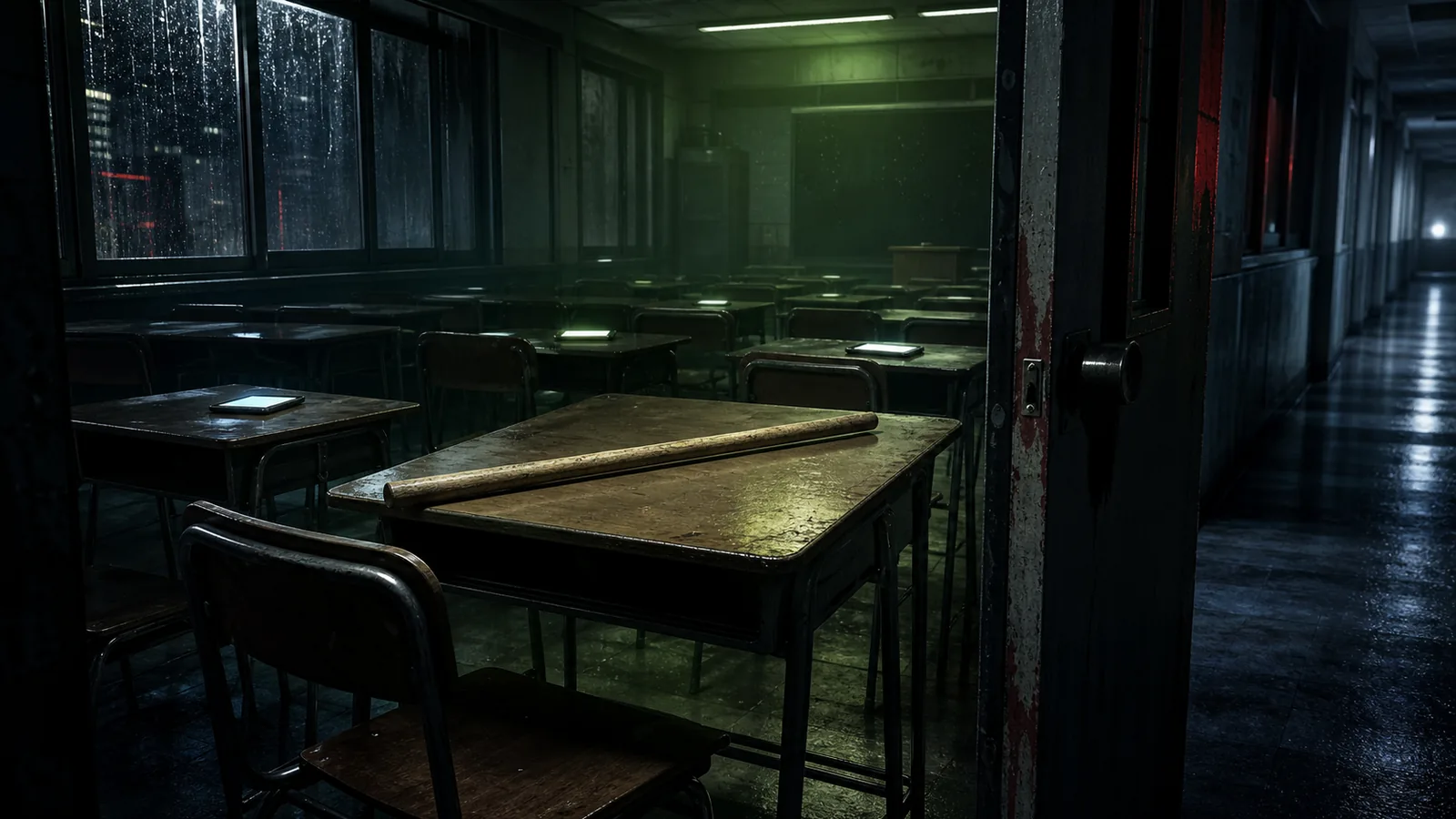
Daehan High has made that fear social. The outcast role passes from student to student like a class duty, complete with a stick, a handoff, and an audience trained to clap. Park Dae-seok becomes the new target after he does the one decent thing in the room, stepping in when Jun-hyeong and his crew humiliate a substitute teacher. The punishment is immediate. The boys beat him, drag him into public shame, make him introduce himself as the new outcast, and force Gyeong-min to stand close enough to understand what relief costs.
That is the ugliest beat in the opening. Gyeong-min survives because Dae-seok becomes the new body in the room. The teachers talk in the lounge about grades, complaints, child-abuse accusations, and the ban on corporal punishment. A student is being broken in the same building, and the adults sound most wounded by the loss of their own authority. Then Dae-seok climbs up and jumps.
Na Hwa-jin slaps Gwang-su in the hall, faces Jun-hyeong’s phone cameras, and announces the Educational Rights Protection Bureau
Dae-seok’s death does not stop the system. It only resets the target.
Gyeong-min becomes the outcast again, and Jun-hyeong’s crew treat the police visit like a joke that briefly interrupted their day. They pour alcohol on him, shove him around, and demand he hit back so they can pretend the violence is mutual. Gwang-su even gives him instructions: look into the other person’s eyes, swing properly, be a man. The room is a training ground for abuse disguised as play, and everyone watching knows the rules.
Hwa-jin enters by breaking those rules in the most direct way possible. He takes the hit meant for Gyeong-min, slaps Gwang-su, and keeps walking through the school’s phone-camera economy like he has come prepared for exactly this kind of audience. Jun-hyeong understands cameras as protection. Hwa-jin understands them as a stage.
The reveal is blunt and almost comic in its timing. Principal Kim demands a name, and Hwa-jin produces the badge: Na Hwa-jin, inspector with the Korean Educational Rights Protection Bureau. The bureau is new enough that no one has heard of it, which lets him define it in public. It will handle schools that bribe police, bury student deaths, and treat discipline as a branding problem. Good students will be praised. Students who misbehave and lack respect, he says, will be beaten.
That line is not subtle. Neither is the premiere. But the force of the entrance comes from the way Hwa-jin names the hidden arrangement out loud. Daehan High has been violent for a long time. He is the first person with power to stop pretending otherwise.
Principal Kim denies the bullying, and Hwa-jin calls roll until Park Dae-seok’s empty seat fills the classroom
Principal Kim’s office gives the case its adult shape. He does not open with grief. He opens with reputation. Daehan High has important families, famous politicians, business connections, and a congressman’s son. Sudden changes might upset parents. Dropping grades might bring backlash. When Hwa-jin asks whether grades are what frighten him, the answer is basically yes.
Hwa-jin’s reply lands as the premiere’s cleanest institutional line: a world where adults are afraid of children… is a world that is nearing its end. He is not talking about children as monsters. He is talking about the adults who handed them the school.
Class 5 makes that point for him. Hwa-jin takes attendance, reaches Park Dae-seok’s name, pauses over the absence, and asks why he died. The students try the approved lie: grades. Jun-hyeong mocks Dae-seok’s suicide with the same bored cruelty he brought to the hallway. Hwa-jin does not let the class hide behind silence. If they feel guilty, he says, it should not stay a thought. It should be felt.
So he orders the entire class into plank position. Jun-hyeong refuses, and the room waits to see whether the old power still works. Hwa-jin pulls him into the same physical logic Jun-hyeong has used on everyone else, then reduces all his inherited status to one sentence: You’re a student. And nothing more.
Jun-hyeong loses the cafeteria line, and Hwa-jin walks into Ryu Gwang-pil’s home to collect him
The cafeteria scene is the first time Jun-hyeong has to experience public embarrassment as something other than a weapon he controls. He cuts the line, and the room lets him because that is what the room has learned to do. Hwa-jin makes him go back. When Jun-hyeong wastes food, Hwa-jin turns the mess back onto him, smearing sauce on his clothes, putting a bowl on his head, and telling the students to film.
It is satisfying in the obvious revenge-drama way, and also slightly sickening by design. Hwa-jin knows exactly how humiliation travels in this school. He uses the same channels: lunch line, phones, laughter, crowd permission. The difference is not method. The difference is target and authority.
Then the case leaves campus. Hwa-jin walks into Congressman Ryu Gwang-pil’s home, eats the fruit, waits for Jun-hyeong, and tells his father why he is there. Jun-hyeong did not clean up after class. Hwa-jin has come to take him back.
Ryu tries the usual adult pressure: status, title, implication. Hwa-jin answers with procedure first, then insult. He quotes Ryu’s campaign slogan back at him, says teachers should behave like teachers and students should behave like students, and drags Jun-hyeong out to clean the school bathroom. When Ryu later confronts him with the bruise Jun-hyeong staged on his own forehead, Hwa-jin sees through it immediately. A boy who can hurt others easily, he says, must have been terrified to hurt himself.
Gyeong-min is chased to the roof, and Hwa-jin teaches him to run before asking him to trust a teacher
Jun-hyeong’s crew do not need proof to punish Gyeong-min. They decide he reported them to the bureau, chase him to the roof, and push him into the same edge-space where Dae-seok died. Hwa-jin finds him hanging there and gives him two choices: up or down. Gyeong-min chooses up, but Hwa-jin makes him say please first.
That could have played as a joke. It lands colder because the premiere has already shown what begging sounds like in this school. Hwa-jin is not gentle, but he is practical. When Gyeong-min says fighting back changes nothing, Hwa-jin agrees. Anyone telling him to fight five boys at once has never been beaten by a group. Run first, he says. Then find an adult.
The scene gives the premiere its necessary counterweight. Hwa-jin can be terrifying in a hallway, but with Gyeong-min he becomes something stranger: a teacher who prepares a victim to survive the next minute. He makes him sprint to the soccer goal. He jokes about being the wild dog if Gyeong-min runs too slowly. He peels fruit for him afterward. And when Gyeong-min asks who he is supposed to rely on, Hwa-jin answers with the word Daehan High has emptied out: teachers.
It is not sentimental. Gyeong-min’s phone still carries a cheerful message from home, and he still cannot name anyone he trusts. Hwa-jin’s answer matters because it sounds almost impossible.
Choi Gang-seok exposes Ryu Gwang-pil’s reports, and Jun-hyeong becomes the new Daehan High outcast
The political half of the premiere is cleaner, faster, and less emotionally complicated than the school half, but it gives the ERPB its teeth. Ryu storms into the Ministry of Education and demands that Choi Gang-seok shut the bureau down before the Daehan case becomes public. Gang-seok smiles, offers tea, and lets the threat expose itself.
Then Ryu’s campaign collapses in public. Reporters swarm him with allegations: bribes for nominations, use of aides for personal matters, sexual harassment, misuse of property. Gang-seok does not deny the leak when Ryu realizes what happened. He says it took him two years to establish the bureau, and in two years he learned a lot. When Ryu insists they are on the same political side, Gang-seok cuts the rope: there are no sides when education is the subject.
The sharpest punishment is parental. Ryu falls because of Jun-hyeong, and Gang-seok says so plainly: Because you needed to fall for your son to learn his lesson. Soon the news links Ryu’s arrest motion to reports about his son’s bullying and Dae-seok’s death. The case that almost stayed buried becomes a national story.
Back at school, the outcast stick changes hands again. This time Jun-hyeong is the target. The classmates who once feared him laugh, call him nothing without his father, and shove him into the role he helped maintain. The reversal is savage because it refuses to flatter the crowd. They have not become better people. They have simply learned the direction of power has changed.
Hwa-jin tells Gyeong-min it was not his fault, then makes Jun-hyeong feel the fear he made Dae-seok carry
Gyeong-min’s confession beside Dae-seok’s memorial is the part the premiere needs in order to keep its revenge from floating away. When Dae-seok was picked, Gyeong-min admits, it felt good. When Dae-seok died, the first thing he did was smile, because he thought he might finally escape. He says that makes him the same as everyone else.
Hwa-jin does not let him keep that sentence. He tells him it was not his fault, once, then again. Gyeong-min was an abandoned victim, failed by the adults who watched in silence while the bullies made his life hell. It is the gentlest Hwa-jin gets, and it matters because he does not confuse guilt with responsibility. Gyeong-min can be ashamed of relief. That does not make him Dae-seok’s killer.
Jun-hyeong’s final breakdown pushes the premiere back into nightmare. Stripped of his father’s protection, he attacks the classmates now laughing at him. Hwa-jin arrives, reminds him that guilt should be felt with the body, and confronts him with gasoline, panic, and the fear Dae-seok carried to the roof. Jun-hyeong begs. Hwa-jin asks whether Dae-seok deserved what happened to him. Then he gives the closest thing this case can have to a sentence: This is the hell you created. Enjoy living in it.
After that, the legal machinery finally moves. Police reinvestigate Dae-seok’s case and arrest Jun-hyeong and his friends. Principal Kim, for the first time, takes responsibility instead of hiding. The ERPB publishes the bullying records, and Gyeong-min says they can be erased only if the victims forgive them. Hwa-jin leaves Daehan High, then visits Choi Ga-yun’s memorial. The case is closed. The wound that built the bureau is not.
Tiny details worth clocking
- The outcast stick is treated like school property, which makes the ritual feel uglier than a random act of violence. Daehan High has turned cruelty into an object people can pass along.
- Principal Kim’s phrase “high-class backgrounds” gives away the whole school before Hwa-jin has to prove anything. He is describing insulation, not character.
- Jun-hyeong understands phones as leverage until Hwa-jin uses the same public recording culture against him in the hall and cafeteria.
- Hwa-jin’s advice to Gyeong-min is deliberately unheroic: run, survive, find an adult. The premiere does not insult a victim by demanding a brave fistfight he cannot win.
- Gang-seok’s “line of fire” exchange with Hwa-jin is a small pressure release after the political takedown, but it also makes clear that the bureau is going to create problems for the people protecting it.
Final verdict
As a premiere, “Episode 1” is blunt, bruising, and sometimes too neat in the way its mechanisms click into place. Ryu Gwang-pil’s downfall happens with almost comic speed once Gang-seok opens the folder, and the final public reversal at school is intentionally broad enough to feel like a moral demonstration. This is not subtle television.
But Teach You a Lesson earns most of that bluntness because it keeps returning to the bodies that polite systems hide. Dae-seok’s empty seat, Gyeong-min hanging from the roof, Jun-hyeong kneeling in front of the class, the bathroom floor, the cafeteria sauce, the gasoline: every major beat asks who gets to feel consequences and who usually escapes them. The premiere’s best scene is still Hwa-jin telling Gyeong-min he was abandoned, not corrupted. That is where the revenge fantasy finds its moral floor.
The risk going forward is obvious. If Hwa-jin becomes only a cool punishment machine, the series will flatten its own anger. Episode 1 works because it lets the punishment feel good while leaving a bad taste in the mouth. Daehan High needed intervention. It is still horrifying that intervention had to look like this.
Rating: 8.3/10 — A forceful, morally charged opener whose school case hits hard, even when the political cleanup moves faster than the pain underneath it.
More episodes from Teach You a Lesson — School-violence K-drama, episode by episode. Jump to any episode in the season:
Where to go next
Reviewed by Mira Vance · QuizFandom Editor & Lead Reviewer. Every rating is an honest per-watch assessment from the desk that also writes the quizzes — not a press release rehash.