The Evil Lawyer Episode 2 "Testimony" Review: Jittri Buys Mek Time, Then Makes Him Pay for It
What happens — the short version (spoilers)
- Jittri visits Mek in detention, tells him she is his only way out, and pushes him to fire his current lawyer.
- At Techin's funeral, Ang insists she does not believe Mek killed him while Atchara's political world warns her not to provoke Anan.
- Jittri lays out the evidence problem: Mek went to Techin's house, Techin is dead, and a confession strategy may be safer than claiming a frame-up.
- Mek refuses to accept the confession route because he believes Anan is using the case to bury the waste-plant thread and the boat-party secret.
- Jittri identifies Judge Yuthana as the bail pressure point and uses the judge's daughter's divorce-assets problem as leverage.
- Mek is humiliated during prison intake before bail lands, and Jittri gets him out under her own terms: no fee, but he works for her and obeys.
The Evil Lawyer turns its second hour into a pressure test: Mek insists he did not murder Techin, Jittri agrees only after measuring every ugly option, and Anan's reach makes bail feel less like freedom than a temporary gap in the trap.
Episode 1 ended with Jittri walking into the room where Mek had just crossed the line from legal idealist to murder suspect. Episode 2 is smart enough not to pretend the next move is noble. It is not a rescue fantasy. It is a negotiation between a man who still believes the truth should matter and a lawyer who knows the truth usually needs leverage before anyone in power will listen.
That is what makes “Testimony” such a useful second chapter. It narrows the story after the chaos of Techin’s death. Mek is not wandering through a conspiracy board yet. He is in custody, charged, watched, and slowly learning that Anan does not have to personally touch every part of the system for the system to bend toward him. The danger is procedural first. A denied bail motion can be as lethal as a hitman if the prison is already waiting.
Jittri visits Mek in detention and refuses to sell him comfort
Jittri’s first full post-crime conversation with Mek tells us almost everything about the show’s lawyer-client engine. She does not rush in with reassurance. She tells him they do not have much time, calls herself his only way out, and tells him to fire the lawyer he already has. It is blunt, transactional, and almost offensive, which is exactly why it works.
Mek pushes back because he is still trying to sort his case through ordinary categories: counsel, facts, defense, innocence. Jittri is already somewhere else. She is reading power. She knows the charge is not just about what happened in Techin’s house. It is about who Techin was: Police General Anan Methaneepaisal’s son. It is also about who Mek is: a lawyer tied to the waste-plant fire case, with a family name the court world recognizes, and an ex-girlfriend now caught in Ruam Thai Party optics.
The episode keeps that first meeting tense by letting Jittri be right without making her soft. Mek says he did not murder Techin. Jittri does not immediately believe him because belief is cheap in a room full of evidence. Her job, as she sees it, is to decide whether his version can survive the institutions already lining up against him.
Techin’s funeral turns Ang’s grief into political risk
The funeral sequence widens the cost of the case without losing the episode’s focus. Angsumalin Thumnart is not just Mek’s ex or Techin’s fiancee-adjacent political link. She is Dr. Atchara’s daughter, attached to the Ruam Thai Party machine, standing inside a public tragedy that everyone around her wants to manage.
The scene is careful about Ang’s position. She does not believe Mek killed Techin, but belief becomes dangerous when Anan is the grieving father. The warnings around her are practical. Anan is not someone to provoke, and a public defense of Mek would turn one murder case into a party problem.
That is where the show finds one of its better tensions. Ang’s emotional instinct points toward Mek, but her political world points toward silence. Atchara’s orbit does not need Ang to be cruel. It needs her to be useful. The episode lets that sit there, chilly and unresolved, while Mek’s case moves forward without the one witness who might understand why Techin called him over in the first place.
Mek rejects the confession route because the frame-up is the point
Jittri’s strategy talk is one of the cleanest procedural sections so far. The evidence places Techin and Mek together. Mek went to Techin’s house. Techin is dead. Mek was found there. On paper, the safest legal move is not a grand innocence campaign. It is a damage-control version of guilt.
Mek refuses because that version would quietly accept Anan’s frame. He did not go to Techin’s house to murder him. He went because Techin dangled information tied to Ang’s boat-party secret. Mek knows the final violence happened in a room already poisoned by Techin’s threats, Anan’s reach, and the earlier waste-plant case. The problem is that knowing the story is not the same as being able to prove it.
The episode is sharpest when it makes Mek sound principled but cornered, not foolishly pure. His claim that Anan is framing him is not paranoia. It is the only theory that fits the speed and pressure closing around him. But Jittri can still see what the court will see first: a dead powerful man’s son, a defendant with motive, and no usable alternate suspect.
Padung and the prison pipeline make the courtroom feel already occupied
“Testimony” does not need Anan to bark orders in every scene. The point is that his influence already has rooms waiting for him. Padung is described as Anan’s man. The prison director is close enough to Anan for Mek’s team to treat detention as immediate physical danger. The case has a gravity before anyone argues the merits.
That gives the bail fight real stakes. A lesser show would treat bail as a paperwork beat. Here it is the episode’s central action sequence. If Mek stays inside, the state does not need a verdict to punish him. It only needs time, access, and plausible deniability.
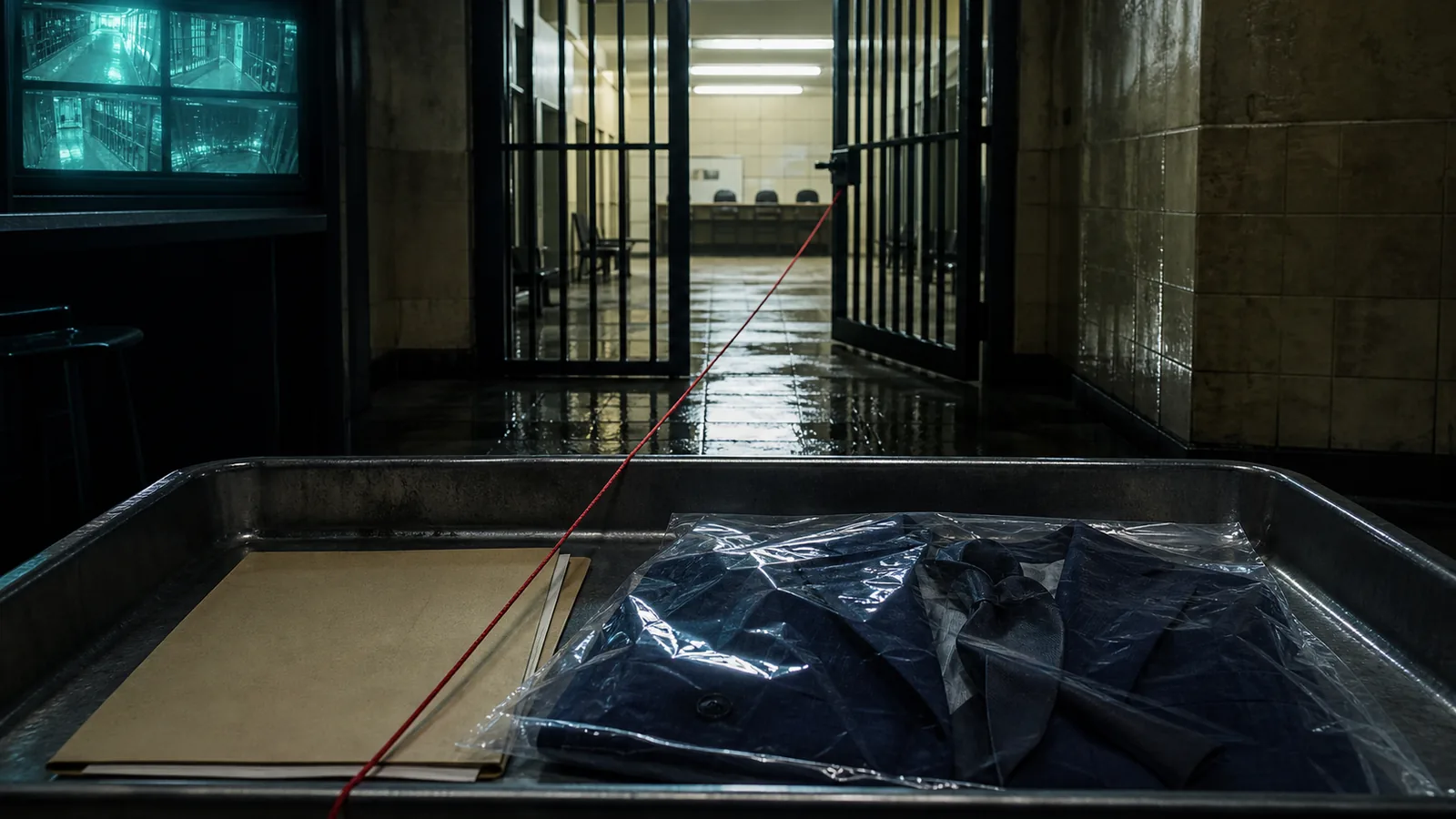
The prison-intake sequence proves the fear. Mek is stripped, handled, and made small before he even has a chance to fight his case. The humiliation is not incidental. It is the system teaching him his new rank. When the bail news arrives, it does not feel like salvation. It feels like someone yanked him out seconds before the machinery could close.
Jittri targets Judge Yuthana through his daughter’s divorce case
The episode’s ugliest winning move belongs to Jittri, and the show is better because it does not ask us to cheer too cleanly. She identifies Judge Yuthana as the bail pressure point and uses the judge’s daughter’s divorce-assets trouble as leverage. It is a nasty tactic, the kind that turns private family mess into procedural advantage.
But the episode also understands why Jittri’s nastiness has force. Anan’s side is already leaning on judges, prisons, police, and public grief. Jittri is not corrupting a pure arena. She is entering a corrupt arena with a weapon that can still cut. That does not absolve her. It explains the moral weather she lives in.
This is where the title The Evil Lawyer starts to feel less like a gimmick and more like an argument. Jittri’s evil is partly performance, partly survival, and partly appetite. She knows how to hurt people because the polite paths have already been fenced off. The show keeps asking whether that makes her a necessary counterweight or just another predator with better taste in targets.
Mek makes bail, but Jittri makes the contract personal
Mek’s release is not a clean victory. Jittri gets him out, then immediately sets the terms. She is not taking money. He will work for her. If he wants to beat the case, he will do what she says.
That condition matters because it flips the usual client-lawyer dynamic. Mek is not simply hiring a savior. He is being drafted into Jittri’s war room. She does not want gratitude. She wants obedience, proximity, and maybe a weapon she can point at Anan later.
The final note, with Anan learning that Judge Rit Piriyawich’s son has made bail and hired Jittri, is a smart escalation. The case is no longer just a dead son and a suspect. It is a collision of court families, police power, political optics, and Jittri’s private vendetta-shaped competence. Mek has escaped prison for now. The harder question is whether he has escaped being used.
Tiny details worth clocking
The episode keeps calling Mek by his full legal identity, which matters because his family connection through Judge Rit changes how every court figure reads the case.
Ang’s refusal to believe Mek is not framed as romance first. It is framed as memory. She knows him well enough for the official story to feel wrong.
Jittri’s decision not to take money from Mek is not generosity. It is a stronger claim of ownership.
The title “Testimony” works because the episode is full of people deciding which truth can be spoken safely: Mek in custody, Ang at the funeral, and Jittri in rooms where pressure counts more than virtue.
Final verdict
“Testimony” is a strong second episode because it turns the murder cliffhanger into a procedural vise. The writing understands that legal thrillers do not need constant twists if every ordinary step – bail, prison intake, funeral etiquette, judicial access – carries danger.
Jittri remains the show’s best weapon: cold, funny in the driest possible way, and visibly dangerous even when she is doing the correct thing. Mek is still catching up to the kind of case he is inside, but that imbalance gives the season its pulse. He wants the law to recognize innocence. Jittri wants to know who has enough power to make innocence useful.
Rating: 8.4/10 – a tighter, colder hour that deepens the frame-up and makes bail feel like a battlefield instead of a formality.
More episodes from The Evil Lawyer — Thai courtroom revenge, power, and frame-up fallout. Jump to any episode in the season:
Where to go next
Reviewed by Mira Vance · QuizFandom Editor & Lead Reviewer. Every rating is an honest per-watch assessment from the desk that also writes the quizzes — not a press release rehash.