The Evil Lawyer Episode 6 "Falsehood" Review: Anan's Gun Surfaces, Chai Becomes Leverage, and Mek Breaks Jittri's Plan
What happens — the short version (spoilers)
- A flashback shows Seya and Nay Oo separated into Chai's boat economy, making Seya's later panic less evasive than survival-trained.
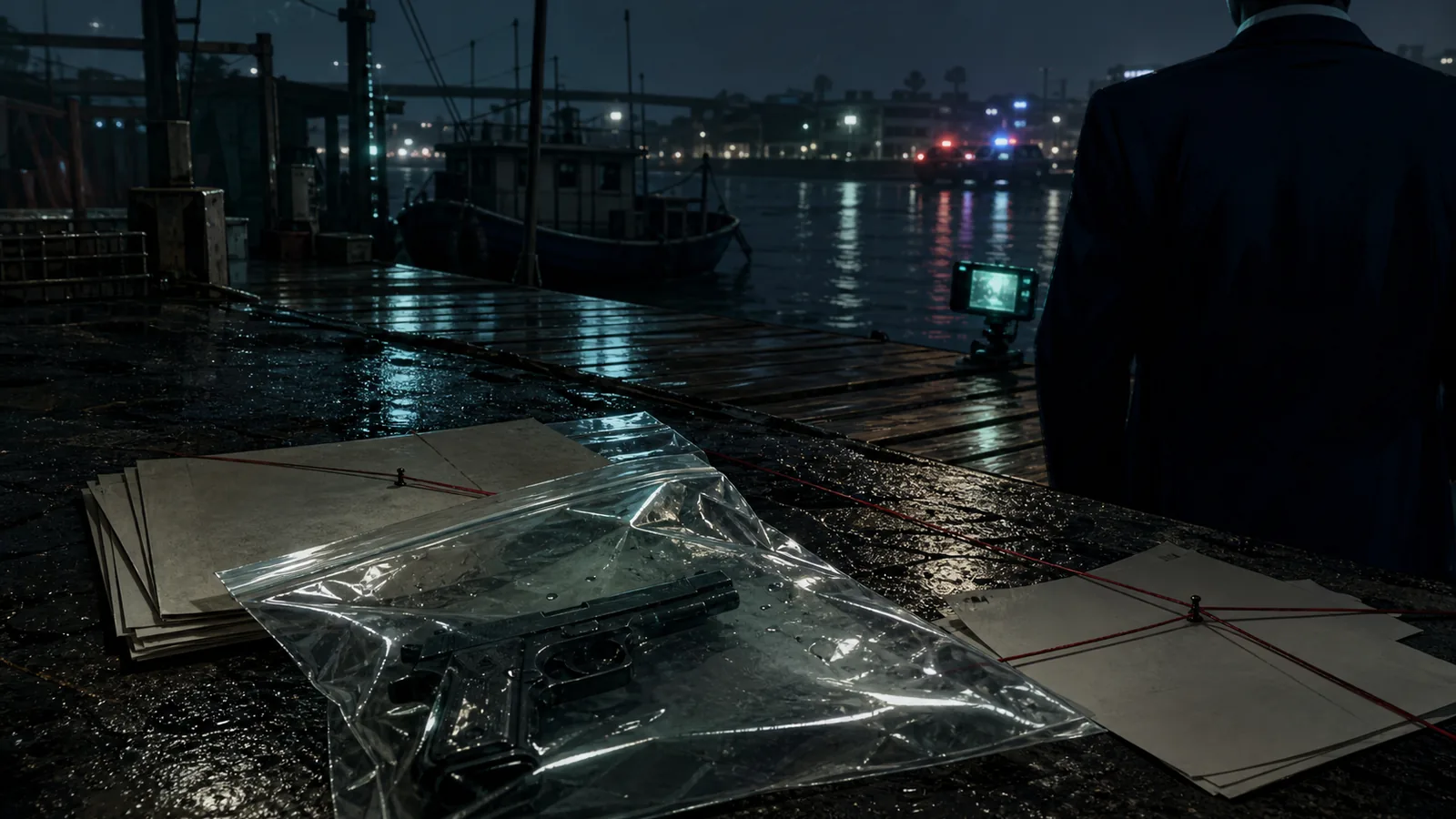
- Seya confronts Chai with a gun over Nay Oo's disappearance, and the weapon is later identified as Anan's missing gun.
- An anonymous leak connects the gun to Anan publicly, forcing him to deny knowledge of how it reached a migrant worker attacking his former subordinate.
- Jittri approaches Chai, links him to old police identity Yutthachai, and sees him as the witness who can expose Anan's trafficking operation.
- Jittri's plan requires using Leh as a fall guy in Chai's drug case, which Mek rejects because he is fighting not to become a scapegoat himself.
- When Leh reports a Burmese woman resembling Nay Oo on a boat, Mek calls Ang and pushes toward a risky raid despite Jittri's order to stay with the plan.
The Evil Lawyer pushes the trafficking conspiracy into the open when Seya attacks Chai with Anan's gun, then forces Mek to choose between saving a possible Nay Oo lead and preserving Jittri's larger case against Anan.
“Falsehood” is the season’s most propulsive episode so far because it lets every hidden connection turn physical. The missing gun is no longer only a theory from the golf-course case. It appears in Seya’s hands. Chai is no longer an abstract fishery boss. He becomes the man who can link migrant labor, smuggling routes, and Anan’s protection network. Jittri is no longer just threatening Anan through Mek’s murder case. She walks into his house with documents and tells him information is a weapon.
The hour also gives Mek his cleanest moral rupture with Jittri. He can tolerate dirty strategy when it protects him. He cannot accept sacrificing one trafficked worker or delaying a rescue if Nay Oo might still be alive.
The flashback shows Seya and Nay Oo separated into Chai’s boat economy
Episode 6 opens with the origin of Seya’s terror. He and Nay Oo arrive together, then are split apart. Men decide how many workers to put on boats. Seya is shoved toward years of forced labor while his sisters are taken elsewhere. The scene is quick, but it gives the trafficking thread the bluntness it needs.
The show has talked about labor exploitation before. Here it lets the process be seen: bodies counted, workers moved, questions answered with force. That matters because later legal language – fishery regulations, drug charges, human trafficking evidence – can sound abstract. The opener reminds us those abstractions begin with someone calling for his sister and being ignored.
By the time Seya confronts Chai, the attack is not random violence. It is grief, fear, and desperation finally finding the wrong door with the right name on it.
The flashback also clarifies why Seya is so hard to manage as a witness. He is not withholding information because he enjoys bargaining with Mek and Ang. He has learned that naming the people who moved him, sold him, or beat him can get someone killed. His fear is not an obstacle to the investigation; it is evidence of the system the investigation is trying to prove.
Seya attacks Chai, and Anan’s missing gun becomes public evidence
Seya’s confrontation with Chai is messy because he is not a professional witness. He is a brother who thinks Nay Oo has been taken, facing the fishery boss whose world swallowed him. Chai mocks him, overpowers him, and the incident leaves behind the crucial fact Jittri needs: the gun involved is registered to Anan.
That discovery turns the entire episode. Jittri’s side finds the missing gun, and an anonymous leak pushes the ownership into the news cycle. Anan tries to present the matter as a stolen weapon used in a separate crime. Reporters press the obvious question: why did his gun end up in the hands of a migrant worker attacking Chaiwut Sinthornsuk, a former subordinate from Anan’s old police world?
The show is good at this kind of pressure. It does not need Anan to confess. It only needs his public explanation to sound thinner than the facts around it.
The leaked registration also folds the two cases together in public. Mek’s defense needs a gun at the golf course. Seya’s attack produces a gun tied to Anan. Chai’s history ties that weapon to a man Anan claims not to remember. Each fact is incomplete alone, but together they make Anan’s clean denial harder to sell.
Jittri sees Chai as the witness who can make Anan’s operation visible
Jittri’s move is immediate. She approaches Chaiwut as a lawyer, then as a threat. She knows his old name, his police history, his connection to Anan, and the route from local fish markets to the wider trafficking operation. Chai thinks he has a powerful backer. Jittri sees a drowning man.
When Chai is arrested in a drug-smuggling case, she takes him on as a client. That sounds absurd until she explains the strategy: Chai knows everything about Anan’s operations. If he testifies, Mek can prove a third party existed and expose the human-trafficking network that made Nay Oo disappearable in the first place.
The tactic is pure Jittri. She does not try to make Chai good. She tries to make him useful. The moral nausea comes from how plausible that is. In a case this corrupt, the witness who can hurt Anan may also be one of Anan’s own predators.
Chai’s value also comes from proximity. He is not a rumor collector or a frightened bystander. He has boats, markets, old police ties, and enough operational knowledge to turn Anan from an untouchable name into a man connected to routes, documents, and bodies.
That proximity is exactly why both sides need him controlled.
Jittri threatens Anan with ship records, work permits, and the blast radius of information
The home confrontation between Jittri and Anan is the episode’s centerpiece. She tells him she represents Chai, then starts naming the kinds of documents that can hurt him: ship coordinates, ownership transfers, duplicate licenses, forged work permits, human trafficking.
It is a beautiful legal-thriller scene because Jittri is not bluffing with emotion. She is bluffing with logistics. Anan has money, rank, history, and men loyal enough to kill. Jittri has information that might explode in directions he cannot control.
Anan hits back by naming the older wound. He knows Jittri wants answers about her father. That line matters because it confirms her vendetta has a family history, not only a professional disgust for Anan. But it also shows Anan’s weakness. He recognizes revenge because he has been creating it for decades.
The Chai plan asks Mek to accept another scapegoat
Jittri’s plan for Chai is where the episode turns against her. Chai has been caught with a serious drug case, so she wants to spin a different story and use Leh, a trafficked Thai worker, as the person who goes to jail instead. Chai then becomes available as a witness against Anan.
Mek refuses because the symmetry is unbearable. He is fighting his own frame-up. He cannot help frame another trafficked worker just because it helps his defense. Jittri treats that objection as naive, but the episode does not. It lets Mek be morally right even when his righteousness makes the case harder.
That argument is one of the season’s best because both positions are easy to understand. Without Chai, Mek may not prove a third party. Without the scapegoat, Chai may never testify. But if the defense of an innocent man requires sacrificing another vulnerable person, then Mek is becoming exactly what he entered the law to resist.
The possible Nay Oo lead sends Mek to the water against Jittri’s orders
The final movement shifts from strategy to rescue. Leh tells Mek that a woman was recently taken onto a boat, Burmese, limping, and resembling Nay Oo. Mek wants the authorities alerted. Jittri orders him not to save her because a reckless raid could tip off Anan, let him blame a subordinate, and destroy the bigger case.
Mek hears something else: if the woman is Nay Oo, she may die while Jittri waits for the perfect attack. He calls Ang and goes to Chai’s fishery. The search pushes toward the border waters, then a boat, then gunfire.
The cliffhanger works because it is not just action. It is the collision between Jittri’s long game and Mek’s immediate obligation. If he is wrong, he may have ruined the best shot at Anan. If he is right, delay would have been another word for abandonment.
The episode does not let either answer feel safe. Jittri is correct that a premature raid can warn Anan and give him time to sacrifice a subordinate. Mek is correct that a living woman is not a chess piece. The suspense comes from watching two valid urgencies make each other more dangerous.
Tiny details worth clocking
Chai’s old police identity, Yutthachai, connects the present fishery world to Anan’s earlier law-enforcement network.
The public leak about Anan’s gun is not treated as a complete proof. It is pressure, and pressure is often how this show creates the next procedural opening.
Jittri says she only wants to help Mek beat his case while holding a dossier that could damage Anan’s whole operation. Both statements can be strategically true.
Leh matters because he turns the Chai plan from abstract dirty work into a human cost Mek can look at.
Final verdict
“Falsehood” is a gripping escalation episode. It pulls the trafficking conspiracy, the missing gun, Chai’s fishery, and Jittri’s Anan vendetta into one line of force, then makes Mek snap that line by choosing the possible victim over the cleaner strategy.
The writing is strongest when it lets Jittri be brilliant and wrong at the same time. Her plan may be the only way to crush Anan in court. Mek’s refusal may be the only thing keeping the case from becoming another machine that feeds on the powerless.
Rating: 8.7/10 – a tense, consequential hour that turns Anan’s gun into public pressure and makes Mek’s conscience the biggest threat to Jittri’s plan.
More episodes from The Evil Lawyer — Thai courtroom revenge, power, and frame-up fallout. Jump to any episode in the season:
Where to go next
Reviewed by Mira Vance · QuizFandom Editor & Lead Reviewer. Every rating is an honest per-watch assessment from the desk that also writes the quizzes — not a press release rehash.