The Evil Lawyer Episode 7 "Statement" Review: Chai Dies, Padung Closes the Door, and Ang Burns Ruam Thai in Public
What happens — the short version (spoilers)
- The rescued woman is not Seya's sister but another Thai woman tricked onto the boat, while twenty-three workers and Chai are killed after the raid.
- Jittri hears the older Anan story about her father dying after interrogation near the Mekong, deepening why Chai's death hits her case so hard.
- Seya tells Ang that Nay Oo remembered Ang trying to help Nee An on the boat and that the sisters did not blame her.
- Mek's father warns him that Padung now has the case, and Mek confronts him over the family wound left by his mother's death.
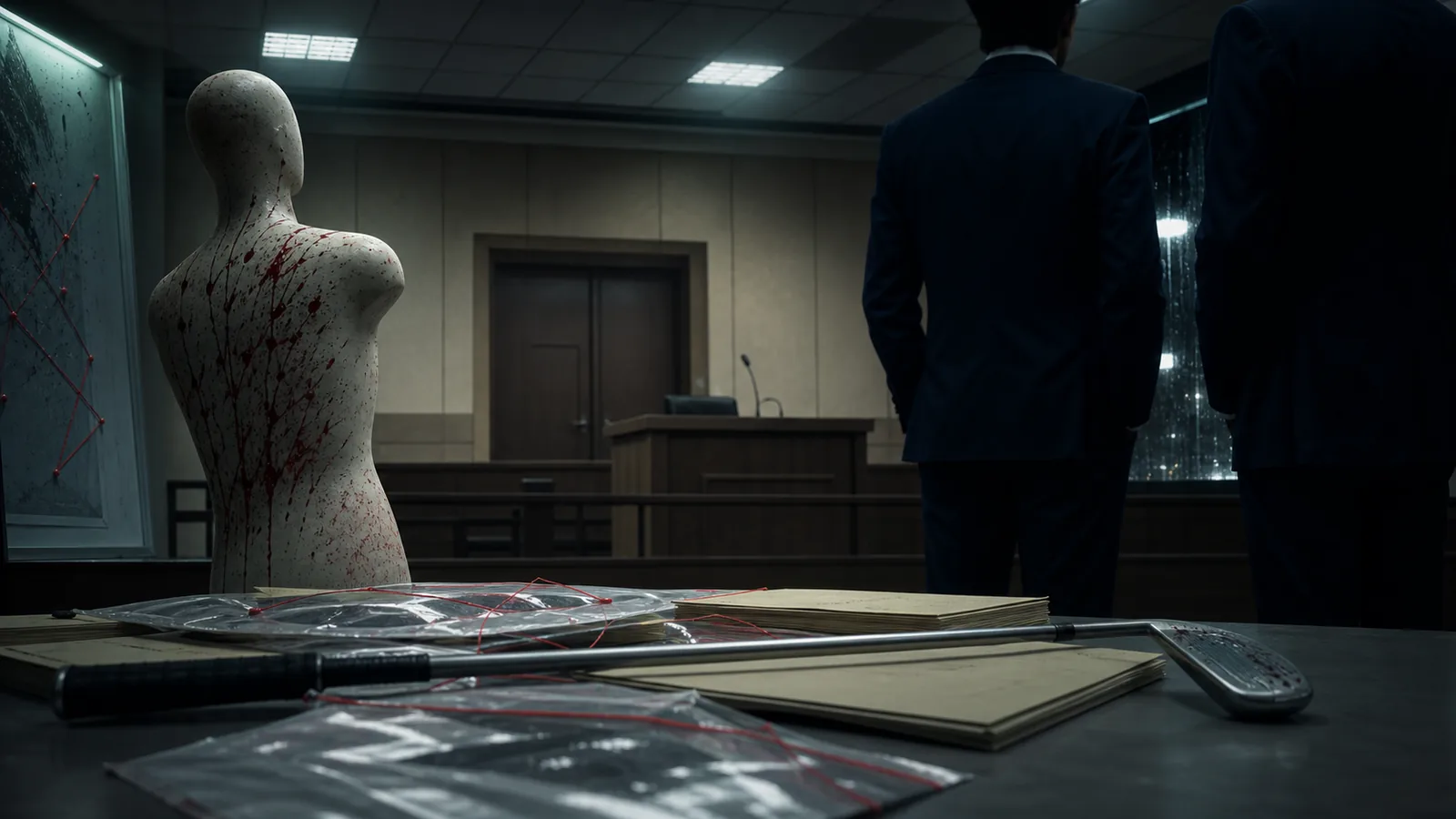
- In court, Jittri uses a blood-splatter demonstration to show Mek's stains could come from struggling over the club, but Padung denies late evidence and witnesses.
- At Ruam Thai's rebranding event, Ang resigns and names Nee An, Suwat, Anan's boat, and the body-dumping cover-up in public.
The Evil Lawyer makes the cost of Mek's rescue choice horrifyingly clear, then gives Ang the season's most explosive public act as she names Nee An, Suwat, Anan, and Ruam Thai from the party stage.
“Statement” is the episode where consequences stop waiting politely offscreen. Mek’s rush to the boat does save someone, but not the person he hoped to find. Chai dies before he can become Jittri’s witness. Padung takes control of Mek’s case and denies the defense’s most important late move. Then Ang steps into a Ruam Thai rebranding event and detonates the secret everyone had been trying to manage.
The episode keeps moving because every loss forces a different kind of statement. Jittri learns more about Anan’s old crimes. Seya tells Ang what Nay Oo said about Nee An’s death. Mek faces Judge Rit as both father and judge. Ang finally decides that silence is more dangerous than public ruin.
The boat raid saves the wrong woman and leaves twenty-three workers dead
The episode opens with a painful correction: the woman rescued from the boat is not Seya’s sister. She is a Thai woman recently tricked onto the vessel. Mek was not wrong that someone needed saving, but he was wrong if he thought the raid would cleanly find Nay Oo and solve the case.
The fallout is worse. The people below deck are dead. The transcript counts twenty-three workers killed, then Jittri adds Chai to make the moral arithmetic even colder. The witness she needed has died, and the trafficked people Mek hoped to rescue have been turned into evidence of how fast Anan’s network can erase a problem.
The show is harsh with Mek here. It does not frame his choice as stupid, because a person was in danger. It also does not let him escape the strategic cost. His rescue instinct exposed the operation before Jittri could lock down Chai, and Anan’s side moved with murderous speed.
Jittri gets the old Anan story and loses the man who could prove the new one
Before Chai dies, the episode fills in a crucial piece of Jittri’s vendetta. An old police-linked account describes her father being arrested near the Moei River, taken to a safe house near the Mekong, interrogated by Anan, and left dead in a report rewritten as an escape. It is the kind of story that explains Jittri without softening her.
Her hatred of Anan is not a professional feud. It is family history buried under official language. A dead man becomes an escaped suspect. Destroyed evidence becomes an order. Everyone who stayed alive learned what Anan’s power meant.
That revelation makes Chai’s death even more damaging. Chai could have connected Anan’s past methods to his present trafficking operation. Instead, Jittri is left with confirmation of the pattern and one less witness who can say it under oath.
It also makes her anger at Mek more specific. She is not only furious because a plan failed. She is furious because one of the few men who could testify about both her father’s history and Anan’s current machinery is gone. Mek’s conscience has saved a person, but it has also removed a witness Jittri may have spent years waiting to corner.
Seya tells Ang that Nay Oo remembered her kindness on the boat
The episode’s most tender scene belongs to Ang and Seya. After the boat massacre, Seya asks what happens if they never find Nay Oo. Ang says she will keep looking because she has no one left either. Then she finally says the part she has been carrying: she was on the boat the night Nee An died.
Seya already knows. Nay Oo told him what happened to Nee An. She also told him Ang tried to help and remembered her name. That detail matters because it gives Ang something more complicated than absolution. Seya does not excuse the cover-up. He tells her Nay Oo did not see her as the monster of that night.
It is a small mercy in a season that rarely gives anyone mercy without a bill attached. Ang’s shame remains, but it stops being only self-punishment. It becomes fuel for the public statement she is about to make.
Judge Rit warns Mek that Padung taking the case means prison is close
The father-son scene between Mek and Judge Rit is one of the episode’s sharpest emotional turns. Rit tells Mek that the judge has changed because someone complained about Jittri stalling for time. The case now goes to Padung.
Mek understands what that means. Padung is aligned with Anan. Losing is no longer an abstract risk. It becomes the expected outcome unless Jittri can force the record open.
But the conversation is not only tactical. Mek’s anger at Rit comes from old family damage: his mother’s death, his father’s principles, and the feeling that impartiality became abandonment when the family needed protection. Rit tries to hold onto the idea that judges must remain impartial. Mek hears the cost of that principle in a dead mother’s name.
The scene works because neither side is reduced to a slogan. Rit is not simply noble. Mek is not simply bitter. The show lets legal ethics and family grief bruise each other until both look compromised.
It also prepares the finale’s most important judicial move. Rit cannot save Mek by privately warning him about Padung. A warning only tells Mek how bad the room is. If Rit wants the room to change, he will have to give up something public.
Jittri’s blood-splatter demonstration creates doubt that Padung refuses to widen
In court, the prosecution removes Sorn from the witness list because of the risk of collusion outside court. Jittri accepts the removal, which looks like a concession until the forensic testimony gives her another opening.
The expert describes fingerprints, the golf club, repeated strikes, and blood patterns. Jittri responds with a blood-splatter dummy and a physical demonstration that turns the prosecution’s certainty into a question: could the blood on Mek have come from struggling over the club rather than delivering every blow?
It is theatrical, but it is not empty theater. The demonstration gives the court a visual alternative to the prosecution’s story. Mek’s bloodstains no longer prove only attack; they may also fit intervention.
Padung shuts the door when Jittri tries to introduce additional evidence and witnesses tied to the third party at the scene. That denial is the point. The episode shows us the defense creating reasonable doubt, then shows us a judge willing to restrict the path that would make doubt undeniable.
The sequence also explains why Judge Rit matters even when he is not on the bench. Padung’s authority is not just personal bias; it is a procedural gate. Once he denies the late evidence, Jittri cannot simply argue harder. She needs the bench itself to change, which turns Mek’s family wound into a legal necessity.
The law is now asking for a sacrifice before it can even hear the defense.
Ang names Nee An, Suwat, Anan, and Ruam Thai from the rebranding stage
The finale of the episode belongs to Ang. Ruam Thai has arranged a rebranding event, with Ang presented as legacy and new blood. The event is supposed to launder the party’s image. Instead, she uses it to confess what the party and its patrons buried.
Ang begins by honoring her mother as someone who taught her to see people equally, then turns that language toward Nee An, the Burmese waitress who died at a Ruam Thai gathering on Anan’s boat. She says Nee An was forced to drink by Minister Suwat, suffered acute heart failure, and had her body dumped in the river to protect the guests.
The speech is powerful because Ang does not make herself clean. She says she is ashamed to have been part of it and resigns from Ruam Thai. The resignation is not image control. It is self-indictment with names attached.
For a season about lawyers shaping statements, Ang’s is the rare statement that costs the speaker something immediately.
Tiny details worth clocking
The rescued woman being Thai, not Nay Oo, keeps the show from treating exploited workers as interchangeable proof. Mek saved someone, but the specific missing witness remains missing.
The court’s removal of Sorn helps the prosecution avoid a compromised witness while also clearing away one of Jittri’s earlier delay tools.
Mek’s confrontation with Rit connects the present murder case to the older family trauma that still shapes his view of legal principle.
Ang’s speech ties the Fisheries Act, party rebranding, Nee An’s death, Suwat’s abuse, and Anan’s boat into one public record.
Final verdict
“Statement” is a punishing, excellent penultimate episode. It makes Mek’s conscience costly, deepens Jittri’s vendetta, gives the trial a frighteningly narrow path, and lets Ang seize the moral center without pretending she is innocent of the silence that came before.
The episode’s best move is that it treats public truth as action, not closure. Ang’s statement does not fix the case. It changes the field everyone has to fight on.
Rating: 8.8/10 – a bleak, forceful hour with the season’s strongest political scene and a courtroom setback that makes the finale feel genuinely uncertain.
More episodes from The Evil Lawyer — Thai courtroom revenge, power, and frame-up fallout. Jump to any episode in the season:
Where to go next
Reviewed by Mira Vance · QuizFandom Editor & Lead Reviewer. Every rating is an honest per-watch assessment from the desk that also writes the quizzes — not a press release rehash.