The Evil Lawyer Episode 5 "Denial" Review: Nay Oo Vanishes, Manao Mirrors Jittri, and Dr. Korn Walks Through the Ruins
What happens — the short version (spoilers)
- Chaiwut's fishery is tied to Seya's forced-labor past, with Chai running the kind of boats and transport network that can swallow migrant workers.
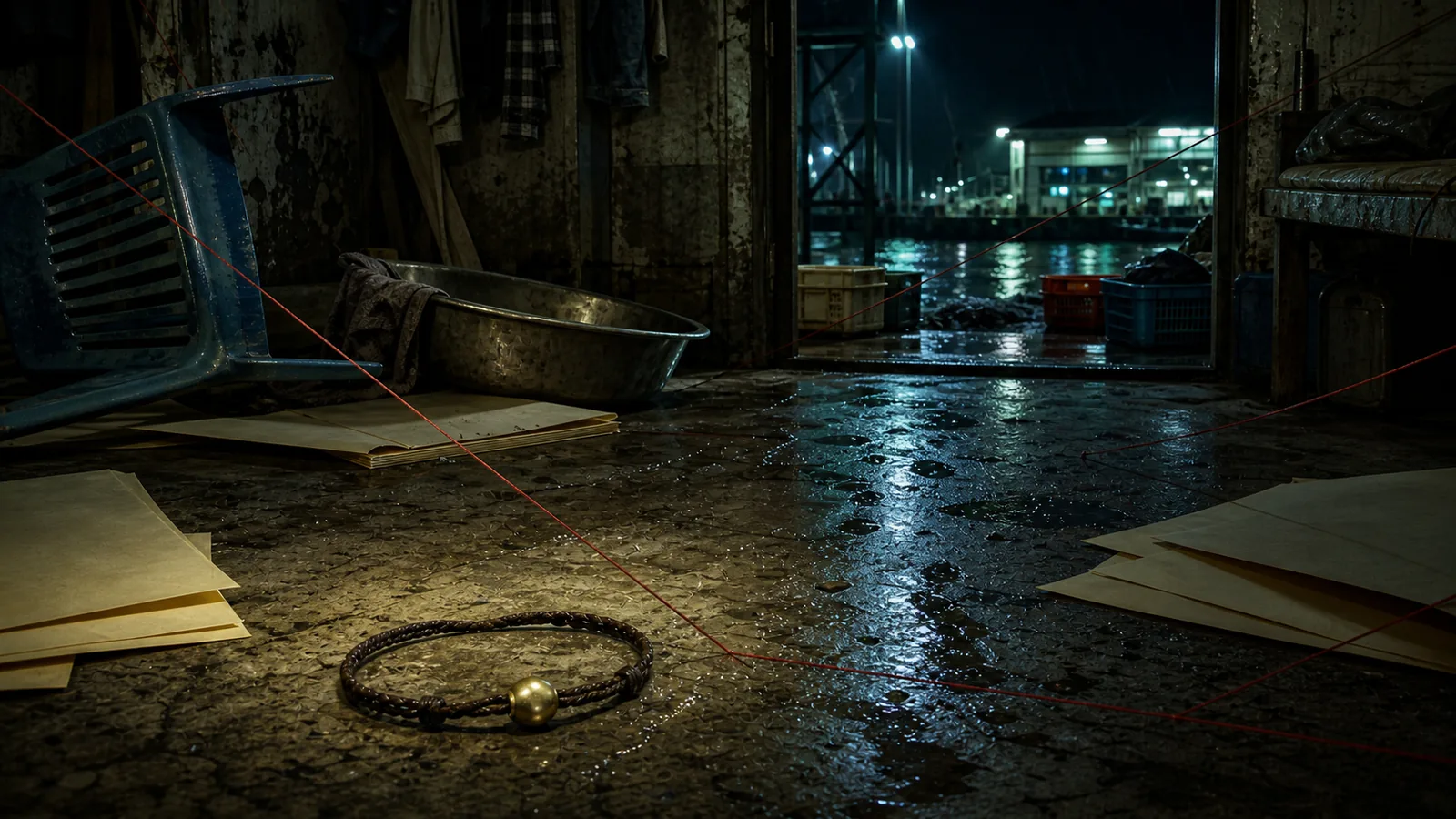
- Seya admits he hid Nay Oo at the workers' camp, but she is gone, the room is trashed, and her family bracelet has been left behind.
- Attorney Manao, Jittri's former assistant, presents Pui's video and Dr. Korn's 50,000-baht transfer on a media show before the case reaches court.
- Mek notices Pui's wording sounds rehearsed and suspects Manao may have coached the return visit to create evidence.
- Jittri cross-examines Pui's mother about Manao's social-media contact and shifts the case from alleged assault to possible fabrication.
- Pui drops the charges, Dr. Korn announces a defamation countersuit, and Mek's own hearing remains two weeks away with Nay Oo still missing.
The Evil Lawyer uses Dr. Korn's sexual-assault case as a mirror for Jittri's own tactics, while Mek and Ang lose their best lead when Nay Oo disappears from Seya's hiding place.
“Denial” is built around two disappearances. Nay Oo vanishes from the workers’ camp before Mek and Ang can turn her into proof. Pui’s accusation against Dr. Korn gets pushed toward collapse after Jittri turns Attorney Manao’s own media strategy into a courtroom liability. One disappearance is physical, one institutional, and both leave the episode asking who gets to survive when evidence has to pass through people with power.
This is also the hour where The Evil Lawyer becomes more honest about Jittri’s influence. Her methods do not stay with her. They spread. Manao, her former assistant, has learned how to use social media, pressure, and staged documentation. Mek notices the pattern before anyone else because he has been living inside Jittri’s logic long enough to recognize its shape.
Chaiwut’s fishery connects Seya’s story to Anan’s hidden economy
The episode opens the Nay Oo thread by giving Seya’s background a specific place: Chaiwut’s fishery. Chaiwut, called Chai, runs cold storage, transport, and fishing boats. When Seya and his sister crossed into Thailand, the broker brought them through that world. Seya was separated and sent out to sea, part of a debt-labor system where workers can lose their documents, their names, and years of their lives.
That context matters because it makes Nay Oo’s disappearance bigger than one missing witness. She is not simply hiding from the police after the golf-course case. She is moving through an economy that knows how to erase migrant workers before any court can ask where they went.
Mek’s question about whether Anan is involved is the right one. Chai is the operator who appears to keep getting away with what stricter fishery regulations are supposed to stop. If Chai is protected, then Nay Oo’s case is not a loose thread. It is part of the structure Anan uses to keep people available, disposable, and silent.
Seya admits he hid Nay Oo, then finds only the bracelet she would not leave behind
Seya’s confession reframes his earlier evasions. He did know more than he told Ang, Pang, and Mek. He had brought Nay Oo to hide in the workers’ camp, planning for them to run away together. Then she disappeared.
The bracelet is the emotional detail that makes the scene land. Seya says their great-grandmother gave the siblings those bracelets when they crossed into Thailand. Nay Oo would not simply abandon it if she ran away by choice. The room is trashed. There was likely a struggle. The story stops feeling like a search and starts feeling like an abduction.
For Mek, that bracelet becomes a clock as much as a clue.
Mek apologizes to Ang because he should have trusted the danger sooner. But the apology does not produce a lead. There are no cameras. Nobody saw anything. Pang spreads the word, but the practical question remains brutal: if Anan’s men took Nay Oo, is she still alive?
Manao turns Dr. Korn’s case into a media event before Jittri gets to court
The Dr. Korn case arrives through television and social media before it arrives as law. Attorney Manao appears on a show as Pui’s lawyer, presenting a video and a 50,000-baht transfer from Dr. Korn as evidence that he tried to make the accusation go away. Korn is known publicly as “The Angel’s Touch,” a respected doctor with fans ready to defend him.
Manao’s strategy is sharp because it takes the case to the public before the defense can control the story. It also looks familiar. She used to work for Jittri, and the office immediately recognizes the old training in a new package: evidence, optics, timing, and a victim’s lawyer who knows how to make the court of public opinion move first.
Mek is the one who hears the odd note. Pui’s wording in the clip sounds legal and rehearsed. He wonders whether Manao advised her to return to the clinic, capture the exchange, and generate evidence that would look damning in a police report. It is a smart observation and an uncomfortable one, because it does not automatically make Korn innocent. It only makes the evidence vulnerable.
That distinction keeps the side case from flattening into a gotcha. The clip can be useful and still be staged. Pui can be telling the truth about the assault and still have been coached into creating evidence. Manao can be trying to protect a victim and still hand Jittri a procedural opening. The episode keeps those possibilities alive at the same time, which is why the later collapse hurts.
Jittri cross-examines Pui’s mother until the accusation becomes about fabrication
The courtroom section is hard to watch because the allegation is serious and the tactic is ruthless. Pui’s mother testifies about her daughter’s pain, the clinic visit, the alleged assault, and Dr. Korn’s confidence that no one would believe someone like her over someone like him.
Jittri does not fight that testimony by proving Korn good. She attacks the return visit and the contact with Manao. Why did Pui go back? Did she consult anyone? Did Manao use personal social media before the evidence was created? The cross shifts attention from what Korn did in the exam room to whether Pui and Manao manufactured proof afterward.
That is where “Denial” earns its title. Denial is not only Dr. Korn denying wrongdoing. It is the system’s ability to deny a victim by making her evidence look coached. It is also Jittri denying Manao the moral high ground by proving that Manao learned too well from her old boss.
Dr. Korn’s win feels less like acquittal than damage spreading outward
The result is devastating in a quiet way. Pui drops the charges after one hearing. Dr. Korn then announces a countersuit seeking ten million baht for defamation. Manao insists dropping the case does not mean Korn is innocent, but the practical damage has already been done.
The show is careful here. It does not ask us to celebrate Jittri. It lets her office admire the win while the viewer has to sit with the cost. If Manao staged evidence, Jittri exposed a real problem. If Pui was assaulted, the exposure also made it easier for a powerful doctor to punish her. The legal answer and the moral answer do not line up cleanly.
Mek’s discomfort is the useful reaction. He is not naive about fabrication anymore, but he has also seen how quickly a fabrication argument can become a weapon against a frightened person. That lesson folds back into his own case, where every piece of evidence can be true, planted, coached, or all three depending on who gets to tell the story first.
That tension is exactly why the side case belongs in Mek’s season. Mek is fighting not to be a scapegoat, but he is working for someone who can create scapegoats in other rooms when the strategy calls for it.
Mek’s own case is still waiting, and Nay Oo’s absence makes every delay worse
The episode closes by reminding us that the golf-course murder case is not paused forever. The next hearing is scheduled for two weeks later, and Mek continues to deny all charges. That public wording matters. The media has turned his life into a case title, just as it turned Dr. Korn into a persona and Pui into content.
Nay Oo’s disappearance makes the ticking clock harsher. Mek’s defense still needs the gun, the missing woman, or someone who can prove a third party was present at the golf course. Instead, the only person who could explain the whole chain has vanished into the same protected economy that made her vulnerable in the first place.
By the end of “Denial,” Mek has learned something grim. Finding the truth is not enough. The truth has to remain alive long enough to testify.
Tiny details worth clocking
Pang’s network becomes essential here. She is not a decorative ally; she gives Ang and Mek access to migrant-labor circles they could not safely enter alone.
Manao’s “Mother Power Lawyer” branding is important because the show keeps showing law as media performance. Reputation shapes evidence before judges do.
The bracelet matters because it is both emotional proof and future forensic possibility. Seya treats it as family memory before anyone treats it as evidence.
Dr. Korn’s countersuit is the final twist of the side case. The victim does not simply lose momentum; she becomes legally exposed.
Final verdict
“Denial” is an uncomfortable, effective episode because it refuses to make Jittri’s talent clean. She can expose procedural manipulation and still leave a vulnerable person crushed. She can defend Mek from a frame-up while using the same instincts that make frames possible elsewhere.
The Nay Oo thread gives the hour its urgency, but the Dr. Korn case gives it its moral bite. This is The Evil Lawyer at its most skeptical: justice may exist, but it has to survive lawyers first.
Rating: 8.3/10 – a morally sour, well-built chapter that makes Jittri’s methods look contagious and turns Nay Oo’s disappearance into the season’s biggest alarm.
More episodes from The Evil Lawyer — Thai courtroom revenge, power, and frame-up fallout. Jump to any episode in the season:
Where to go next
Reviewed by Mira Vance · QuizFandom Editor & Lead Reviewer. Every rating is an honest per-watch assessment from the desk that also writes the quizzes — not a press release rehash.