The Evil Lawyer Episode 3 "Confession" Review: Ang Tells the Boat Story, and Jittri Turns One Witness Into a Delay Machine
What happens — the short version (spoilers)
- Mek tells Ang that Techin used the boat-party secret to lure him to the house, forcing Ang to explain the coalition party on Anan's boat.
- The flashback shows Ang attending to push fishery-labor protections, only for Suwat's entitlement and the boat hierarchy to reveal the original cover-up.
- Mek tells Ang a female caddy from Myanmar was at the golf course and may be tied to the woman who died on the boat; Ang offers to help find her.
- Jittri studies Anan's witness list and spots Sorn Saengruengnop, the forestry officer who found Techin's body and whose son Mai is facing a shooting case.
- Mek objects to using Mai's case as leverage, but Jittri argues they need Sorn to buy time before Anan accelerates the witness hearing.
- Jittri turns Mai's case with three respectable alibi witnesses: Mr. Somchai, Mr. Sirikorn, and Mr. Tawanchai.
The Evil Lawyer finally lets Ang describe the boat-party secret that Techin used against Mek, then pivots into a nasty little courtroom detour where Jittri helps Sorn's son because Mek's murder case needs time more than purity.
“Confession” is the episode where The Evil Lawyer makes its structure clear. Mek’s case will not be solved by one hidden fact falling out of the sky. It will be delayed, bent, and bargained through side cases, dirty favors, and people who have good reasons to fear the truth. The hour begins with Ang and Mek trying to name what happened on Anan’s boat. It ends with a courtroom trick in a different case buying just enough room for the larger conspiracy to breathe.
That could have felt scattered. Instead, Episode 3 uses the detour to sharpen the main argument. Jittri is not just defending Mek. She is teaching him, against his will, that a legal battle against Anan cannot be fought on the schedule Anan chooses.
Mek tells Ang that Techin used the boat-party secret to pull him in
The opening conversation between Mek and Ang carries the weight of everything neither of them said in Episode 2. Mek has changed lawyers to Jittri. Ang worries because she knows Jittri’s reputation. Mek does not pretend the choice is clean. If Jittri had not stepped in, he thinks he would have died in jail.
Then the episode finally ties Techin’s invitation to the secret Ang refused to explain. Techin told Mek he would reveal what happened at the boat party. That is why Mek went to the house. The prosecution reads that decision as intent. Mek reads it as bait. Both can be true inside the machine Anan is building.
The careful part is that Mek does not force Ang’s confession out of her as proof of loyalty. He would rather hear the truth from her because the truth has already been weaponized by Techin. Their relationship is broken, but not empty. The show lets the hurt remain personal even while the facts become evidence.
The boat flashback turns Suwat’s entitlement into the original crime scene
Ang’s memory of the coalition party is less about one drunken night than about how impunity organizes itself. Anan hosts. Techin is introduced as his son and as a lawyer. Ang attends because she wants support for the Fisheries Labor Protection Act drafted with a labor coalition. Her mother has told her Suwat, the Minister of Agriculture, is the crucial person to persuade.
That is the civic version of the event. The real version is uglier. Suwat treats the boat like a private kingdom. He notices a young woman. He ignores Ang’s refusal. Everyone around him understands the hierarchy before Ang can finish a sentence.
The episode does not need to show every detail of the death yet. It shows enough to explain Ang’s shame: she went there to advance labor protections and walked into a room where labor, gender, and political access were being exploited in plain sight. When Techin later tells Mek that the woman at the golf course was tied to the girl who died on that boat, the season’s two case files snap together.
Ang offers to help find the woman while Jittri studies Anan’s witness list
Mek gives Ang the practical part next. A female caddy from Myanmar was with him and Techin at the golf course. Techin said she was the sister of the woman who died on the boat. Mek believes Techin planned to kill her too and use Mek as an accomplice he could blackmail.
Ang’s response is one of the episode’s quiet turning points: she offers to help find the woman. The story could have kept Ang in a purely political lane, trapped by Ruam Thai Party optics. Instead, it lets her use that world as a map. She knows where the fishery-labor fight meets the party world. She knows why a missing migrant woman would disappear from the official record before anyone powerful had to answer for her.
Jittri, meanwhile, is less interested in emotional clarity than timing. She studies Anan’s witness list and notices Sorn Saengruengnop, the forestry officer who was the second person to find Techin’s body. Sorn is not just a witness. He is a lever, because his son Mai is the defendant in another violent case.
Jittri proposes helping Mai because Mek’s case needs time
The Mai detour is the hour’s best test of Mek’s conscience. Sorn’s son is accused in an ordination-ceremony shooting. The prosecution has witness pressure, hearsay, and a story about revenge. Jittri sees the exchange rate immediately: help Mai, influence Sorn, delay the golf-course murder case.
Mek recoils. He still believes the path to winning his own case is to find the gun and the Burmese woman. Jittri does not disagree with the destination. She disagrees with the calendar. Anan is pressuring the court to move the prosecution witness hearing forward. If Mek waits for clean evidence, he may lose before he finds it.
That is the grim brilliance of the episode. Jittri does not tell Mek innocence is irrelevant. She tells him innocence needs oxygen. If Sorn disappears or becomes unavailable, the court has to postpone. If the trial is postponed, they get time. Time is not justice, but in this case it is the closest thing justice has to a pulse.
Mai’s case lets Jittri show the difference between truth and usable proof
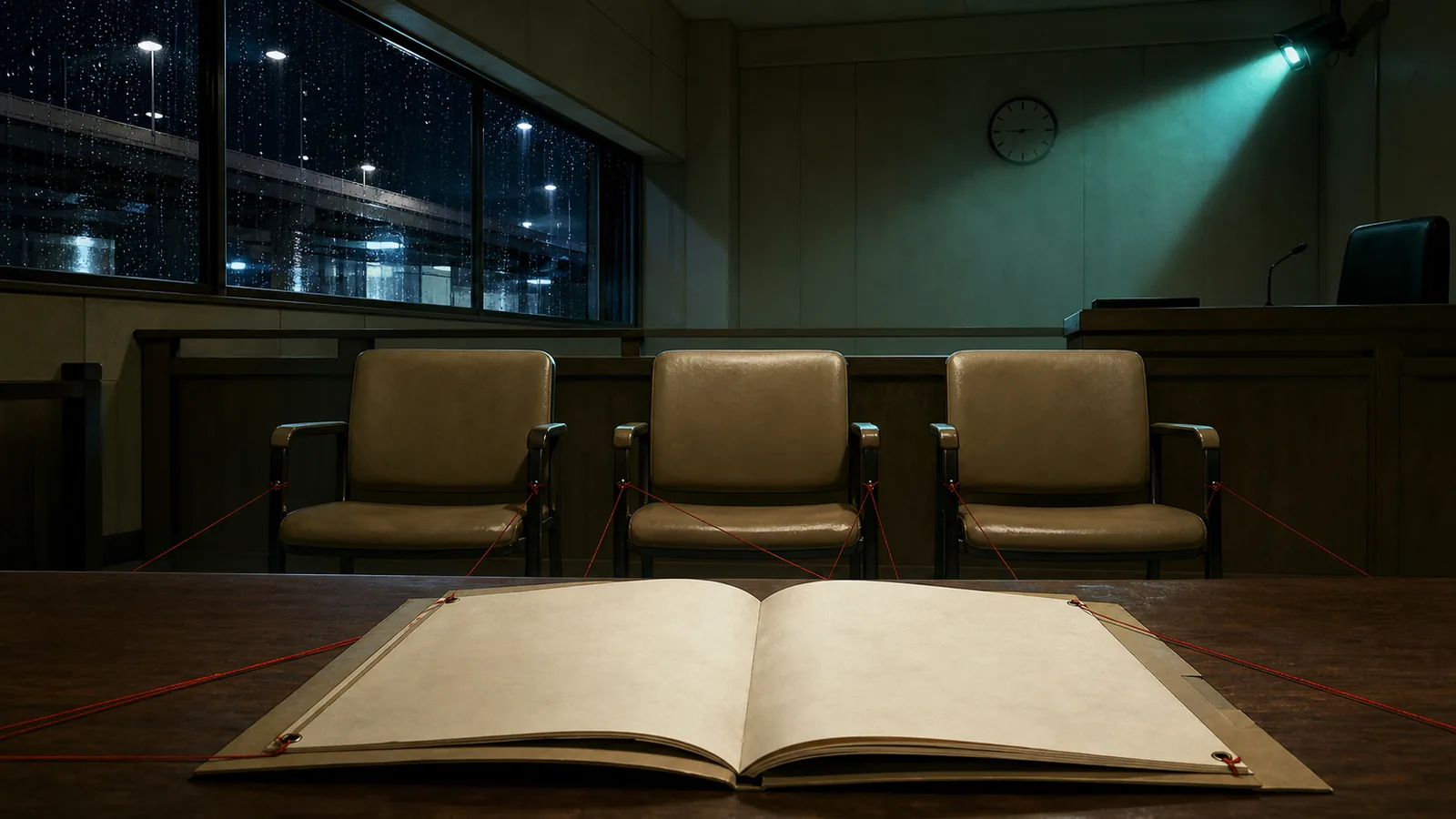
The courtroom section around Mai is lean and nasty in the right ways. Mek tries to treat the case like a normal defense. Witnesses saw chaos. They claim Mai was involved. The motive has grief behind it: Mai’s sister had been killed first, and the shooting can be framed as a rage response.
Jittri’s version is less sentimental. She lets the case move until the procedural moment is right, then submits an additional witness list. The three men she names are not random: Mayor Somchai, Chief of Forestry Sirikorn, and School Director Tawanchai. They can place Mai away from the temple for the entire night.
The result is funny, cynical, and sour at once. The court gets its alibi, but the episode knows we are watching a lesson, not a miracle. Jittri has not purified the facts. She has manufactured a legal roadblock strong enough to matter. Mek can hate it and still benefit from it.
That is why Mai’s case does more than fill time. It teaches Mek what kind of evidence moves a courtroom. A morally satisfying story about why Mai acted, or whether grief pushed him past control, is less useful than three respectable men saying he was somewhere else. Jittri understands status as evidence. Mek is still learning how often status outranks truth.
Anan and Padung quietly remind us why Jittri plays dirty
Episode 3 does not leave Jittri’s tactics floating in moral abstraction. Anan’s pressure keeps showing up in small official ways: witness scheduling, court speed, Padung’s presence, and conversations that treat Mek’s case as a problem to be managed rather than tried.
That is why the episode’s title, “Confession,” feels broader than a single admission. Ang confesses the boat story. Mek confesses enough of the golf-course night to give Ang a path forward. Jittri’s office, by its actions, confesses what kind of system it believes it is in.
The uncomfortable truth is that Jittri’s method works because Anan’s method is already working. She is not the origin of the rot. She is the lawyer who understands the rot has procedures.
The final joke around “false speech” lands because the episode has already made everyone complicit in performed truth. Witnesses swear, lawyers posture, and the people with the cleanest titles can still be the most useful liars. The comedy keeps the episode from becoming dry, but it never lets the tactic feel harmless.
Mek leaves the detour with an answer he hates: sometimes the wrong witness buys the right day.
Tiny details worth clocking
Sorn is introduced in two ways at once: as a forestry officer and as Mai’s father. The family connection is what turns him from witness into leverage.
The boat party is not just a sex-crime thread. It is tied to the fisheries bill, Ruam Thai’s political branding, and the labor exploitation that keeps the missing woman in danger.
Mek keeps pushing toward the gun and the woman from Myanmar because those are the only facts that can undo the murder frame-up rather than merely delay it.
Jittri’s office address and neighborhood texture matter. Her power does not come from marble prestige; it comes from information, favors, and people who owe her.
Final verdict
“Confession” is a strong connective episode. It gives Ang’s silence a political and moral shape, clarifies why Techin pulled Mek to the golf course, and then uses Mai’s case to show how Jittri actually fights: sideways, early, and with no patience for clean hands.
The hour is less explosive than the premiere, but it is more precise. It understands that a good legal thriller is not just about who committed the crime. It is about who controls the clock.
Rating: 8.5/10 – a sharp, cynical bridge episode that turns a side case into the season’s clearest lesson about power and delay.
More episodes from The Evil Lawyer — Thai courtroom revenge, power, and frame-up fallout. Jump to any episode in the season:
Where to go next
Reviewed by Mira Vance · QuizFandom Editor & Lead Reviewer. Every rating is an honest per-watch assessment from the desk that also writes the quizzes — not a press release rehash.