The Evil Lawyer Episode 8 "Judgment" Review: Mek Walks Free, Anan Falls, and Jittri's Final Client Changes the Whole Story
What happens — the short version (spoilers)
- Ruam Thai first denies Ang's statement, while Seya is prepared to testify about being separated from his sisters at Chai's pier and one sister being sent to Anan's boat.
- Jittri gives Ang leverage over Suwat through business and shaman-related evidence, pushing her toward blackmail as a route to confession.
- Atchara turns the press conference into a resignation threat, naming the Fisheries Act loopholes and the list of people involved in covering up Nee An's death.
- Judge Rit confesses to taking a bribe from Padung in the waste-plant case, removing both himself and Padung and giving Mek's case a new judge.
- The defense brings a patrol witness, Seya, DNA from Nay Oo and the bracelet, and Mek's own testimony that he agreed to help Techin silence Nay Oo before the golf-course violence broke open.
- The court finds reasonable doubt because the prosecution ignored the gun and distorted the evidence trail, so Mek receives the benefit of the doubt and cannot be sentenced.
- After Anan's death is being turned into another official story, Kosol identifies himself to Mek as the man who had Mek's mother killed and introduces Jittri as his lawyer.
The Evil Lawyer closes Mek's murder trial with reasonable doubt instead of innocence, turns Ang and Atchara's political break into pressure on Anan, and ends with a Kosol reveal that makes Jittri look more dangerous than ever.
“Judgment” understands that a legal thriller finale does not have to give moral cleanliness to feel satisfying. Mek is not declared pure. He is not magically absolved of every terrible choice at the golf course. The court finds reasonable doubt because the prosecution’s version ignored the missing gun, the third party, and the distorted evidence trail.
That distinction is why the finale works. Mek walks free, but the truth that frees him is uglier than the truth he first wanted to tell. Ang helps break the political cover-up by choosing public ruin. Judge Rit destroys his own career to pull Padung out of the case. Jittri wins, then the last scene reminds us that winning was never the same thing as trusting her.
Ruam Thai denies Ang before Seya is prepared to tell the truth
The finale opens in the public wreckage of Ang’s speech. Ruam Thai’s official line is immediate: what Ang said is untrue, a smear campaign orchestrated by opponents. That is exactly the sort of institutional denial the show has been building toward. The party does not need the truth to disappear. It only needs an alternate statement ready before the truth can settle.
At the same time, Seya is being prepared for a press-facing petition and testimony. He is told to speak truthfully about being separated from his sisters at Chai’s pier and about one of them being sent to Anan’s boat. The episode is careful with Seya. He is not turned into a mascot. He is nervous, managed, protected from reporters, and still asked to do the impossible: make a hidden trafficking system legible to the public.
That pairing gives the finale its political shape. Ruam Thai has a podium. Seya has a petition. The question is which version of reality can survive long enough to matter.
Jittri and Ang push Suwat with the same dirty tools the season has taught us to distrust
Jittri’s evidence against Suwat is classic The Evil Lawyer: not pure, not pretty, but effective. She has material about his businesses and a kuman-related connection through a shaman she once represented. Ang understands the move immediately. Jittri wants her to blackmail Suwat into confessing about the boat party.
The scene is smart because it does not suddenly turn Ang into Jittri. Ang is disturbed by the method, but she is also looking at a system that will crush her if she waits for formal courage from powerful men. Suwat responds with rage, then runs to Anan. His panic confirms the pressure is landing.
This is the finale’s recurring moral pattern. The clean route is either blocked or too slow. The dirty route works. The show does not ask us to forget the cost.
Atchara chooses survival by telling a larger truth than the party wanted
Atchara’s press conference could have been simple betrayal. Instead, the finale gives her a sharper political calculation. She first appears inside the party line, but Ang pushes her toward the only viable escape: if Ruam Thai is going to force her out anyway, she can resign as someone who spoke rather than someone who hid.
Atchara takes the microphone and widens Ang’s statement. She says Ang left part of the truth unsaid, frames the Fisheries Act as a bill creating loopholes for exploitation, and says she has a list of people involved in covering up Nee An’s death on Anan’s boat. She resigns if she cannot reveal the full truth.
It is not pure heroism. It is political survival with a conscience attached. That is more interesting. Atchara remains a party figure calculating the next election, but she also chooses to burn the version of safety Anan and Suwat offered.
Judge Rit confesses to the Padung bribe and gives Mek a new judge
The judicial reversal is the finale’s cleanest act of self-destruction. Judge Rit steps down and admits he took a bribe in the waste-plant case. The bribe was tied to helping Mek’s case, with Judge Padung connected to the arrangement. Rit produces financial records linking him to Padung.
For Mek, this is complicated mercy. Rit finally does what Mek has been accusing him of failing to do: he chooses his son and the truth at personal cost. But he does it by admitting corruption, not by proving a lifelong purity. The act saves Mek’s case from Padung, but it also confirms how badly the system around Mek was already compromised.
The new judge changes the finale’s legal atmosphere. Jittri no longer has to perform for a bench already tilted against her. She still has a hard case, but the record can breathe.
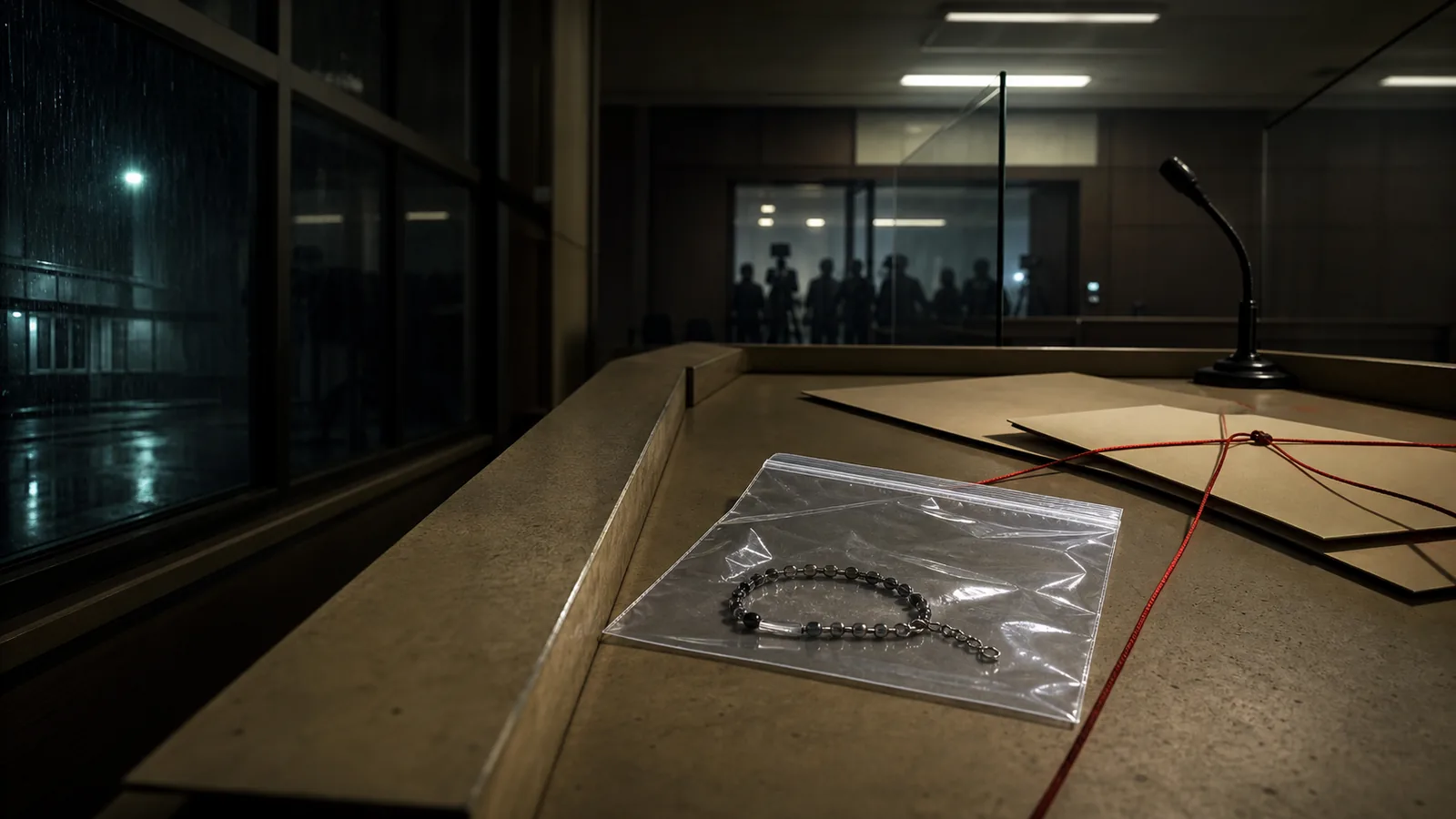
The defense builds reasonable doubt through the gun, the bracelet, Seya, and Mek’s own ugly testimony
The trial’s final push is strong because it refuses easy exoneration. A patrol witness says he heard two gunshots and saw a bloodied woman in a caddy uniform holding a gun. Seya identifies Nay Oo as his sister and links the gun to the night she vanished. Forensics confirms DNA from Nay Oo and the bracelet connection proving Seya and Nay Oo are siblings, while also admitting limits: DNA cannot by itself prove she was the third party at the scene.
Then Mek takes the stand and tells the version that makes him look worst. Techin asked him over, threatened Ang, brought Nay Oo, and planned to silence her because she witnessed the boat cover-up. Mek admits he agreed to help. At the sand bunker, Techin hesitated, Mek grabbed the gun, Nay Oo struck Mek, and when Techin went for the weapon, Nay Oo hit the back of his head.
That testimony is not heroic. Seya’s rage in court is justified. Mek was not simply a framed innocent standing near a crime. He was pulled into an attempted silencing and made a terrible choice before the situation broke. The finale is honest enough to let his freedom rest on reasonable doubt, not moral absolution.
The verdict frees Mek because the prosecution hid the shape of the case
The verdict turns on the prosecution’s incomplete story. The court notes the missing gun, Sorn’s testimony about hearing gunshots, forensic links to the gun, and the prosecution’s failure to mention the gun at the scene. Those omissions create reasonable doubt about how evidence was obtained and what really happened.
Mek receives the benefit of the doubt and cannot be sentenced. That is a legal victory, not a baptism. The celebration outside court is loud and funny because the office family has earned the relief. But the viewer knows what the verdict does and does not settle. Mek is free. Nay Oo is still missing. Anan’s world is cracking, not gone.
That restraint is what makes “Judgment” satisfying. It gives the defense a win without pretending the law can neatly sort guilt, fear, coercion, and survival into separate folders.
Anan’s death is staged as another cover story, and Kosol reveals Jittri’s next nightmare
The last act shifts from courtroom closure to a colder season-ending hook. After Anan’s fall becomes unavoidable, a room of men starts brainstorming how to explain his death. Suicide from trafficking stress? Shame over an affair with a police aide? The gun belongs to Anan. The police aide has already been handled with the same gun. The room is not seeking truth. It is drafting the next official story.
Then Kosol arrives and speaks directly to Mek. He identifies himself as the man who had Mek’s mother killed and introduces Jittri as his lawyer.
It is a brutal final turn because it reframes Jittri’s victory. She helped save Mek from Anan, but she is also willing to stand beside the man tied to the deepest wound in Mek’s life. The title snaps back into focus. Jittri can be the only lawyer who saves you and the lawyer protecting the person who destroyed you.
Tiny details worth clocking
The finale’s legal language matters. Mek is not acquitted because the court confirms his whole story; he benefits from reasonable doubt under the procedure code.
The bracelet remains narrow evidence: it proves Seya and Nay Oo are related, not the entire golf-course reconstruction by itself.
Atchara’s move is partly maternal, partly electoral, and partly survival. The episode is stronger for letting all three motives coexist.
Kosol’s reveal keeps the season from ending with Jittri safely on Mek’s side. The alliance was always conditional.
Final verdict
“Judgment” is a strong finale because it gives the season a real legal payoff while refusing a comforting moral one. Mek’s freedom comes through doubt, pressure, confession, public rupture, and one judge’s self-destruction. Ang and Atchara help break the political cover-up, but the powerful immediately start writing a new cover story.
Best of all, the finale preserves Jittri’s danger. She wins the case and still ends the season as someone Mek may have to fight next. That is exactly the kind of bitter aftertaste this show has earned.
Rating: 8.9/10 – a satisfying, morally thorny finale that closes Mek’s trial, exposes Anan’s machinery, and uses one final client reveal to keep Jittri terrifying.
More episodes from The Evil Lawyer — Thai courtroom revenge, power, and frame-up fallout. Jump to any episode in the season:
Where to go next
Reviewed by Mira Vance · QuizFandom Editor & Lead Reviewer. Every rating is an honest per-watch assessment from the desk that also writes the quizzes — not a press release rehash.