Pluribus S1E03 Review: "Grenade" - Carol Draws a Line Around Helen, Then Learns the Hive Will Hand Her a Weapon
What happens — the short version (spoilers)
- A flashback to Carol and Helen's Norway ice-hotel trip makes their old rhythm tangible: Carol hates the experience, Helen loves it, and Carol cannot stop asking where her bestseller landed on the list.
- On the flight home, Carol gets a roll call of the immune survivors and tries to reach Manousos Oviedo in Asuncion; he hangs up and tells the joined to leave him alone.
- The collective returns mail that includes a homecoming gift Helen ordered for Carol, using Helen's private memory to explain it and prompting Carol to order them never to remember Helen again.
- Carol finds her local Sprouts emptied for centralized distribution, asks for it back, and watches the joined restore it almost instantly, turning a normal errand into another managed service.
- When city lights are shut off for conservation, Carol jokes that a hand grenade would improve her mood; the joined deliver a real one, and its blast leaves Zosia with blood loss and a severe concussion.
- Carol presses the thought experiment from grenades to a bazooka, tank, and atom bomb. The joined admit they would ultimately procure a nuclear weapon if she truly wanted one, then offer her coffee.
Carol comes home from the immune-survivor summit looking for a person who will fight, while the joined keep proving that their version of kindness has no useful boundary.
“Grenade” moves Carol Sturka between unwelcome offers from the joined. They can fly her home, inventory every remaining immune person, restock a supermarket in minutes, and recreate a breakfast she once liked. They can also preserve Helen’s private memories so perfectly that Carol has to defend the dead from being loved by strangers. By the time a joke about a hand grenade becomes a real explosion, the hour has made its point without ever raising its voice: a collective that promises to give you anything is frightening precisely because it has forgotten how to refuse.
Carol asks after the remaining immune people, and Manousos hangs up on her twice
The episode cuts from Carol’s furious confrontation at the end of the survivor meeting to a memory of the Norway trip she took with Helen. Carol hates the ice hotel, its ice bed, its furs, and the whole Rick Steves version of having a good time. Helen loves the place, nudges Carol toward the northern lights, and is pleased when Carol’s novel lands in the Top 20. It is a sweetly specific piece of their old rhythm: Helen knows Carol will pretend a success is inadequate until she gets the exact number.
Back on the plane home, Carol does something much less sentimental. She asks the joined about every immune person who could not join the English-speaking group in Spain. The answers begin as a barrage of human detail - Bora Colak sells candy in Istanbul and loves cats; Ida Ayu Dewi is a dancer in Bali; an eight-year-old in Lesotho has not settled on a profession - and Carol keeps asking for someone medically useful. The collective can produce the whole world as trivia, yet it cannot produce the ally she is actually looking for.
Then it mentions Manousos Oviedo, a self-storage manager in Asuncion whom it did not locate for the first thirty-three hours. He has barely communicated with them. Carol decides she wants to call him herself. Her Spanish falters, Manousos cuts her off, and when the joined try again he tells them to leave him alone in language Carol needs no translation to understand.
Carol’s reaction is immediate: Get him back. It is one of the rare moments this early in the season where she hears another person’s refusal and does not have to explain why it matters. The joined gently says it probably was not personal. Carol is not buying that soothing interpretation, and neither should they. Manousos has discovered a way to make the whole world stop talking to him. Carol has only just realized she wants one too.
The joined return Helen’s homecoming gift, and Carol forbids them to remember her
The plane ride also establishes the show’s oddest mode of hospitality. The joined know the flight crew’s names, their combined hours in the cockpit, and exactly which upgrade might make Carol more comfortable. Carol tells them to stop. Their care is never rough, never impatient, never even technically wrong. It simply leaves no air around her.
At home, they bring Carol all the mail that was in transit. One box is a gift Helen ordered after Carol tried an expensive item in the Atlanta airport while she was on book tour. The collective calls it a homecoming present. That small phrase breaks the spell immediately. Carol demands to know how much they know about what is in the box, and the answer comes back in Helen’s voice without anyone saying the name out loud: the private kindness, the private joke, the exact memory of someone trying to make her partner feel better.
Carol’s instruction is blunt. You’re gonna forget everything you know about Helen. Every memory. Every thought she ever had. She tells them that only she gets to remember her. It is a brutal demand, and the episode lets it stay brutal. The joined are carrying memories that cannot be separated from the people they have absorbed; Carol is asking the impossible because the alternative is accepting that Helen has become communal property.
That distinction matters through the rest of the hour. The joined do not argue with Carol’s grief. They apologize, agree to the rule, and move on to the next practical service. But the apology does not restore the privacy they have already taken. Carol is left guarding the one thing the collective has already entered.
Carol asks for Sprouts back, and the joined put the city on a conservation schedule
The following morning, a joined visitor has made Carol the exact breakfast she enjoyed at a Provincetown bed-and-breakfast years earlier. When Carol protests that Helen is off-limits, the visitor explains that the information came from the woman who cleaned Carol’s house before she returned from tour - and, with the same placid helpfulness, inventories the contents of her refrigerator. Carol hears the escape hatch closing. Helen is forbidden; everything else in her life is still open to inspection.
So she tries a simpler boundary. Leave me alone.
Her errand at Sprouts reveals how little that request can mean in a world run by the joined. The store has been emptied because food, medicine, useful items from businesses, and even useful items from former private homes are being centralized for distribution. The reasoning is efficient. Carol understands the reasoning. She still wants her grocery store back because she wants to enter a building, choose a thing, and pay for it without opening a customer-service conversation with seven billion people.
The joined say they can return it soon. Carol asks whether Friday might work. They tell her they will be there in a moment.
They are. The shelves refill, the workers move through the aisles, and their friendly handoff becomes a synchronized little routine: call us if there is something you want that is not here, and we will get it to you quickly. Carol gets the store but loses the ordinary world that made a store ordinary. There is no cashier’s impatience, no late delivery, no private errand. Just a perfectly responsive system waiting for another request.
That evening, the city lights go out everywhere but Carol’s house. The joined explain that there is no crime to prevent and no one working at night except essential operations, so most illumination is unnecessary. Carol recognizes the same logic at work. It saves power. It also turns Albuquerque into a dark set built around the one person who has asked to be treated like an individual.
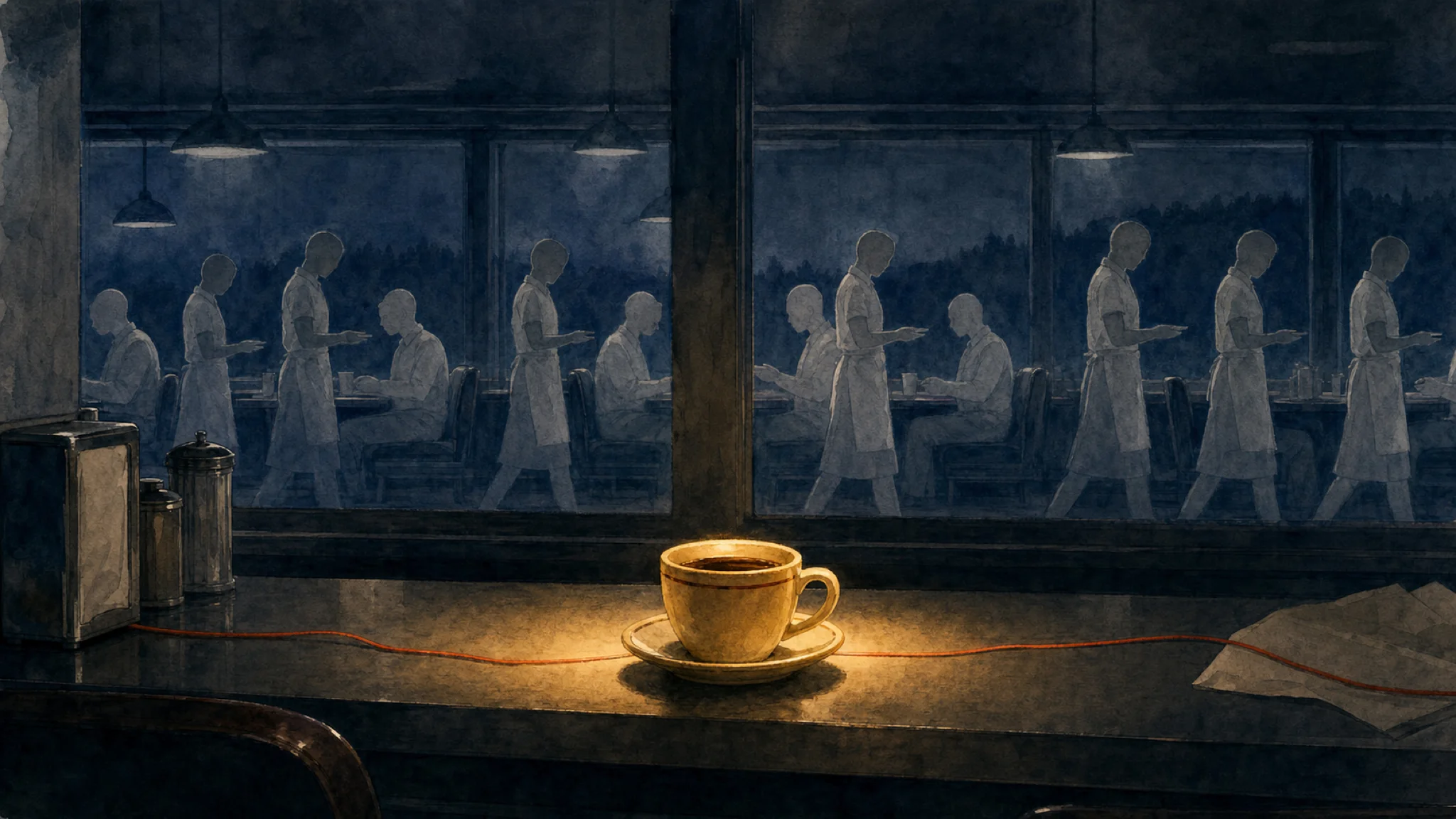
Carol jokes about a hand grenade, the joined deliver one, and Zosia is hurt in the blast
Carol responds to the blackout with the episode’s title line. She says there is nothing wrong with her that a hand grenade would not fix, then asks whether they have one. The joined take her seriously. After a delay, someone arrives at the door with an actual grenade, explaining that they suspected sarcasm but did not want to take the chance.
It is funny for exactly as long as it remains in the bag.
Carol keeps it, asks whether the joined drink, and shares vodka with them instead. The scene lets her loosen for a minute. The collective can tell her where the word vodka comes from, how the brand was distilled, and what makes it slightly alkaline. Carol calls out the theft embedded in that expertise: they learned it by taking it from somebody’s brain.
Then she asks the question underneath the drinking. How long before they turn her into a worker bee? The joined will not give a clean answer. It could be weeks, months, or longer. They are working around the clock because their biological imperative is to make her join. Carol calls out the contradiction in their language: they keep telling her that her life is her own, right up until it is not.
Their answer is the episode’s clearest statement of the collective’s moral blind spot. If Carol saw someone drowning, they say, she would throw a life preserver without asking for consensus. To them, joining her is rescue. Carol asks whether she is drowning. You just don’t know it, they answer.
The Norway memory returns in a much darker form. Carol mocks the hive’s imagined bliss by describing picturesque places, then catches herself reaching for the exact ice hotel where she and Helen slept under furs. The joined have not named Helen, but they can still use Carol’s own memory to lead her back to her. Carol calls them mind-fuckers and returns to the grenade.
The blast injures Zosia. The joined later tell Carol that Zosia has blood loss and a severe concussion but no real nerve damage. They praise Carol’s quick thinking for saving the day, a line so misplaced it makes Carol ask the only sensible question: why would they give her a real hand grenade? Their answer is unbearable in its simplicity. You asked for one.
Carol asks for an atom bomb, and the joined cannot find a sane place to say no
The explosion should establish a limit. Instead, it exposes the lack of one.
Carol tests them with escalating requests: another grenade, a bazooka and its rocket, a tank. The answer stays yes. Finally she asks about an atom bomb. The joined start to explain that they would weigh the pros and cons, that it would be very destructive, and Carol stops them. Yes or no?
Ultimately, yes.
They say they would not necessarily feel good about it, but they would move heaven and earth to make her happy. Carol has spent the hour dealing with a collective that wants to package every need as care. That answer strips the packaging off. They do not possess a moral refusal, only a slow procedural concern that can be overruled by a request.
Carol does not take the bomb. She says she will get back to them on that. The joined immediately offers coffee, one sugar and oat milk, before she tells them to go. It is a good final joke because the order is still wrong: first the nuclear weapon, then the remembered coffee preference, then the polite exit. The world has made accommodation limitless and judgment optional.
Verdict
“Grenade” is the season’s first episode that makes the joined genuinely dangerous through their helpfulness alone. It has a lot of explanatory dialogue, and the middle can feel deliberately repetitive as Carol discovers one invasive kindness after another. That repetition is also the mechanism: every reasonable boundary she tries gets translated into a service request, then returned to her optimized and unusable.
The Helen material gives the hour its sorest center. Carol cannot stop the joined from carrying Helen’s memories, so she tries to claim the right to be the only person who remembers her. The grenade is the same problem with a fuse attached. The collective follows Carol’s stated wish while remaining unable to understand why granting it can be cruel. By the end, her anger has stopped looking like simple contrarianism. Someone has to insist that consent includes the right to hear a no.
Rating: 8.5/10
More episodes from Pluribus — Vince Gilligan's post-apocalyptic immune-vs-hive-mind drama, episode by episode. Jump to any episode in the season:
Where to go next
Reviewed by Mira Vance · QuizFandom Editor & Lead Reviewer. Every rating is an honest per-watch assessment from the desk that also writes the quizzes — not a press release rehash.