Mayor of Kingstown S4E2 Review: Family Becomes Another Contraband Route Inside Anchor Bay
What happens — the short version (spoilers)
- Callahan keeps helping the injured Kyle with cigarettes and painkillers while studying the rare prisoner whose brother can order convicts to kill.
- Tracy visits Kyle despite his shame, insisting there is nothing she cannot handle and that families who stop visiting let prisoners break.
- Frank Moses pitches Bunny a corporate-style drug pipeline to fill the vacuum left by the dead Russians; Bunny listens but negotiates the percentage down.
- Frank meets Mike and asks for access on both sides of the wall; Mike refuses profit, saying his only payout is peace.
- Hobbs reassigns Carney as a vestige of the old order, and Evelyn tells Ian she has tape and will take him to a grand jury over Morrissey.
- Mike recruits corrections officer Cindy as Kyle's lifeline, then Carney is shot dead in his own home while caring for his father.
Kyle's beating turns Mike's power into a prison problem, while Bunny invites a new kind of outsider into Kingstown.
Mayor of Kingstown Season 4 Episode 2 is an hour about protection after protection has already failed. Kyle is alive, which lets the people around him call that a victory, but the episode keeps measuring the distance between survival and safety. Mike tries to turn every relationship he has into a shield around his brother: Carney, Bunny, Cindy Stephens, even the new warden he has just threatened. The trouble is that Kingstown treats every shield as leverage, and every leverage point draws a new hand toward it.
Kyle’s body becomes the new map of Kingstown
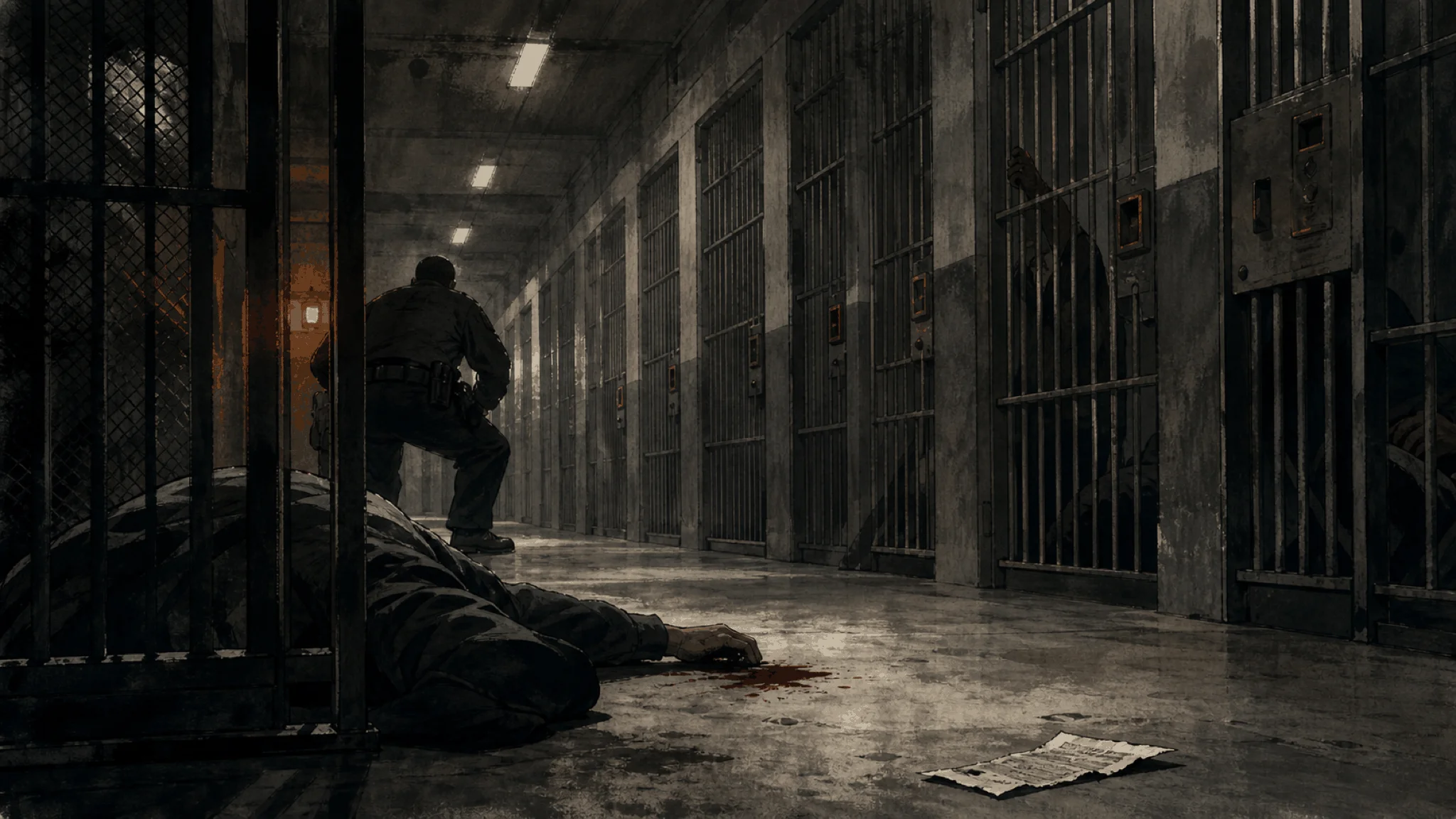
The episode opens in the prison with prayer, panic, and the sound of men trying to survive administrative segregation by any available ritual. Barnes screams about needing to see his counselor, a praying inmate keeps working through the creed, and Cindy Stephens tries to control a cellblock already beyond ordinary correctional authority. A prisoner goes down, Cindy is left shaken, and Kyle McLusky (Taylor Handley) watches from inside the same cage system that has just made him a target.
That matters because Kyle’s body is now the season’s clearest piece of evidence. He is bruised, breathless, in pain, and unable to use the official medical route because Callahan has warned him that sick bay may be more dangerous than the cell. Callahan’s help is unnerving because it arrives as kindness and surveillance at once. He tells Kyle to check the mailbox, slides him cigarettes, later brings him something for the pain, and studies the anomaly: a cop whose brother can make convicts kill on his behalf.
The visit with Tracy is the hour’s most humane scene because it refuses the false comfort everyone else keeps offering. Carney gets Kyle from the cell and apologizes, promising that Mike is working every angle. Kyle assumes he is seeing Mike, then panics when Carney says it is Tracy. He does not want his wife to see him broken. Carney’s argument is more practical than sentimental: if Kyle leaves her waiting, she will only imagine something worse.
Tracy McLusky (Nishi Munshi) walks in and immediately understands what everyone else is trying to manage around. Kyle says it is not as bad as it looks. She asks whether the infirmary saw him, worries about broken ribs and internal bleeding, and threatens to confront the warden herself. Kyle tries to offer her an escape from visiting, saying she does not have to come if she cannot handle seeing him like this. Tracy’s answer is the emotional thesis of the family story: “There is nothing I can’t handle.” She has seen what happens when families stop coming. The people inside break.
That line gives the episode its strongest moral counterweight to Mike’s dealmaking. Tracy is naming one of prison’s cruelties more clearly than the brokers do. Family visitation becomes resistance, but in Kingstown even resistance can be turned into pressure. When she later meets Mike outside, holding baby Mitch, she says the McLuskys live in a “constant state of warning.” Mike asks her to fake belief in Kyle’s choice because Kyle needs it. Tracy says she is already faking as hard as she can.
Bunny’s future arrives with Frank Moses
While Mike is trying to close the circle around Kyle, Bunny Washington (Tobi Bamtefa) is opening a larger one. The episode first lets Frank Moses introduce himself as a man who turns violence into corporate language. He tells Bunny that the Russians on the tracks were a gift, proof of intent, and then lays out the vacuum left by Brighton Beach like a market opportunity. Cross-border transport, security, percentages, partnerships: Frank talks about the drug economy as if he is pitching a legitimate expansion plan.
Bunny is not dazzled by him, which is important. He pushes the percentage down, insists on meeting every player in the network, and reminds Frank that only family calls him Deverin. Still, he listens. Frank offers insulation, legitimacy, and a way to turn the Russian collapse into a border pipeline before the Colombians, Mexicans, or Aryans fill the space. For Bunny, who has been building power under constant exposure, the appeal is obvious. A man who has never done time can sell him a fantasy of distance.
Mike McLusky (Jeremy Renner) sees the danger faster than Bunny wants him to. In their conversation after Mike checks on Kyle’s attacker through Raphael, Bunny admits the Russians were Frank’s gift. Mike’s answer is plain: there is no such thing as gifts. Bunny frames the alliance as enterprise, not escalation. Mike hears an outsider bringing weight into a town that already has too many outside pressures on both sides of the wall.
The meeting between Mike and Frank in the office is one of the episode’s sharpest pieces of theater because both men understand the performance and neither quite drops it. Rebecca warns Mike that Frank is murderous. Mike answers with the exhausted Kingstown version of a shrug: who is not, in this town? Frank comes in polite, biblical, and patient. He flatters Mike’s gift for taking care of the town, calls Bunny a force of nature, and claims that outsiders are coming whether Mike likes it or not. Would Mike rather it be only him?
Frank’s pitch is built around inevitability. He says he knows Mike and Bunny’s arrangement, suggests Mike has been too generous, and asks for access to Mike’s friends on both sides of the wall. Mike refuses the profit logic, saying his payout is peace, or at least the promise of it. The line is pure McLusky, which means it is noble and compromised in the same breath. Mike does not want money from the machine. He wants the machine quiet enough for one more day.
Frank’s answer is more frightening because it sounds reasonable. He asks for Mike’s blessing while he shuts things down, promising that any loose ends will be tied off with restraint. Mike asks whether the train-track massacre was restraint. Frank laughs it away as the ninth inning after Mike had already pitched eight against Sunter and Noskov. By the time he leaves, the alliance does not need Mike’s formal consent. Frank has already named the resemblance: almost partners.
The institutions start closing their ranks
Episode 2 is strongest when it shows that Mike’s reach creates a counter-reach. Warden Hobbs will not accept his threat as ordinary business. When Mike storms in over Kyle’s beating, she does not deny that the prison is dangerous. She narrows the promise she made: she said she would keep Kyle alive, and Kyle is alive. Mike answers by telling her that anything that happens to his brother in her prison will happen to her. Hobbs responds by deciding Carney has to be reassigned, calling him a vestige of the past.
That decision shifts Carney from useful middleman to endangered relic. He has survived by knowing which doors to open, whose calls to answer, and how to stay small enough to keep moving. Now every side wants him to be something more stable than he is. Mike tells him to make new friends and arrange a meeting with Cindy. Bunny later tells him to stop thinking, keep working the warden, and stay useful inside Anchor Bay. Hobbs accepts his warning about Torres and Roberto Cruz with cool assurance that she and her deputy can handle their wards by any means necessary.
Ian Ferguson (Hugh Dillon) gets his own version of institutional pressure. The young Colombian suspect from the Bunny shooting keeps asking for a lawyer, and Ian turns the interrogation into a crude performance of dominance because he has no leverage that actually works. Mike’s answer is to cut the kid loose and tail him. If the Colombians are flexing on both sides of the walls, he wants to see who the suspect runs toward.
That plan barely has time to breathe before Captain Walter calls Ian back to the station. Evelyn has tape she says places Ian returning Charlie to Anchor Bay shortly after leaving Morrissey’s house. Ian denies being there, attacks the lack of a visible plate or driver identification, and turns the meeting into another bluster contest. Evelyn says she is going to the grand jury and intends to press charges. Ian leaves furious at Walter, but the scene has already changed the season’s geometry. Mike’s circle is not the only one tightening.
The closing movements braid those pressures together with a grim neatness. Torres gets too close to Roberto Cruz in the chow hall before another officer snaps him back from danger. Carney warns Hobbs, then goes to Bunny’s family party asking to move beyond Anchor Bay, only to be ordered back into place. Mike meets Cindy at Russell’s and asks her to become Kyle’s lifeline: eyes, ears, phone calls, and a list of everyone in Ad Seg with him. Cindy agrees only within limits, but even that limited yes makes her another human being pulled into Mike’s private emergency.
Then the episode follows Carney home. He jokes with his father over hockey highlights, heats food for him, tells him not to die, and steps away. Two gunshots break the quiet while the television keeps playing. Kingstown’s violence does not stay at work. It follows men through the door.
What this episode argues
This is an episode about family as both motive and exposure. Bunny says his alliance with Frank is about family. Mike’s every move is about Kyle. Tracy keeps visiting because abandonment breaks prisoners. Carney’s final scene places his own home life beside the prison favors that have trapped him. The word should imply refuge. In Kingstown, it often identifies the place where pressure will be applied first.
The hour also argues that peace in this town is never neutral. Mike wants peace as his payout, but the mechanisms available to him are threats, favors, prison lists, retaliatory messages, and men like Bunny and Frank. Hobbs wants control, yet her control begins by purging old channels and treating McLusky influence as contamination. Everyone claims to be reducing chaos. Most of them are simply choosing which chaos gets official protection.
Verdict
Season 4 Episode 2 is a sturdy, tense installment that works best when it slows down enough to watch systems press on individual bodies. Kyle and Tracy give the hour its emotional center, while Frank Moses gives the criminal arc a colder, more corporate menace. The episode occasionally leans on blunt threat dialogue, but the accumulation of scenes is strong: prison pain, domestic exhaustion, political maneuvering, and outside capital all moving toward the same locked room.
The result is not the flashiest Mayor of Kingstown hour, but it is a useful one. It clarifies the season’s stakes without pretending they are new. Kingstown has always been a town where everyone asks for protection from the very structure that is hurting them. This episode makes that contradiction personal again.
Rating: 8.2/10
More episodes from Mayor of Kingstown — Season 4 — Mike vs. the cartel pipeline that's been quietly running through Kingstown. Jump to any episode in the season:
Where to go next
Reviewed by Mira Vance · QuizFandom Editor & Lead Reviewer. Every rating is an honest per-watch assessment from the desk that also writes the quizzes — not a press release rehash.