Mayor of Kingstown S4E5 Review: Mike Sees Every Safe Place Become Leverage at Once
What happens — the short version (spoilers)
- Mike warns Kyle that the man next door is Merle Callahan, the nastiest man he has known, and to accept nothing from him, not even advice.
- Callahan needles Kyle with a story about keeping Mike alive in the yard, then asks why the cop is the one inside while the criminal walks free.
- Ian and Stevie stop Hobbs's car on a fake tip and find an automatic gun in a hidden compartment; Mike chooses leverage over arrest.
- Hobbs agrees to separate Kyle from Callahan and frames their interests as aligned, a provisional truce rather than trust.
- Ian and Robert confront the food-delivery witness Reggie, who recognizes it as tampering and reaches for his phone, so Robert shoots him and they dump the body.
- Mike asks Evelyn for a trade to free Kyle, but she wants Robert, then Ian, and an evil greater than Robert, leaving Mike with no path.
Protection turns to pressure as Callahan, Hobbs, and a roadside grand jury problem close on the McLuskys from three directions.
Mayor of Kingstown S4E5 opens with a cruel correction: nobody in Kingstown stands outside the prison economy, even when they are sleeping at home, driving a Subaru, or standing in a warm kitchen with their children. The hour begins with weapons and chemicals moving through an industrial exchange, then cuts to Mike McLusky learning that Merle Callahan is not a distant threat but Kyle’s neighbor in Ad Seg. From there, every attempted act of containment widens the circle of danger. Mike can move Tracy out of state, shake Warden Hobbs, and warn Cindy, but he cannot stop the town from converting each personal tie into usable pressure.
Callahan Uses Kyle’s Cell to Reopen Mike’s Old Wound
The strongest early scene is the visit between Mike McLusky (Jeremy Renner) and Kyle McLusky (Taylor Handley), because it lets the episode put fear in a narrow room and leave it there. Mike arrives with information Kyle did not know he needed: the man in the next cell is Merle Callahan. Kyle’s first reaction is practical horror. He never asked the man’s name. He thought he had been receiving generic prison advice, the kind of survival talk any older inmate might offer a cop behind bars.
Mike knows better. He tells Kyle that Callahan is working him to get at Mike and warns him not to accept anything, not even advice. The language is blunt because the danger is intimate. Callahan is not merely another Aryan Brotherhood figure in the prison ecosystem; he is someone Mike describes as the nastiest man he has known, someone who will hurt Kyle to hurt Mike, then hurt Tracy to hurt Kyle. When Kyle’s panic shifts from confusion to chest pressure, the scene becomes less about exposition than inheritance. He says he thought he was having a heart attack. Mike says he remembers the feeling.
That exchange gives the hour its emotional grammar. Mike survived prison by becoming useful, violent, and unreadable, but he cannot pass that lesson to Kyle without admitting what survival cost him. When Kyle asks how Mike lasted as long as he did, Mike dodges the story and gives him a promise instead: think of him as a light coming. It is one of the episode’s few tender gestures, and it is still shaped by confinement. Hope arrives as a visitation strategy.
Callahan’s later scene with Kyle proves Mike’s warning correct while complicating it. Callahan does not threaten Kyle directly. He tells a story about seeing Mike fight on the yard, going “blackout” in the middle of a war, and says he helped keep him alive. Then he asks the question built to split Kyle open: if Kyle is the cop and Mike is the criminal, why is Kyle the one inside? The framing is manipulation, but it lands because it touches a real fracture. Kyle has protected Mike, Ian, and the old McLusky machinery by taking damage he did not create alone.
The episode’s final image of Kyle being moved out of his cell should feel like relief. Instead, Callahan uses the transfer to leave him one last piece of prison scripture: kill whatever comes close. Hobbs may be separating them, but Callahan has already found the opening he wanted.
Hobbs Learns the Mayor Still Has Reach
Mike’s confrontation with Warden Hobbs plays as the episode’s clearest institutional duel. He tries to get into her office, gets blocked, nearly escalates with staff, then is pulled inside under the language of legal counsel. Once there, he demands that Callahan be moved away from Kyle. Hobbs answers with process: Kyle was placed next to Callahan, not the other way around; the paperwork has been filed; it was a bureaucratic mix-up.
The scene works because neither of them is really talking about paperwork. Mike accuses her of playing games with his brother and says the cartel has been empowered since her arrival. Hobbs fires back with his inmate number, his history as an ex-con, and the blood left behind by the influence he once had inside and outside the walls. She sees Mike’s loss of control and names it as humiliation. He sees her confidence and reads it as compromise.
The episode does not confirm every link in Hobbs’s chain, but it gives Mike enough proof to press. Ian Ferguson (Hugh Dillon) and Stevie stop her car on a fake contraband tip, seize her phone, and discover a fully automatic gun with no serial number hidden in a trap compartment inside her otherwise ordinary vehicle. Ian wants to book her and scandalize DOC. Mike refuses. An arrest on the gun would be temporary, and Hobbs’s connections point past the weapon itself. For Mike, the gun matters less as evidence than as a message: she is carrying the kind of firepower that belongs to people with money, lawyers, and a reason to move quietly.
That restraint counts as one of Mike’s smarter choices in the hour, but it is not clean. He has Ian and Stevie conduct a coercive roadside search without cameras or a warrant, then chooses leverage over law when the search produces something useful. Kingstown’s moral vocabulary keeps shrinking. Every side claims order; every side uses pressure; every side calls the other corrupt while reaching for the same tools.
Hobbs comes to Mike’s office later and concedes the narrow point. She will separate Kyle from Callahan. She calls it Mike’s win. Mike rejects the word because he understands, or wants to understand, that the game is larger than one cell assignment. He says he wants to do right by all parties concerned and offers again to help her. Her answer is careful: their interests align. It is not trust. It is a provisional truce between people who have both seen the outline of the same machine.
That machine appears in the cold open, where firepower moves north and chemicals move south, and again near the end when Bunny sees what looks like his product moving under someone else’s control. Bunny’s warning to Mike is not an abstract gang complaint. He recognizes his own supply and promises to battle back. The streets have been quiet, Ian says earlier. Mike answers that the only calm he knows is the one before the storm.
Ian and Robert Destroy the Case They Say They Need
While Mike tries to contain the Callahan-Hobbs problem, Ian’s Morrissey exposure becomes its own disaster. His captain tells him the grand jury is convening in two days and that Evelyn Foley will indict him. Ian jokes about ham sandwiches and win rates, but the warning lands. Foley has a witness, and Ian knows the case will harden once that witness is protected.
The episode makes a grim choice by pairing Ian’s fear with Robert Sawyer’s appetite for action. Ian finds Robert drinking and asks for help finding the food delivery witness. Robert does not treat this as a delicate legal problem. He says they need to talk to the man and make him understand. Ian accepts that framing because he wants the indictment gone more than he wants to admit what kind of help he is asking for.
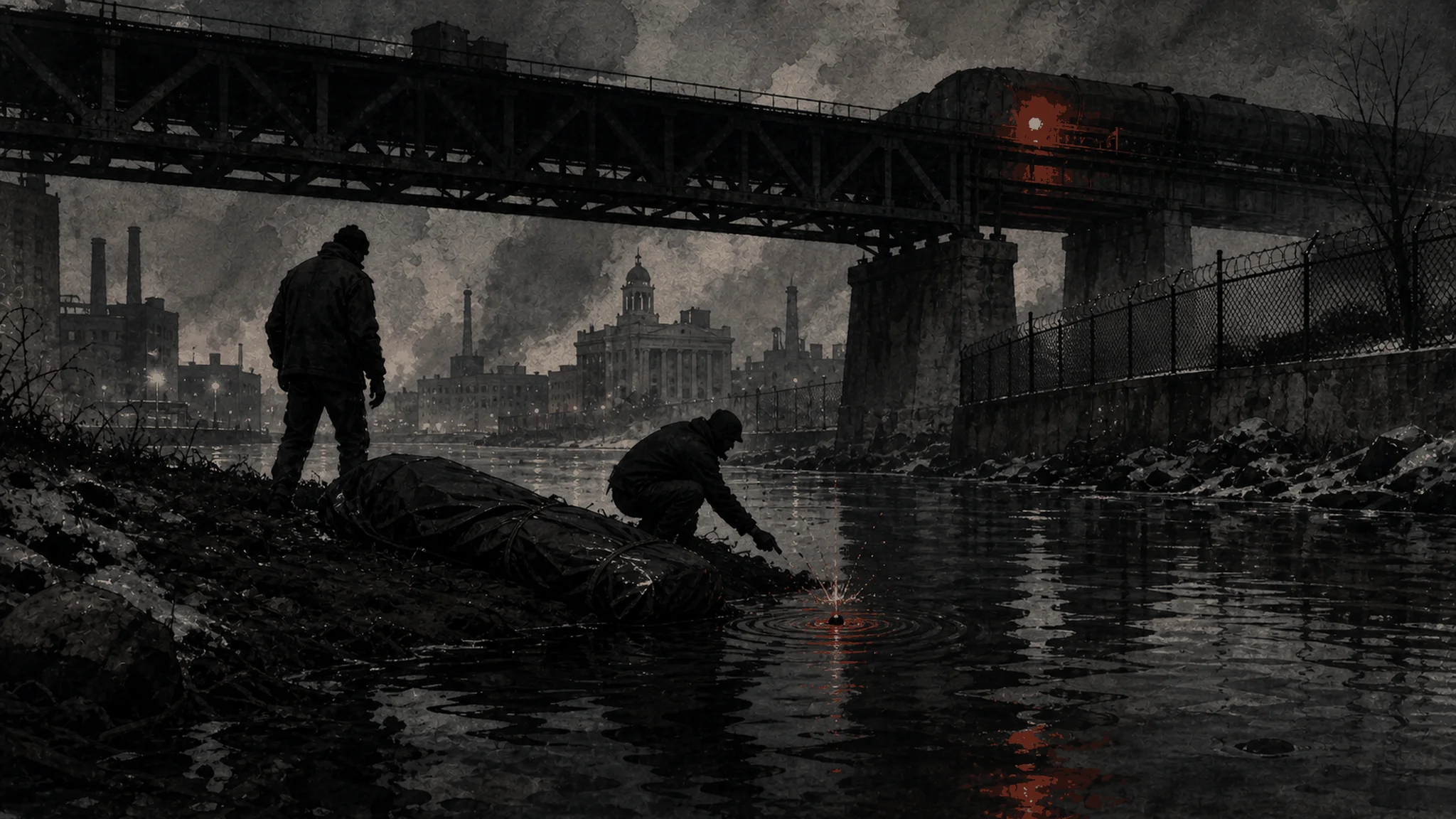
Their approach to Reggie Davis is staged as intimidation pretending to be procedure. Robert opens with package theft, plainclothes logic, and the soft pressure of a conversation in the car. Reggie understands too quickly. He names the grand jury, identifies the encounter as witness tampering, and reaches for his phone to record them. At that point, the fragile fiction of “just talk” collapses. Robert shoots him, Ian panics, and Reggie tries to recant what he saw while bleeding out.
The killing is not presented as an efficient cleanup. It is messy, stupid, and damning. Ian’s horrified reaction matters because it keeps the scene from making Robert’s violence look tactical. Robert has crossed from threat to murder before Ian can control the room, and Ian is now tied to a second body in an effort to escape the first. When they dump Reggie into the river, Robert removes the slugs so the body cannot speak later. Ian asks whether this is a walk in the park for him. Robert’s later joke about the gym, followed by his claim that it feels good to have a purpose, registers as one of the episode’s coldest character turns.
That subplot also sharpens Mike’s failed bargain with Evelyn. He comes to her apartment looking for a path to get Kyle out, offering the fantasy that there must be something he can trade. Evelyn says she wants Robert Sawyer, then Ian, and that freeing Kyle would require an arrest, prosecution, and conviction of an evil greater than Robert. Mike hears a door closing. Evelyn tells him Kyle’s situation may be one problem he cannot solve, and Mike rejects the premise because responsibility has become his last religion.
The awful irony is that while Mike tries to protect Kyle by finding a bigger target, Ian and Robert are making themselves bigger targets across the same afternoon. The state wants testimony. The police answer by erasing the witness. Kingstown keeps manufacturing the very monsters it says it is trying to prosecute.
What this episode tracks
S4E5 cares less about whether Mike can win a move than about what each move costs the people closest to him. Tracy’s scene shows that cost most plainly. Mike tells her to leave the state because Callahan may reach for her, and she names the pattern he cannot bear to hear: Mariam, Mitch, now Kyle. Mike tries to keep everyone safe, she says, and everyone ends up hurt worse. The line is not fair in every detail, but it is emotionally precise. Mike’s protection often arrives after the damage has already been organized.
The hour also makes the case that Kingstown’s institutions do not fail by accident. Hobbs’s prison, Ian’s police department, Evelyn’s prosecution strategy, Bunny’s street intelligence, and the cartel’s logistics all run on information moving through compromised hands. The episode’s best social observation is that power here rarely announces itself as power. It appears as a cell assignment, a roadside stop, a hidden compartment, a witness visit, a state-line escort, a transfer order, a phone call from a rooftop.
Verdict
Mayor of Kingstown S4E5 lands as a controlled pressure-cooker hour, more disciplined in its family material than in some of its procedural maneuvering. The Mike/Kyle and Mike/Tracy scenes give the episode the weight it needs, and Callahan’s quiet work beside Kyle is more disturbing than a louder threat would have been. Hobbs also becomes a more compelling figure once the episode stops treating her as merely obstructive and starts suggesting a separate survival logic around her.
The Ian and Robert plot is effective but blunt, especially in how quickly intimidation becomes murder. Still, the bluntness serves the season’s moral direction: this is what happens when men trained by Kingstown’s violence try to solve legal danger with street pressure. The episode leaves Mike with a temporary win, Kyle with Callahan’s advice in his head, Bunny facing a cartel incursion, and Ian standing deeper in the hole he wanted to escape.
Rating: 8.4/10
More episodes from Mayor of Kingstown — Season 4 — Mike vs. the cartel pipeline that's been quietly running through Kingstown. Jump to any episode in the season:
Where to go next
Reviewed by Mira Vance · QuizFandom Editor & Lead Reviewer. Every rating is an honest per-watch assessment from the desk that also writes the quizzes — not a press release rehash.