Mayor of Kingstown S4E8 Review: Callahan Brings Mike's War Home in Family Blood
What happens — the short version (spoilers)
- Bunny recovers and demands biblical payback; Mike flips the cornered Lamar into killing LJ to buy back trust and repay Bunny's blood.
- Callahan escapes prison and, instead of fleeing, burns an underling named Shaver alive as a loyalty lesson, taking cash and meth as travel money.
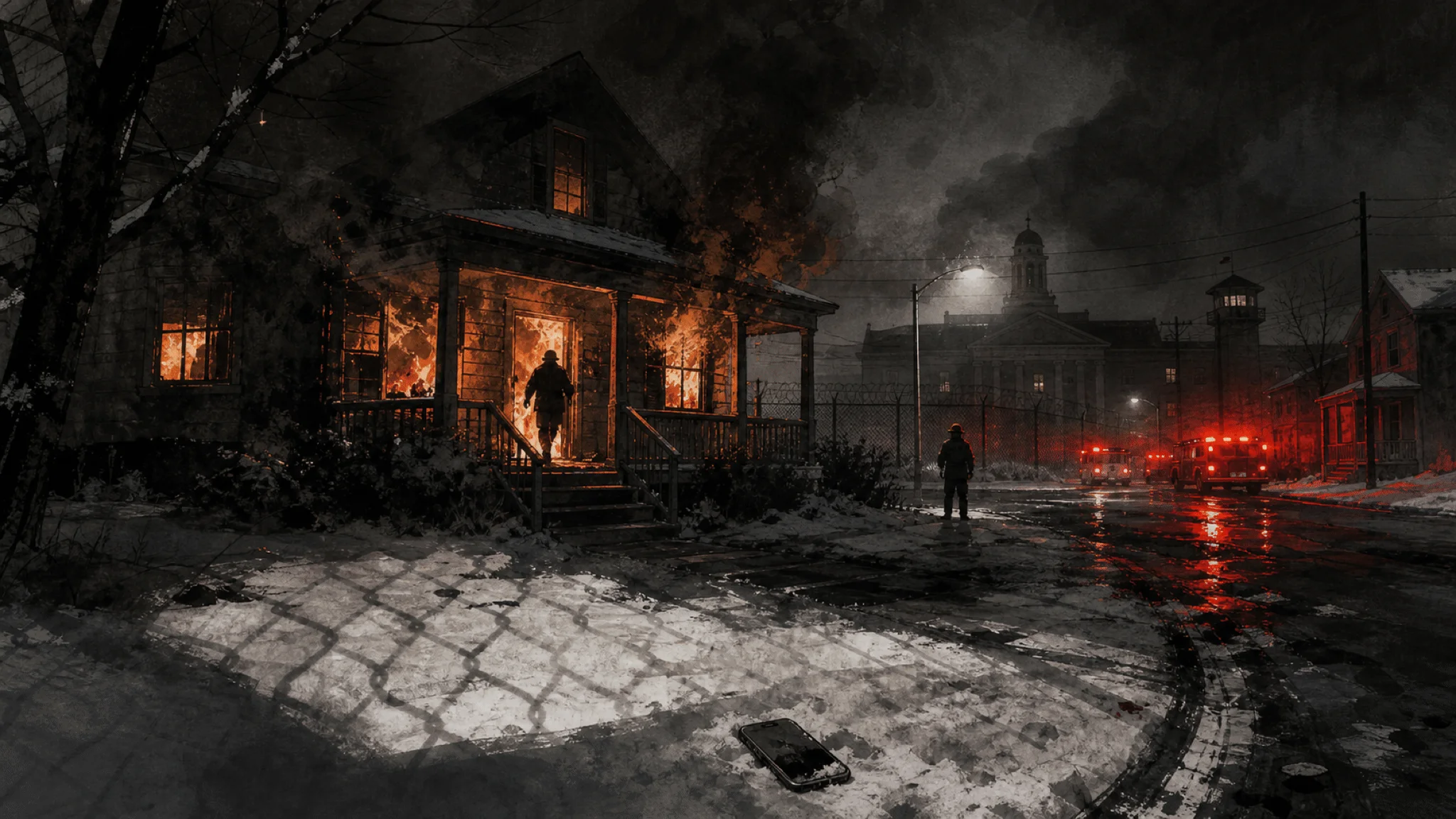
- Mike misreads the escape as flight while Ian insists Callahan only wants Mike; Pete sets Mariam's house on fire as a decoy.
- Mike pulls the firebug Pete from the burning house, only to learn Callahan was never there and the real strike is aimed at Kyle's family.
- Callahan takes over Tracy's phone call to Kyle, telling him everything he loves is in his hands while Kyle begs helplessly from his cell.
- Callahan shoots Tracy dead and deliberately leaves Baby Mitch alive and crying; Kyle, afterward, refuses sedation and tries to harm himself.
A revenge hour sends Mike chasing the wrong fires while Bunny, Lamar, and Callahan prove no bargain in Kingstown stays contained.
Mayor of Kingstown S4E8 opens like a recovery episode and reveals itself as a punishment episode. Bunny Washington is alive, Mike McLusky has a traitor to flip, and the prison system has one more escape to explain before it can pretend order still exists. The hour’s pressure comes from the distance between Mike’s working theory and Merle Callahan’s actual design: Mike keeps reading the crisis as a hunt, while Callahan treats it as a lesson. By the time the episode reaches Tracy and Baby Mitch, the season’s gang war has crossed from tactical violence into family annihilation.
Bunny’s Survival Creates a Debt Mike Can Spend
Bunny’s hospital room gives the episode its first temporary illusion of control. Mike McLusky (Jeremy Renner) brings him food from the Q, and Bunny Washington (Tobi Bamtefa) jokes that his gut is the only thing his attackers missed. That little piece of normalcy matters because Bunny is already translating survival into retaliation. He says he savors payback, then tells Frank and Mike that whoever hurt people close to him will meet something biblical.
The scene is not written as a triumphant return from the dead. Bunny says the doctor told him he was dead on the table for sixty-seven seconds, and when Mike asks whether he saw a light, Bunny says he saw nothing: no tunnel, no gates, no family, just absence. That confession briefly strips away the boss posture. Bunny can still threaten a reckoning, but the episode lets us hear the fear under the threat. He came back with no cosmic reassurance, only more work waiting for him.
Mike’s response is practical and emotional at once. He tells Bunny he came back because he is supposed to be here, then promises he will get his reckoning. But by now we already know Mike’s preferred version of reckoning is not the same as Bunny’s. Bunny wants the Colombian hitters captured and delivered to him. Mike wants to use the loose pieces in the room to move Frank, Moses, and Lamar into a configuration that gets Bunny repaid without letting the town erupt at full volume.
That brings him to Lamar. Mike enters Lamar’s apartment, names the connection Cole made between Lamar and Bunny, and confronts him with the Detroit arrest Moses made disappear. Lamar starts with denial, then collapses when Mike lays out the trap around him: Bunny will kill him if he learns Lamar helped set up the hit, Frank will kill him if he learns Mike made him, and running is not an option because KPD is already looking. Mike’s offer is the episode’s clearest example of Kingstown mercy. Lamar can live, maybe, if he does exactly what Mike says and uses someone else’s death to buy back a piece of trust.
The payoff arrives with cruel efficiency. Frank and LJ sit together over jazz, nostalgia, and the fantasy of easier times. LJ wonders whether there has to be a finish line, and the scene answers with a silenced shot. When Lamar calls Mike afterward to say it happened and it is done, the line lands like an invoice being marked paid. Mike tells him to lay low and come to the Outreach later, but there is no clean moral space left in the order. He has taken the man who helped hurt Bunny and turned him into an instrument of punishment, which may be the only kind of problem-solving Kingstown still recognizes.
Callahan Escapes the Prison and Writes the Map in Fire
The prison material begins with the kind of institutional alarm Kingstown knows too well: noise first, explanation later. The wailing siren pulls Ian Ferguson (Hugh Dillon) and the others into motion, then the episode cuts to Shaver’s place, where Merle Callahan and Pete McDonough appear with the relaxed confidence of men who know the system is behind them, not ahead of them. Callahan’s first stop after escape is not Mike. It is discipline inside his own network.
Shaver tries to make himself useful with money and product, but Callahan is not there for negotiation. He asks whether Shaver has a problem with how he runs things, frames disloyalty as an injury, and lectures him about loyalty and continuity before Pete sets him on fire. The scene is grotesque because it has the rhythm of an employee review until it becomes an execution. Callahan makes a small regime lesson out of Shaver’s body, then leaves with cash and meth as travel money.
Mike misreads the direction of the escape at first because every practical sign points to flight. The money is gone, the drugs are gone, and Callahan has had a head start. Ian, played with a raw, angry certainty by Hugh Dillon, keeps saying what Mike does not want to hear: Callahan is not looking for a cabin across the border. He wants Mike. The episode makes that disagreement valuable because Mike is rarely wrong about a threat’s shape, only about how personally the threat wants to hurt him.
Inside the prison, Nina isolates the Aryans and lets Mike speak to Marc on the same range where Kareem Moore was murdered. That location does a lot of quiet work. The prison keeps repurposing old violence as the setting for new violence, and nobody in the scene can claim surprise anymore. Marc taunts Mike about Kyle, calls him Judas, and withholds Callahan’s location until Stevie Tarrant (Derek Webster) beats him in a sanctioned-looking burst of unofficial force. Mike then threatens Marc with the hole unless he talks, and Marc gives the answer Ian already knew: Callahan will be wherever Mike is.
That answer turns out to be both true and incomplete. Mike returns to find his office trashed, then learns from Ian that the firebug has been spotted at Mariam’s house. Pete has set it on fire and, in a manic flourish, runs back into the burning house. Mike pulls him out against Ian’s shouted advice to let him burn, then tries to force Callahan’s location out of him. Pete tells him he got played. Callahan is not there. The house fire is pain sent ahead of the real strike, a way to make Mike chase the visible blaze while the deeper one is already moving toward Kyle’s family.
Tracy Pays for a War Mike Cannot Contain
The episode’s final movement is built on one of the show’s harshest inversions of distance. Kyle McLusky (Taylor Handley) is in custody, physically removed from the street war, and yet the phone brings the war directly into his cell. Tracy McLusky calls him, Baby Mitch crying in the background, and Callahan’s voice takes over the line. He tells Kyle that everything he loves is in his hands.
Kyle’s bargaining is immediate and desperate. He offers to go back into general population if that is what Callahan wants, but Callahan says it is too late. When Kyle asks what he wants, Callahan answers that he wants exactly this. The cruelty is not only the threat to Tracy. It is the staging of helplessness as punishment, forcing Kyle to listen while he cannot move, cannot protect, and cannot trade himself fast enough to matter.
Tracy’s scene with Callahan is written with a sickening calm. She tries to reason with him, first by arguing that he does not have to do this, then by redirecting his rage toward Mike. If Mike is the one who deserves punishment, she says, Callahan should go back to Kingstown and kill him. Callahan refuses the moral distinction. To him, Tracy and Kyle are incidental, Baby Mitch is fruit from the same poison tree, and the question of who deserves what has become irrelevant. The line is important because it exposes the emptiness in his religious language. Punishment is not justice here. It is appetite wearing a doctrine.
The gunshot lands after Tracy pleads for her son. Baby Mitch keeps crying audibly afterward, which makes the choice even colder. Callahan kills Tracy and leaves the baby alive, preserving the witness, the wound, and the future burden in one act. He does not only murder Kyle’s wife. He designs a life sentence for Kyle outside the prison walls.
The closing hospital scene refuses catharsis. Ian tells Mike there was nothing he could have done and no way he could have known, which is factually true and emotionally useless. Kyle refused sedation and tried to hurt himself; now they have eyes on him around the clock. Mike says all they do is survive it, then admits he does not know whether Kyle will. That uncertainty is S4E8’s most honest note. Survival has been the McLusky family business for years, but the ending makes survival sound less like resilience than a sentence nobody remembers choosing.
What this episode argues
S4E8 is about containment as a civic fantasy. Mike contains Bunny’s rage by redirecting Lamar. Nina contains the Aryans by lining them up on the range. Ian tries to contain Callahan by putting eyes on Mike. Kyle is contained by custody and still loses his wife. Every wall, cell, office, and family address becomes porous the moment violence finds a better route.
That is why the episode’s strongest scenes are not the loudest ones. Bunny describing sixty-seven seconds of nothing, LJ wondering about a finish line, Nina telling Mike the future does not exist, and Mike saying all they do is survive it are all variations on the same exhaustion. Kingstown’s power players talk in plans because planning is the only dignity left to them. Callahan’s advantage is that he does not need order to win. He only needs everyone else to keep believing the next move can be managed.
Verdict
“S4E8” is a bleak, effective hinge episode, with a ruthless final third that redefines Callahan from prison extremist into personal catastrophe. The hour occasionally leans hard on threat rhetoric, especially in the Aryan range material, but its best sequences understand consequence as geography: hospital room, apartment, prison range, office, family home, holding cell. Each location receives a debt from the last.
The episode works because it makes Mike look competent and insufficient at the same time. He identifies Lamar, moves Frank off the board, follows Callahan’s trail, and still arrives everywhere a few minutes behind the real damage. That gap between skill and control is Mayor of Kingstown at its most punishing.
Rating: 8.7/10
More episodes from Mayor of Kingstown — Season 4 — Mike vs. the cartel pipeline that's been quietly running through Kingstown. Jump to any episode in the season:
Where to go next
Reviewed by Mira Vance · QuizFandom Editor & Lead Reviewer. Every rating is an honest per-watch assessment from the desk that also writes the quizzes — not a press release rehash.