Mayor of Kingstown S4E6 Review: Bunny Bleeds, Kyle Learns the Price of Protection
What happens — the short version (spoilers)
- Bunny is ambushed on the road by gunmen in the woods and left wounded; Mike later realizes Lamar was flipped by Moses, who used the train fire as bait.
- The prison moves Kyle into general population off the books, ignoring his pleas, until cartel-aligned inmates beat and nearly break him.
- Callahan's people stop the assault, then Callahan asks Kyle when anyone last protected him like that, turning the rescue into recruitment.
- Hobbs holds Mike hostage to her terms: she will return Kyle to Ad Seg and move Callahan only if Mike delivers Frank Moses to arrest.
- Mike lies to Frank that the police pickup is routine questioning about the train, persuading him to come in without running.
- The arrest at Frank's depot collapses into chaos when someone shouts about a gun and Keno is shot in the arm.
Kingstown mistakes spectacle for victory until Mike sees the older local power hiding beneath the cartel fire and prison noise.
Mayor of Kingstown S4E6 opens with a city reading violence too quickly. A cartel shipment burns on the tracks, Bunny Washington is hit on the road, and every institution in Kingstown immediately starts making the story fit the threat it already understands. Mike McLusky (Jeremy Renner) spends the episode trying to prevent separate crises from merging, only to realize the real design has been closer to home than the fire. The strongest material treats protection as a form of debt: Bunny protected by soldiers who may have betrayed him, Kyle protected by men who want to own him, Mike protected by influence that now has a bill attached.
Bunny’s Shooting Reveals the Train Fire as Bait
The first movement is all smoke, metal, and bad assumptions. Bunny (Tobi Bamtefa) and Lamar are driving toward the pin Mike sends after the train attack when the car hits road spikes. Lamar panics, gets out despite Bunny yelling for him to get back in, and gunfire comes from the woods. Bunny is left wounded, coughing and bleeding, while the episode cuts away from the ambush without giving the audience a clean look at the shooters.
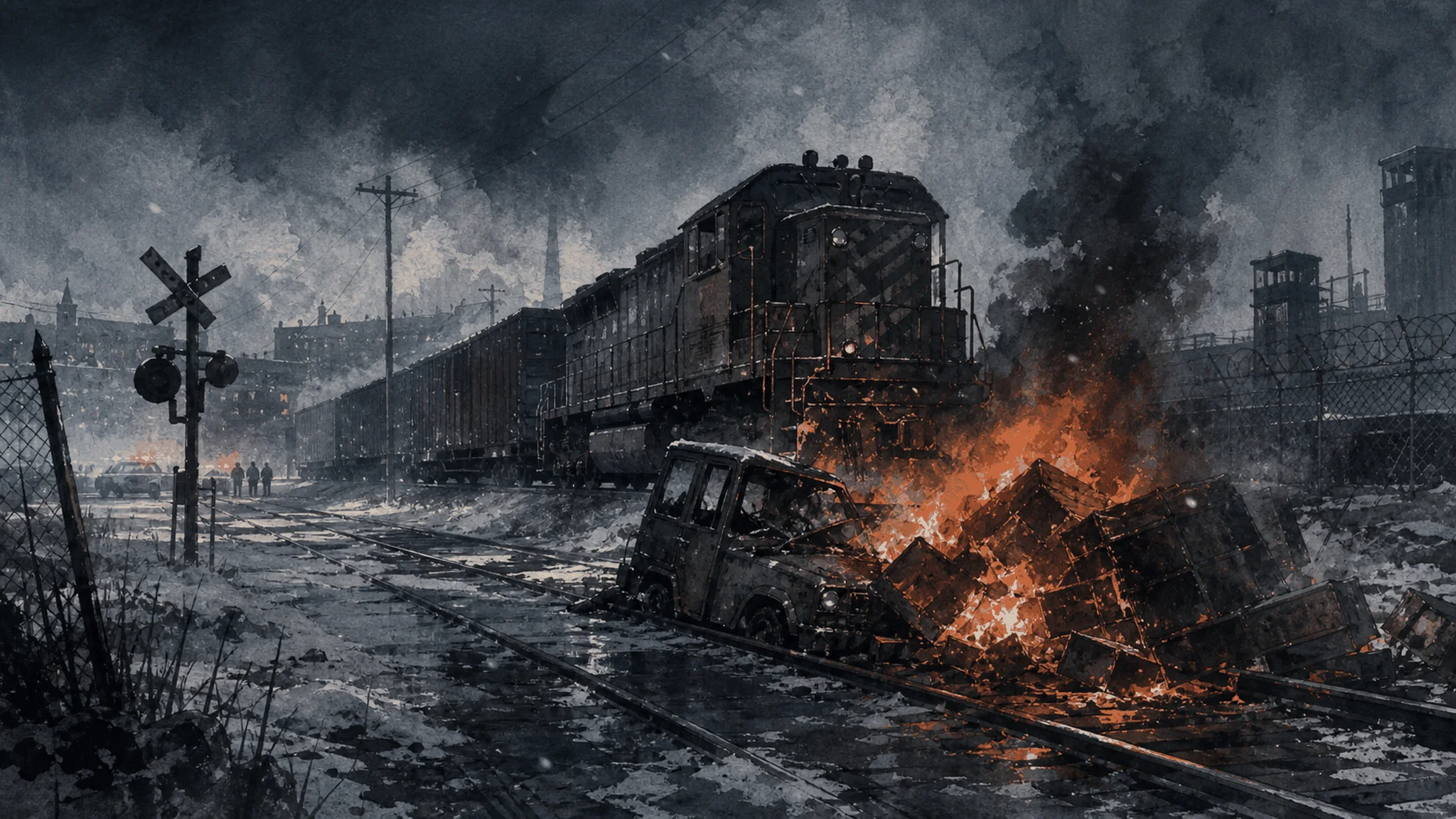
That denial matters. The show has spent the season building Bogotá as the obvious pressure point, and the train wreck seems to confirm it. The burned shipment is not a theft. It is a public statement. At the tracks, Frank Moses and Mike are told the train’s emergency system was tampered with and the engineer and conductor were likely shot near a smashed truck. Frank reads the fire as cartel grandstanding, money deliberately turned into smoke so everyone can smell it. Mike sees the same risk from the other side: if KPD figures out the attack was targeted, they will start asking why that shipment mattered.
The hospital scenes give Bunny’s survival the weight of a civic event. Frank offers to put his men on the entrances, but Mike refuses, insisting KPD should handle the doors because armed soldiers around a hospital only make the target harder to identify. It is one of those Mike decisions that sounds sensible and hollow at once. He is correct about the tactics, yet every person in the conversation knows the law is only one security vendor among several.
Then the episode shifts from Bunny as gang leader to Bunny as brother. His sister sits beside him and refuses to pray because, in her words, prayer is unnecessary where command will do. She tells Deverin that their parents’ strength is in his blood, that what he does is good, and that he has survived too long to die now. It is a moving scene because it does not ask the viewer to forget what Bunny is. It asks the viewer to understand that Kingstown’s moral categories are inadequate for the people trapped inside them. A man can move drugs, command violence, and still be the person someone orders back to life because she loves him.
Mike’s later visit to Lamar is where the hour quietly turns. Lamar tells him four or five attackers shot from the woods and backed off when he fired back. He claims he emptied two magazines and stayed because of Bunny. Mike tests him by saying Bunny has come to, and Lamar’s relief looks real enough until he mentions that Moses has his people posted at the hospital around the clock. That is the tell. Mike returns to Ian Ferguson (Hugh Dillon) and Stevie with the episode’s real correction: Lamar was flipped, not by the cartel, but by Moses. The train wreck drew Bunny out, and Mike, thinking he was answering Bogotá, helped lead him there.
Kyle’s Transfer Shows How Prison Converts Safety Into Ownership
The Kyle material is the episode’s hardest institutional thread because it moves like a trap built out of paperwork. Kyle McLusky (Taylor Handley) is supposed to be in Administrative Segregation, separated from Merle Callahan, but the prison finds a way to make him disappear without recording the move. Cindy notices the empty cell, checks the infirmary and exercise cage, and tells Mike there is nothing in the logs. Mike’s answer tells her everything: Torres is not looking for Kyle because Torres is in bed with Hobbs.
Before Mike can act, Kyle is in general population, begging an officer to move him back because he is a cop and fears for his life. The officer tells him to get away from the fence. The scene plays Kyle’s panic against the prison’s indifference, which is the point. The system recognizes his risk when it wants leverage from it and pretends not to hear him when acknowledgment would require rescue.
Mike reaches Kyle by phone and gives him survival instructions in the bluntest possible terms. Do not let the white inmates pull him close. Put his back against the fence. Look for Raphael. When Kyle says officers are taking him back, Mike hears the danger immediately and tells him not to go, even to knock them out if he has to. The call drops into helplessness. Mike can explain prison logic from the outside, but he cannot make the doors obey him.
The attack that follows is staged less as a fight than as a forced demonstration. Kyle is shoved into a cell with cartel-aligned inmates, beaten, threatened, and nearly broken before Callahan’s people intervene. Someone calls Raphael’s attention to Kyle as the mayor’s brother being led to slaughter. Callahan’s protection arrives at the exact moment when protection can become recruitment. Kyle survives because the Aryan network moves for him, and that fact will follow him back into every cell.
Callahan understands the value of timing. After Kyle is returned to his cell, Callahan speaks from next door like a man closing a sale. He tells Kyle they protect their own by any means necessary, then asks when someone last did that for him. It is a cruelly intelligent question. Mike has spent his life protecting Kyle through deals, threats, and favors, but from Kyle’s side of the bars, the person who stopped the assault was Callahan. The episode does not need Kyle to answer. Silence is enough.
That is the prison’s social machine in miniature. Safety is never free, and gratitude is one of the currencies by which predatory groups launder power. Hobbs knows it too. When Mike storms the prison, he is grabbed and sent to Hobbs instead of Kyle. She says Kyle’s call got Mike’s attention and demands that Mike demonstrate his influence by getting Frank Moses arrested. Mike can have Kyle back in Ad Seg, and Callahan can go to gen pop, but only if he delivers Frank. Hobbs calls the arrangement mutually beneficial. Mike calls it what it is with his face: a hostage exchange wearing administrative clothing.
Mike Trades Frank for Time and Still Loses the Room
The third movement follows Mike trying to satisfy Hobbs without burning the Moses bridge too early. He goes to Frank and frames the coming KPD pickup as routine. The police need someone to question because the train came through his depot, the engineers are dead, and the investigation has no clean lead. Frank wants to disappear before they knock. Mike tells him hiding would only confirm suspicion and bring more scrutiny.
The scene is a careful lie because Mike is not handing Frank over to justice. He is buying time and trying to keep Hobbs convinced he can be useful. Frank, for his part, is too disciplined to panic. He agrees to answer questions, but with his lawyer beside him and without the humiliation of handcuffs. The exchange keeps the episode’s politics precise. Frank is not afraid of a police station; he is offended by being made to enter it like an ordinary suspect.
Mike tells Ian to hold Frank as long as possible, knowing they probably cannot keep him. That makes the arrest a performance for Hobbs, not a case. Meanwhile, Mike is still piecing together Bunny’s ambush. Ian reports shell casings, road spikes, tire tracks, and no leads. Lamar is silent with the police. Mike goes around the badge because he knows Lamar may talk differently to him, and the result reframes the whole hour.
The episode then lets Mike’s temporary plan collapse into public violence. Ian and the officers pick Frank up at the depot while Frank and LJ sit with whisky and Ella Fitzgerald. The arrest begins almost ceremonially, with Frank thanking LJ and walking out as if this is a minor inconvenience. Then someone shouts about a gun, panic erupts, and Keno is shot in the arm. The scene does not stage the shooting as a neat reveal; it lets the chaos land in real time — shouting, a gun warning, Keno down, Ian calling for medical help.
That messy ending is important because Mike has been trying to manage perception all hour. He wants Hobbs to see compliance. He wants Frank to see a harmless box-check. He wants Bunny’s people at the hospital but not so visibly that they become another threat. He wants Kyle protected without giving Callahan a claim on him. Every solution depends on somebody accepting a story for a few more hours. The depot shooting proves how thin that kind of management is. Once a room decides it is in danger, the story stops belonging to Mike.
What this episode argues
S4E6 is about the difference between power that announces itself and power that waits. The burning train is spectacular. Bunny’s ambush is loud. Kyle’s assault is staged to terrorize him. But the deeper power in the episode works through reassignment, missing logs, quiet phone calls, and men like Lamar deciding which loyalty is safer to confess. Kingstown has always been a town where official systems and criminal systems share hallways; this episode narrows that idea until the distinction feels almost clerical.
It also sharpens Mike’s season-long failure of attention. He has been so focused on Bogotá that he misses Moses turning the same chaos toward a local objective. That does not make Mike foolish. It makes him overloaded in the exact way Kingstown demands. Every crisis is real, every faction is dangerous, and the one you do not prioritize uses your triage against you.
Verdict
This is a strong, grimly efficient episode, less elegant than the season’s best hours but very good at pressure. The Bunny hospital scene gives the hour its heart, Kyle’s general-pop detour gives it its most vicious institutional insight, and Mike’s realization about Moses gives the plot a sharper direction than another round of cartel escalation would have.
The episode does lean on a few blunt chess metaphors, especially when the cartel kid talks about pawns, knights, rooks, mayors, and kings. Still, the tension comes from action with consequences rather than shock for its own sake. By the final hospital image, with Mike sending Whitney home and sitting beside Bunny while his phone goes unanswered, the city feels smaller, meaner, and harder to route around.
Rating: 8.3/10
More episodes from Mayor of Kingstown — Season 4 — Mike vs. the cartel pipeline that's been quietly running through Kingstown. Jump to any episode in the season:
Where to go next
Reviewed by Mira Vance · QuizFandom Editor & Lead Reviewer. Every rating is an honest per-watch assessment from the desk that also writes the quizzes — not a press release rehash.