Mayor of Kingstown S4E4 Review: The Mayor Runs Out of Clean Lines
What happens — the short version (spoilers)
- Ian calls Mike to a burned Colombian squat where someone used a flamethrower; Mike's police contacts are furious he had them pull surveillance beforehand.
- At a meeting, Frank and Bunny split the war: Bunny handles the prison, Frank brings in Detroit muscle, while Mike warns an army is coming.
- Callahan gives Kyle a small mirror to see around the bend and tells him solitary protects the body but endangers the mind, with no friends, only alliances.
- Cindy gets the Ad Seg list and learns Callahan has been Kyle's neighbor since before intake, and that Hobbs has been talking to Callahan.
- Evelyn is hurt by a brick through her car; Mike first suspects Robert, whose alibi holds, then suspects Ian.
- Ian admits to Stevie that he dropped the brick himself as a warning, calling it street logic, and Stevie absorbs the confession without turning him in.
A violent morning forces Mike to measure cartel pressure, police rot, prison leverage, and the people still trapped under his protection.
Mayor of Kingstown S4E4 begins with Mike McLusky, played by Jeremy Renner, trying to leave a bed before the town can pull him out of it. Cindy hears enough from his phone call to learn that the day involves flamethrowers, and the awkward domestic pause says plenty about what intimacy costs around Mike: sooner or later, everyone gets handed a piece of the machinery. The episode then widens from one burned cartel squat to a larger question of jurisdiction. Mike is still moving between cops, prisons, Bunny’s crew, and the district attorney’s office, but the hour keeps proving that each lane has already been contaminated by the others.
Mike Finds a War That No One Can Keep Outside
The burned Colombian squat gives the episode its bluntest evidence that Kingstown’s new conflict has outgrown the usual neighborhood arithmetic. Ian, played by Hugh Dillon, calls Mike before sunrise with a scene full of dead cartel men, two dead hitters, and the detail that makes even Kingstown sound startled: somebody used a flamethrower. By the time Mike arrives, Ian and Stevie are already angry because Mike had them pull surveillance before the attack. Their frustration matters because it is not procedural vanity. Mike’s habit of compartmentalizing has left his own police contacts walking into consequences they were never allowed to understand.
The scene also clarifies the new shape of Bunny’s alliance with Frank Moses. Mike tells Ian and Stevie that Bunny Washington, played by Tobi Bamtefa, is now partnered with Frank, the man who took out Russians by the tracks. Stevie warns that Frank may look harmless, but he is dangerous enough to change the temperature of the city. Mike does not dispute the danger. He only argues that the partnership might be useful while the cartel is moving in, which is a very Kingstown form of reasoning: a monster becomes tolerable when a larger monster enters the room.
That calculation carries into Mike’s meeting with Bunny and Frank. Mike arrives to counsel rather than celebrate, and his complaint is precise. Frank sent two hitters against what looks like a platoon. Frank and LJ treat the dead men as battlefield scouts, losses that produced information. Bunny identifies Roberto Cruz as the inside problem, the man feeding the Colombians from prison. Frank divides the labor with chilling ease: Bunny handles the prison, Frank brings in more muscle from Detroit. Mike wants the fire stamped out before it becomes another war, but everyone else is already speaking in terms of leveling up.
Vocabulary does most of the work in this scene. Mike talks about containment. Frank talks about costs. Bunny talks about standing on business. Each phrase belongs to a different institution, and none of them can hold the whole crisis. By the end of the night, Mike will still be warning Bunny that an army is coming, while Bunny keeps imagining the war as a bridge to real estate, legitimacy, and family money. Mike sees the vice. Bunny sees a portfolio.
Kyle Learns the Architecture of Isolation
Kyle McLusky, played by Taylor Handley, spends the episode in a quieter danger. In Ad Seg, Merle Callahan coaches him through pain by telling him to focus on numbness. Then Callahan tells Kyle to check his mailbox and gives him a small mirror, a tool for seeing around the bend from inside a cell. The gift is practical, almost neighborly, and that is why it is so unsettling. Prison intimacy in this show rarely arrives without a second purpose.
The hour keeps returning to the idea that isolation is never empty. Callahan tells Kyle that solitary is safer for the body and more dangerous for the mind. He also corrects Kyle’s first instinct about prison friendship: there are no friends, only alliances. That line could sound like genre wisdom in another series. Here, it lands as infrastructure. The cell next door is not simply the cell next door; it is a route for influence, information, and pressure.
Warden Hobbs understands that, too. Her visit to Callahan matters because it shows how administrative language and criminal strategy can occupy the same hallway. She finds the inconsistency in his status: he is in Ad Seg, but his name remains on the infirmary list. Instead of treating that as an error, she uses it as a bargain. He stays the course, and she keeps him comfortable. When Callahan says that suits him fine, Kyle’s placement is no longer neutral. It was a deal.
Cindy’s prison material lands the same point from a different angle. After a morning in Mike’s apartment, she is inside the facility taking abuse from inmates and bantering with Breen, who mistakes cruelty for professional realism. Her hospice experience lets her notice details around medical care, and later Mike pushes her to get a burner and reach Ad Seg. By the final act, she has the list of prisoners there and reads names to Mike while her kids argue over television in the background. The domestic noise behind the call is crucial. Mike has pulled another civilian-adjacent life into his work, and nothing about that feels clean.
The information Cindy finds detonates quietly: Merle Callahan has been in the cell next to Kyle since before Kyle’s intake. Mike also learns that Hobbs has been talking to him. He tells Cindy to burn the list, but the damage is already done. The episode’s best cliffhanger is not a gunshot. It is Mike realizing that the prison around Kyle may have been arranged before he even understood the board.
Evelyn’s Attack Exposes the Rot Inside Mike’s Circle
Evelyn Foley’s hospital scenes give the episode its most personal pressure. She is hit by a brick dropped through her car, and when Mike visits her, she is angry first about her missing phone. That detail is very Evelyn: even hurt, she thinks in terms of function, evidence, and forward motion. Mike tells her a brick today can become a bullet tomorrow and urges her to stand down. She refuses because she has a witness who can put Ian at Morrissey’s the day Morrissey died.
That witness changes the entire episode. Mike first assumes Robert is responsible for the attack because Robert had already gone after Evelyn in public. He has Ian bring Robert to the river and confronts him hard, but Robert denies it and says he was at Hennigan’s all morning. Ian confirms the alibi. Robert’s anger then puts Mike himself on trial. He says he has executed orders for Mike and Mitch, risked his life for the McLusky family, and now watches Kyle jailed, Ian threatened, and himself waiting for the noose. His ugliest line is aimed at Evelyn, but his central accusation is aimed at Mike’s authority: Mike is not a cop, not a criminal, and not the mayor.
The accusation sticks because the episode immediately makes Mike ask Ian the same question. Did Ian drop the brick because he knew Evelyn had a witness? Ian is wounded by the suspicion, insisting he grew up with Evelyn and would not touch her even if she could put him in a cell. Mike does not fully apologize. He tells Ian that Evelyn has a witness, and that is the apology. It is a brutal exchange because it shows how little trust remains among men who still depend on each other for survival.
Then the episode reveals that Mike’s suspicion was right and wrong at the same time. Robert did not drop the brick. Ian did. Stevie catches the lie by pressing him about the diabetic cat excuse from the morning crime scene. Ian admits Evelyn is alive, says he was not trying to kill her, and calls it “street logic.” He claims he would have dropped the brick into the driver’s seat if murder had been the goal. The rationalization is horrifying precisely because Ian believes it has rules.
Stevie’s response gives the scene its moral weight. He does not accept the logic as clean, but he also does not turn Ian in. The room absorbs the confession and keeps playing pool. That is the institutional sickness of Kingstown in miniature: everyone knows too much, everyone is compromised, and every private confession becomes another secret the group has to carry.
What this episode argues
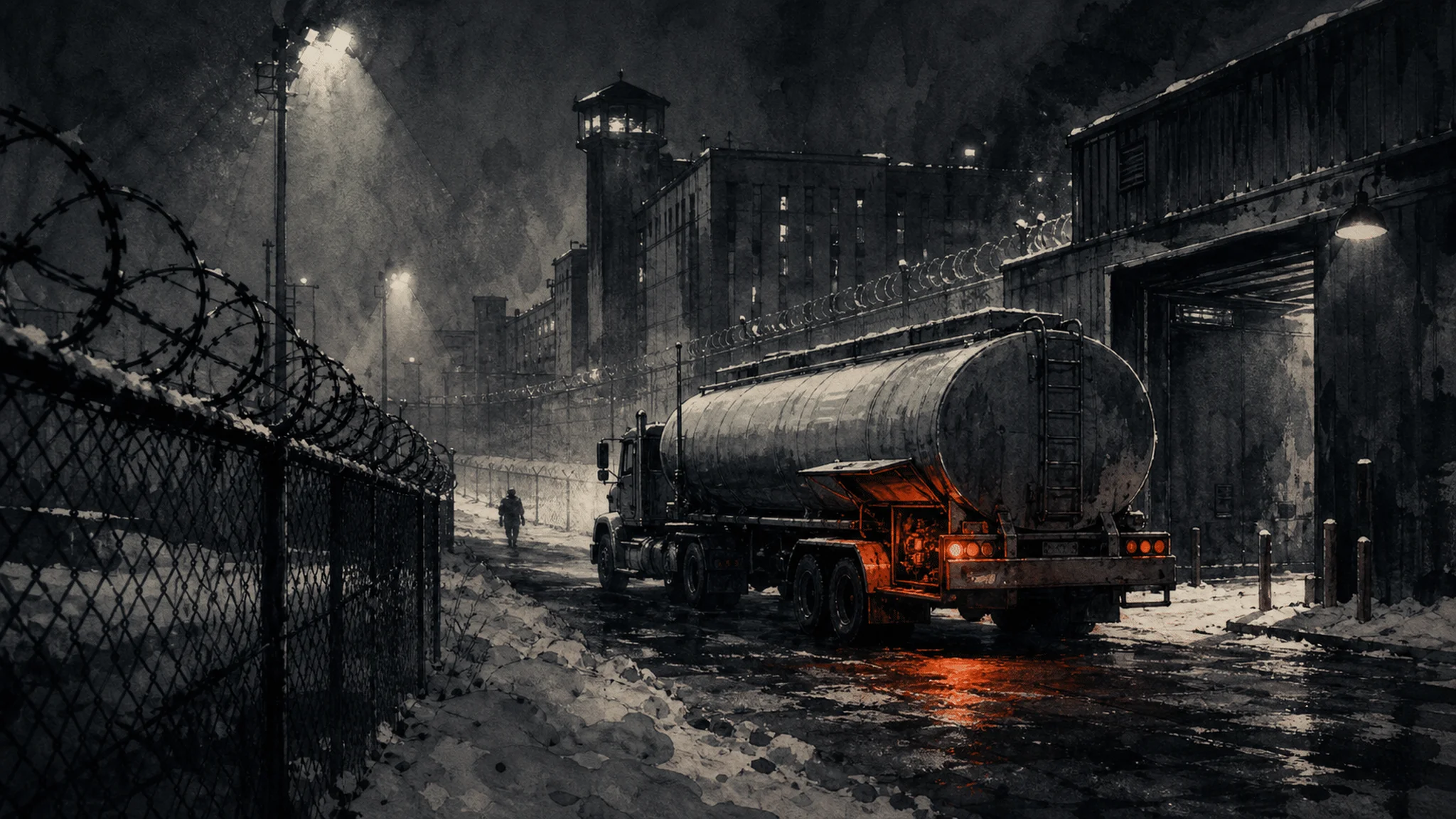
S4E4 argues that Kingstown’s real power does not live in any single office, cell block, crew, or badge. It lives in the passages between them. A fueling truck can become a cartel route. An infirmary list can hide an Ad Seg arrangement. A police alibi can shield one lie while concealing a worse one. A district attorney’s witness can turn into leverage for every man she is trying to prosecute. Mike’s job has always been to move through those passages, but this episode makes the movement feel less like control and more like exposure.
That is why Bunny and Frank’s final conversation matters beyond the crime plot. Frank explains legitimacy as a laundering philosophy: real estate, art, coins, donations, societies, the whole outside world’s willingness to forgive sins once money enters approved channels. Bunny is listening because he wants a future beyond street command. Mike’s warning earlier is that Frank will take something from him. Frank’s pitch is more dangerous than a threat because it offers Bunny a way to call capture ambition.
Verdict
This is a strong, crowded Mayor of Kingstown episode, less clean as an action hour than as a pressure map. The flamethrower aftermath gives the cartel war scale, but the best material is quieter: Callahan’s mirror, Hobbs’ bargain, Cindy reading the Ad Seg list from home, and Ian trying to define attempted intimidation as a controlled act. The episode does not give Mike a single central problem. It gives him too many overlapping systems and then shows how each one has already entered his family.
The weakness is density. A few transitions feel rushed, as if every board position needs touching before the next escalation. Still, the accumulation works because the final Callahan reveal reframes Kyle’s whole situation, while Ian’s confession makes Mike’s circle feel more dangerous than the enemies he can name. Kingstown has always been a town where survival requires dirty knowledge. This episode asks what happens when Mike can no longer tell which knowledge is protecting him and which knowledge has already trapped him.
Rating: 8.3/10
More episodes from Mayor of Kingstown — Season 4 — Mike vs. the cartel pipeline that's been quietly running through Kingstown. Jump to any episode in the season:
Where to go next
Reviewed by Mira Vance · QuizFandom Editor & Lead Reviewer. Every rating is an honest per-watch assessment from the desk that also writes the quizzes — not a press release rehash.