Mayor of Kingstown S4E3 Review: Carney's Death Makes Every Alliance Look Like a Trap
What happens — the short version (spoilers)
- Mike tells Kyle that Carney is dead, and Kyle spirals, calling Carney his sole lifeline and realizing he can no longer protect anyone.
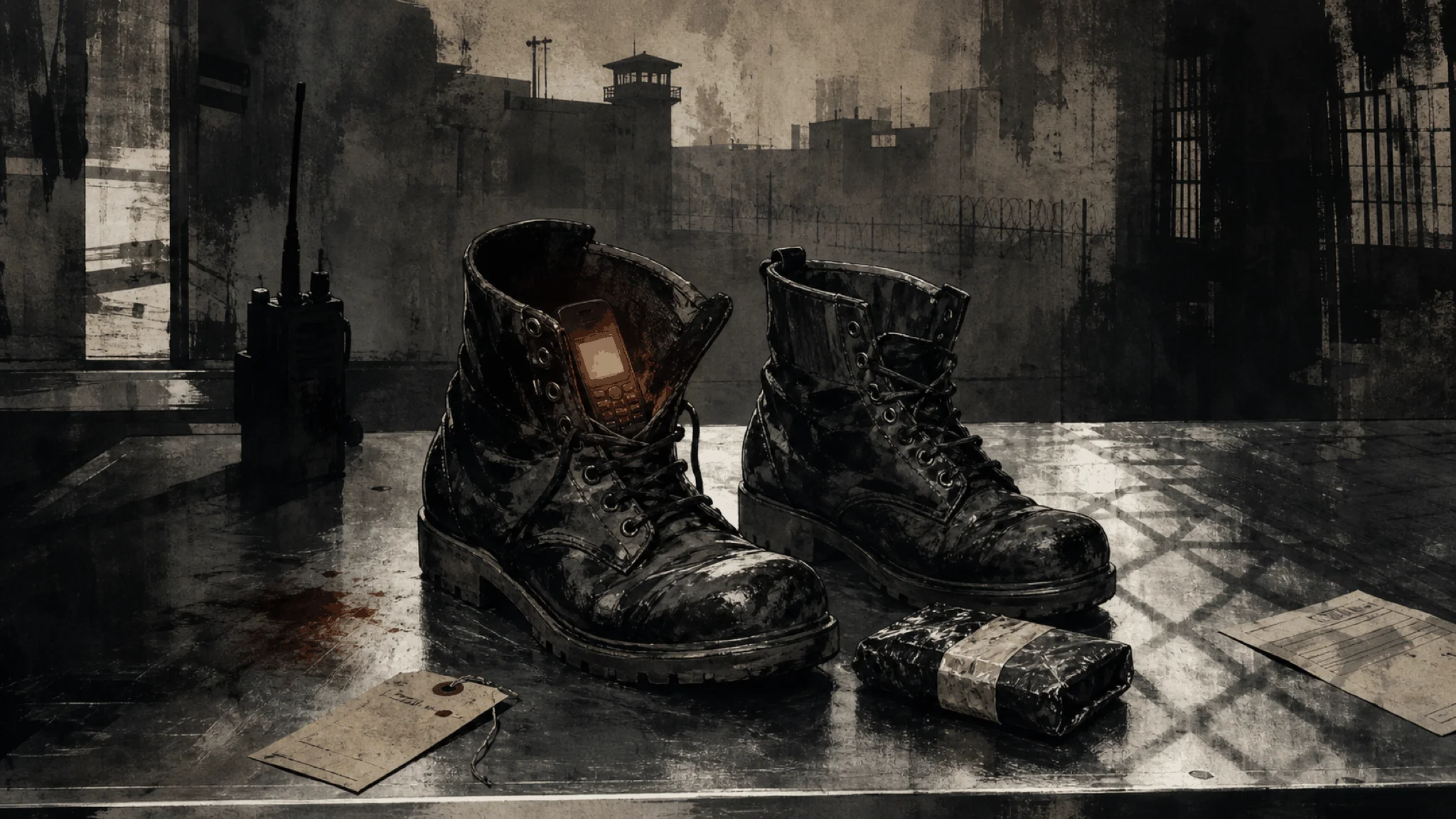
- A burner phone and hash found in Carney's boots suggest corruption, but Mike rejects the dirty-officer reading; Deputy Warden Torres seems to know too much.
- Moses walks Bunny through a garbage-and-gravel smuggling pipeline, framing Bunny's growth as rebranding and expansion rather than simple corner work.
- The cartel dismembers three Grape Street corner boys and scatters the parts, which Mike reads as a territorial flag, not just a move inside.
- Robert confronts Evelyn publicly, then gets drunk and rages about being abandoned after putting Mitch down for Mike; Ian gets him home.
- Hobbs offers Mike access to Kyle in exchange for becoming her asset, then armed men storm a house and open fire as the episode ends.
A dead officer, a frightened brother, and a cartel flag turn Kingstown's fragile bargains into open territorial war.
Mayor of Kingstown opens Season 4 Episode 3 with a public statement about Doug Carney’s murder and then spends the hour exposing how little public language can hold. The department can call him a colleague and a friend, but Mike McLusky (Jeremy Renner) has to work the version of grief that moves through favors, contraband, prison corridors, and retaliatory street violence. Carney’s death removes Kyle’s one reliable inside protector, surfaces possible corruption around Anchor Bay, and gives the cartel an opening to turn local disorder into spectacle. What the episode tracks is not who mourns Carney most loudly but who can convert his absence into leverage.
Kyle learns his lifeline is gone
Mike’s first important scene is not with the police, the warden, or Bunny. It is with Kyle McLusky (Taylor Handley), locked inside Anchor Bay and trying to make sense of the news that Carney was killed at home with two shots to the chest and one to the head. Kyle asks the practical questions first. Was anything taken? Did the canvass turn up anything? Mike answers what he can, then tells Kyle this is not for him to worry about, which is exactly the wrong comfort for a man whose safety depended on Carney’s quiet attention.
The exchange gives the episode its sharpest emotional beat. Kyle calls Carney his “sole fucking lifeline,” then spirals into a feeling he cannot name except as helplessness. He cannot touch anything, fix anything, or protect anything. Mike grabs the one interpretation Kyle can survive: he is in prison because he is protecting everyone. That may be true, but the scene works because it is not enough. Mike’s reassurance plays like triage, a hand pressed against a wound that will not close. Kyle’s anger wobbles into panic without making him small.
The Carney investigation sours almost immediately. Ian Ferguson (Hugh Dillon) and Stevie find a burner in Carney’s boot, with a call history full of disconnected numbers, and chunks of hash in the other boot. Mike rejects the dirty-C.O. reading on instinct. Carney, in his view, could not hide that kind of sideline from the people who knew him, and his father’s care was covered by DOC benefits. Ian is less sentimental, but even he notices Deputy Warden Torres sniffing around the detail that Carney’s father was in the house.
That tiny factual slip matters. Torres speaks as though he knows more about the crime scene than he should, then covers by claiming he may have heard it on the news. The episode does not overplay the moment. Ian clocks the fishing, Mike weighs Torres as either a freelance operator or a Hobbs-linked instrument, and then the show moves on before certainty can arrive. That suits the register Kingstown has always operated in. Proof rarely comes first here. Patterns come first, side glances, men who know the official story is arriving too neatly.
Bunny’s new partnership meets Kingstown’s old street rules
While Mike works to replace Carney inside Anchor Bay, Bunny Washington (Tobi Bamtefa) is being shown a larger map. Moses walks him through the shipping logic behind garbage, gravel, storage, and border blind spots. Trash becomes the perfect cover because nobody asks why something marked for disposal fails to reach the landfill. It is a vintage Sheridan-world speech: commerce as infrastructure, crime as paperwork, the invisible thing moving inside the thing everyone thinks they understand.
Bunny is not dazzled so much as alert. He wants to see the whole pipeline before he trusts the operator, and Moses respects that caution. The phrase that sticks is Bunny’s later answer to Mike, after he has checked on a new guard inside the prison: Kingstown is a company town, and prison has always been the fulcrum. Moses corrects him. Bunny is rebranding and expanding. That framing pushes Bunny beyond the familiar corner economy without severing him from it, which is why the Grape Street call hits as hard as it does.
Lamar interrupts the pipeline tour with news that corner boys on Grape have abandoned a vacancy. Bunny tells his people to bring the young ones in front of him so they know who they answer to. Later, Ian calls Mike to a scene where the bodies are not whole bodies anymore. He counts three victims, maybe, because the cartel has cut them at the joints and scattered the evidence. Stevie calls it a treasure hunt. Mike reads it faster: this is more than the Colombians moving inside. This is a flag.
The Bunny-Moses material works best because it refuses to make expansion feel clean. Moses talks about family, offshore places, legitimate interests, and pain viewed from above. Bunny is listening, but the dead young men pull him back to the ground. When Mike tells him to bring the hammer down, Bunny pauses because he now has a partner. When Moses asks to handle the response himself, he frames it as proof of partnership: no more “mine and yours,” because if Bunny is cut, Moses bleeds. It is seductive language, and also dangerous. Kingstown has a long history of calling mutual liability trust.
The hour closes that thread in a quieter register. Bunny and Moses sit together after the day’s violence, and Moses names Bunny’s grief before redirecting it toward elevation. Bunny says he trusts him 60 percent, and the laugh between them is one of the episode’s few warm sounds. Then Moses compares trust to what Bunny has with McLusky: minutes, miles, offerings, sacrifices. The line cuts because it sounds generous while also measuring Bunny’s relationships like assets.
Mike tries to control fires he did not start
Mike spends the episode being summoned from one unstable perimeter to another. He tells a guard connected through Bunny to call him about Kyle’s movements, schedule changes, threats, and everyone in Ad Seg. The guard asks whether this is what got Carney killed. Mike says one has nothing to do with the other, then promises safety anyway. The scene is uncomfortable because Mike is asking a frightened young officer to step into the exact role that just ended with a dead man at home.
Inside the prison, Kyle gets a different kind of counsel from Callahan. The conversation starts as neighborly concern. Kyle asks if he missed chow, admits he needs to keep his head down, and Callahan answers with the kind of prison philosophy that sounds almost soothing until its meaning lands. Survival requires a remaking. A man has to be both marble and sculptor. He has to shatter his substance under chisel and hammer. Kyle repeats “heavy blows” as if he understands the metaphor and dreads the tuition. Mike can buy watchers, but he cannot stop the prison from teaching Kyle its own language.
Outside, Robert keeps surfacing as a separate emergency. Evelyn and Robert cross paths at city hall, and Robert turns the encounter into a grievance performance about arbitration, public service, and what he believes he has done for the McLuskys. Evelyn’s sharpest cut is about Kyle: Robert gets to walk around in public, while Kyle cannot. Robert answers that Kyle made his bed; Evelyn replies that he did it so Robert could sleep under his own roof with his family. The exchange puts Robert’s resentment in public view before Rebecca tips Mike off that the confrontation had witnesses.
Mike and Ian go to Robert’s house, where Mike tells him he crossed the line by going after Evelyn in public. Robert fires back that Kyle shot him and Mike is now standing in his yard. The argument is ugly, but the later bar sequence is sadder and more revealing. Ian finds Robert drunk, shouting at Marty, blaming Evelyn for taking his clock, and whispering that he “put that motherfucker down for Mike.” He means Mitch, Kyle, and every old ledger at once. Ian gets him home, finds Patty and the kid gone, and pours him water. The episode does not forgive Robert, but it shows how the institution keeps one of its most violent men alive just enough to become everyone’s problem again.
Mike’s visit to Warden Hobbs is the hour’s sharpest institutional confrontation. Hobbs tells him to use official channels, insists Kyle is safe and secure, and treats Carney’s murder as off-campus until police say otherwise. Mike tries to turn outside violence into a reason for access: what happens outside happens inside, and his job is to keep things balanced. Hobbs understands the bargain immediately. Access to Kyle in exchange for Mike as an asset. She does not quite accept, but she does not reject the premise either. Her final position is colder: her concern is keeping inmates safe, and as long as they understand each other, there should not be a problem.
Then the episode answers every speech with gunfire. Armed men hit a house while music plays and people scatter through the back. The sequence is shot as rupture rather than puzzle: screams, muzzle flashes, orders in Spanish, bodies moving before anyone can convert the violence into strategy. It is the hour’s final reminder that Mike’s balancing act depends on actors who do not need his permission.
What this episode is doing
Season 4 Episode 3 watches Kingstown’s power brokers lose the luxury of pretending their arrangements are separate. Carney’s murder is a prison story, a police story, a family story, and a street story at once. Bunny’s expansion does not sit apart from the corners; the corners are where the new partnership will be tested. Robert’s collapse does not sit apart from Kyle’s case; he is one of the case’s human costs walking around with a badge-shaped memory of authority. Hobbs may want clean jurisdictional boundaries, but the episode keeps proving those boundaries are mostly administrative theater.
The strongest writing follows that logic through repetition without making every scene say the same thing. Mike keeps promising protection he cannot fully deliver. Bunny keeps weighing trust against survival. Ian keeps cleaning up the damage done by men he still calls brothers. Kyle keeps being told that endurance is an active choice, even though almost every active choice has been taken from him. The town is no longer negotiating peace; it is negotiating which fires are allowed to burn first.
Verdict
This hour works as a bridge with more pressure than release. It does not have the single blunt centerpiece of a prison riot or a set-piece execution, but it treats escalation as logistics: a burner in a boot, a vacant corner, a scared guard, a drunk detective, a warden’s jurisdictional caution, armed men entering through the dark.
The Moses material occasionally leans on grand phrasing, and the episode asks a lot of viewers to track at once, but the sprawl matches the conditions on the ground. Carney’s death has not opened a single mystery. It has exposed the wiring under several systems Mike was already straining to hold together. By the time the shooting starts, the violence feels less like a cliffhanger than a bill coming due.
Rating: 8.2/10
More episodes from Mayor of Kingstown — Season 4 — Mike vs. the cartel pipeline that's been quietly running through Kingstown. Jump to any episode in the season:
Where to go next
Reviewed by Mira Vance · QuizFandom Editor & Lead Reviewer. Every rating is an honest per-watch assessment from the desk that also writes the quizzes — not a press release rehash.